
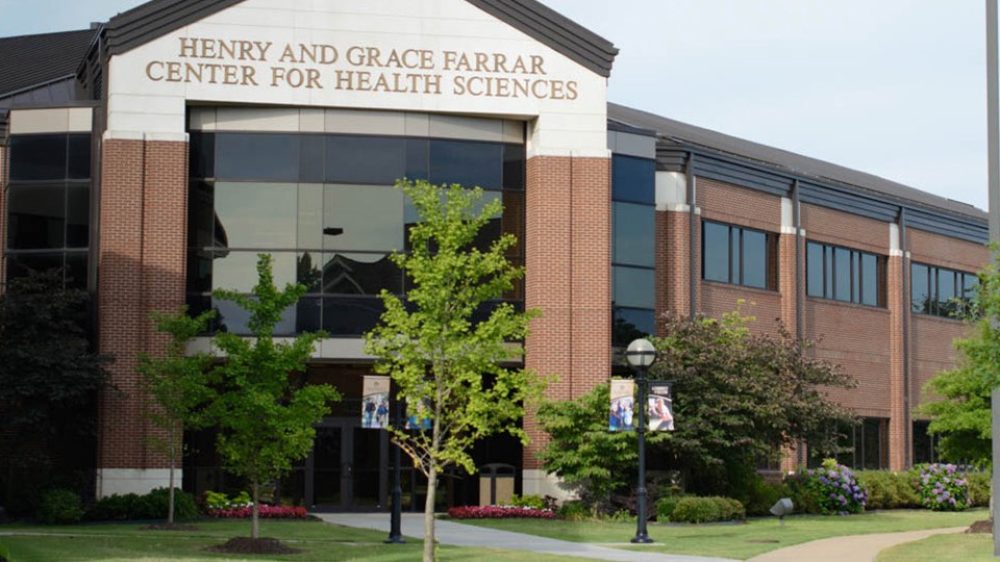
A closer look
Faith-based PA program at Harding University centered on primary care, with small classes and faculty who mentor students and model Christ-centered care.
Mission & approach
Developing caring physician assistants who practice competent, patient-centered primary care in diverse environments
Check my fit with this school
Check three basics
Enter any GPA or patient care hours you know. We’ll compare them with this school’s published numbers. This is a starting point, not an eligibility decision.
The quick check needs JavaScript.
Admissions & prerequisites
Admission requirements
Prerequisite coursework
Semester creditsReview each course, its lab, and the program’s policies. Your links are planning records; the program decides equivalency.
Courses shown as alternatives in the table are not all required. Confirm the accepted route with the program.
- Additional Chemistry: Organic Chemistry (additional chemistry option) OR Biochemistry (additional chemistry option)
- Anatomy and physiology pathway: Standalone Anatomy with lab + Standalone Physiology with lab OR A&P I and II with labs
- Math: College Algebra OR Precalculus OR Calculus OR Statistics (Math department)
- General Psychology pathway: General Psychology OR Developmental Psychology covering the lifespan
| Course | Credits | Lab | Min grade |
|---|---|---|---|
General Chemistry I and II with labs2 course(s)Course notes & alternatives8 credits total; both courses include labs. | 8Semester credits | Required | C |
| Organic Chemistry (additional chemistry option)1 course(s) One of two alternatives for the additional 3-credit Chemistry requirement; lab not required. | 3Semester credits | Not required | C |
| Biochemistry (additional chemistry option)1 course(s) One of two alternatives for the additional 3-credit Chemistry requirement; lab not required. | 3Semester credits | Not required | C |
Microbiology with lab1 course(s)Course notes & alternatives4 credits. | 4Semester credits | Required | C |
| Standalone Anatomy with lab Alternative A&P route: pair with standalone Physiology with lab. Credits for each course are not specified; the paired A&P requirement totals 8 credits. | Not publishedSemester credits | Required | C |
| Standalone Physiology with lab Alternative A&P route: pair with standalone Anatomy with lab. Credits for each course are not specified; the paired A&P requirement totals 8 credits. | Not publishedSemester credits | Required | C |
| A&P I and II with labs2 course(s) Alternative route requires A&P I with lab paired with A&P II with lab; do not mix this sequence with standalone Anatomy/Physiology. | 8Semester credits | Required | C |
| College Algebra One 3-credit Math choice; alternatively Precalculus, Calculus, or Statistics taken in a Math department. | 3Semester credits | Not specified | C |
| Precalculus One 3-credit Math choice; alternatively College Algebra, Calculus, or Statistics taken in a Math department. | 3Semester credits | Not specified | C |
| Calculus One 3-credit Math choice; alternatively College Algebra, Precalculus, or Statistics taken in a Math department. | 3Semester credits | Not specified | C |
| Statistics (Math department) One 3-credit Math choice; Statistics must be taken in a Math department. | 3Semester credits | Not specified | C |
| General Psychology1 course(s) Required; lifespan-covering Developmental Psychology may substitute. | 3Semester credits | Not specified | C |
| Developmental Psychology covering the lifespan Alternative to General Psychology; if used here, cannot also satisfy the separate Psychology elective. | 3Semester credits | Not specified | C |
Psychology electiveCourse notes & alternativesSeparate 3-credit Psychology-department elective. Examples: Developmental Psychology (not necessarily lifespan), Physiological Psychology, Abnormal Psychology, Cognitive Neuroscience. Cannot double-count lifespan Developmental Psychology. | 3Semester credits | Not specified | C |
Upper-level BiologyCourse notes & alternatives3 credits in Biology department, university setting, 300/3000 level or institution’s upper-level designation, at science-major rigor. Approved subjects include cell biology/physiology, developmental biology, genetics, embryology, endocrinology, immunology, mammalian biology, microbial genetics, molecular biology, neurobiology/neuroscience, pathophysiology, pharmacology, virology. Human-applicable content required where distinction exists. | 3Semester credits | Not specified | C |
Medical TerminologyCourse notes & alternativesPublished range is 1–3 credits; the exact minimum is not specified. Pass/fail is accepted for this course only. It can be completed in the final spring/winter alongside one other prerequisite. | Not publishedSemester credits | Not specified | C |
Policies that can change your plan
- A&P sequencing
- A&P I + lab must pair with A&P II + lab, or standalone Anatomy + lab with standalone Physiology + lab. Mixing the sequences is not accepted. Comparative A&P may substitute only when human-body study is included; animal A&P is not accepted.
- Psychology double count
- A lifespan Developmental Psychology course that fulfills General Psychology cannot also satisfy the Psychology elective. Electives must be from the Psychology department.
- Recency
- Seven years is strongly recommended for A&P, Microbiology and Upper-level Biology; there is no hard cutoff.
- Medical Terminology
- 1–3 credits published; the exact minimum is not specified.
- International applicants
- The PA program page requires a US-accredited bachelor's degree. It does not state international eligibility or English-test rules.
Prerequisite GPA minimum 3.00. A cumulative undergraduate GPA above 3.00 is expected, but applicants below 3.00 may be considered with evidence of current academic success. Science prerequisites should be completed within seven years (a recommendation, not a hard expiration). Only one prerequisite may be unfinished in the final spring/winter before fall matriculation; Medical Terminology may accompany it. Also required: 200 hours of healthcare experience (HCE) before CASPA submission, 10 hours of in-person PA shadowing, and three recommendation letters. The 200 hours can be direct patient care or other accepted healthcare experience; it is not a 200-hour direct patient-care minimum. GRE scores may be considered if submitted, but the GRE is not required. The PA program page does not state international eligibility or English-test rules.
When courses must be complete: Only one prerequisite may remain during the final spring semester or winter quarter before fall matriculation; Medical Terminology can be taken alongside that course. Planned/in-progress courses must be listed in CASPA.
Dates & application steps
Verified
Know what the total includes
Published cost estimate
Confirm current cohortConfirm rates for your entering cohort
Confirm current costs with the program.
Curriculum & clinical training
Didactic instruction
Fall, spring and summer classroom and laboratory study take place on the Harding campus.
Clinical phase
Starting in the second August, the fall, spring, summer and fall terms combine supervised clinical practice with further didactic education.
The published sequential master’s curriculum is 28 months, starting each August in Searcy.
The admitted class
Published class statistics describe the named cohort or population. They are not admission minimums or acceptance probabilities.
The program’s track record
Graduate outcomes
PANCE pass rates
See first-time program performance with clearly dated national context.
- First-time PANCE pass rate: 91%
- Five-year first-time PANCE pass rate: 93%
Accreditation history
ContinuedSources you can open
Links to the program’s own pages and the official directories we use.
- CASPA 2027 program description
- PA School Finder deadline record
- ARC-PA currently accredited programs — sponsoring-institution directory
- Harding University program page
- Harding University program page
- Harding University curriculum and clinical training
- PA School Finder contact record
About the U.S. News rank
The U.S. News PA rank uses the 2025 PA edition, matched to the listed program and campus. It reflects peer-assessed reputation, not admissions odds or a personal fit score. Programs without a separate entry are labeled “Unranked.”
How competitive are you for this program?
Match AI compares your full profile with this program and every other one, then sorts your list into Reach, Target and Safety.