Address & Contact

Our Address

River Forest, Illinois

GPS

41.895, -87.81389

Telephone
Email

-

← Find PA SchoolsProgram profile
PROGRAM PROFILE

Dominican University (IL) Physician Assistant Program

River Forest, Illinois · Master of Medical Science in Physician Assistant Studies

Application deadline Aug 1, 2026Passed · Submitted
Tuition Resident: $116,918 published full-program tuitionNonresident: $116,918 published full-program tuition · Confirm current entering cohort
Class size 30 studentsThirty students per entering class; current ARC-PA maximum and program/PAEA class size agree. Historical PANCE candidate counts do not replace the approved entering size.
Program length 24 monthsFull program
GRE requirement Not requiredGRE is optional; a score above the 50th percentile is viewed favorably. PAEA lists no required standardized tests, supporting no CASPer or PA-CAT requirement. English-proficiency policy is a separate question and is not established by that list.
Patient-care minimum 750 combined HCE/PCE hoursAt application, complete at least 750 paid or volunteer healthcare/patient-care hours involving patient contact or interaction. This is a combined HCE/PCE requirement, not a separately published direct-patient-care cutoff. Direct hands-on care above 750 hours strengthens an application. Record duties and supervisor contacts in CASPA; an attestation is strongly encouraged. Later hour updates are not accepted.
Overall GPA minimum 3.00Both cumulative and science CASPA GPAs must be at least 3.0, with no exceptions. Every prerequisite needs C or better; C-minus does not qualify. A separate aggregate prerequisite GPA minimum is not published.
Science GPA minimum 3.00CASPA science GPA of 3.0 is required without exceptions; Class of 2027 average was 3.83.
Recommendations 3 minimumAt least three recommendations are required. A professor, supervisor and certified practicing PA are strongly recommended evaluator choices; those roles are recommendations, not three mandatory categories. A PA letter is not required.
International applicants Not acceptedA bachelor’s from a regionally accredited U.S. institution is required before enrollment; international degrees and WES evaluations do not substitute. PAEA separately states international applicants are not accepted and DACA applicants are accepted.
English proficiency / TOEFL Confirm with programConfirm with admissions. A current program-specific English-test policy is not established in the reviewed sources. Do not infer a waiver from the U.S.-degree rule or PAEA’s standardized-test list.
PANCE pass rate 90%First-time pass rate · Reporting year not recordedFive-year first-time: 91.5% · reporting period not recorded
U.S. News PA rank #190 (tie)2025 PA edition · Peer-assessed reputation
THE PROGRAM

A closer look

A full-time, 24-month, 106-credit MMS program in River Forest, Illinois, beginning in January. The first year combines biomedical and clinical coursework, patient-assessment skills and anatomy; the second year adds core and elective clinical rotations.

Relationship-centered education at a Catholic Dominican institutionVirtual anatomy tables and traditional cadaver studyMedical Spanish and evidence-based medicine courseworkSeven core clinical rotations and three electives
Mission & approach

Prepare competent, compassionate PAs for patient-centered care, teamwork, leadership, service and continued learning, with attention to social justice and diverse communities.

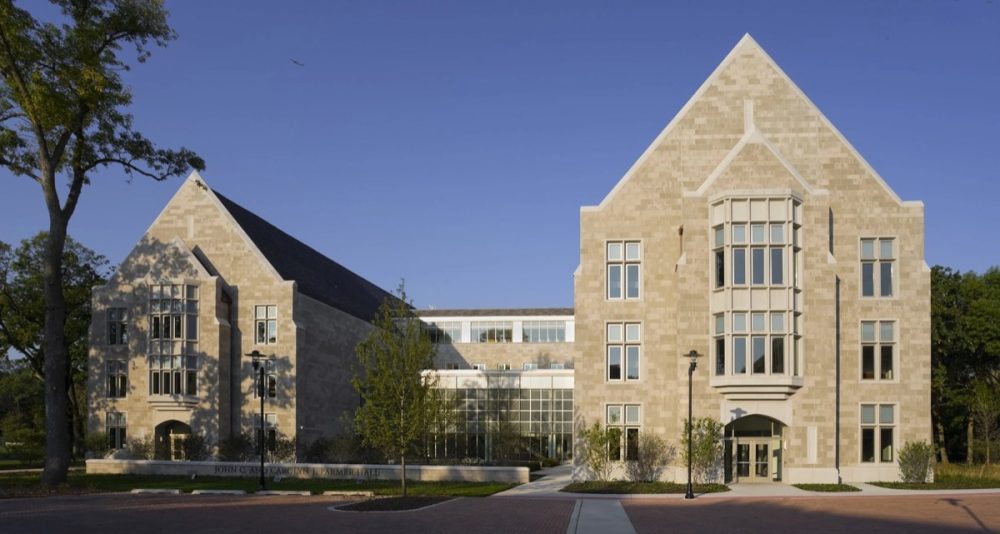
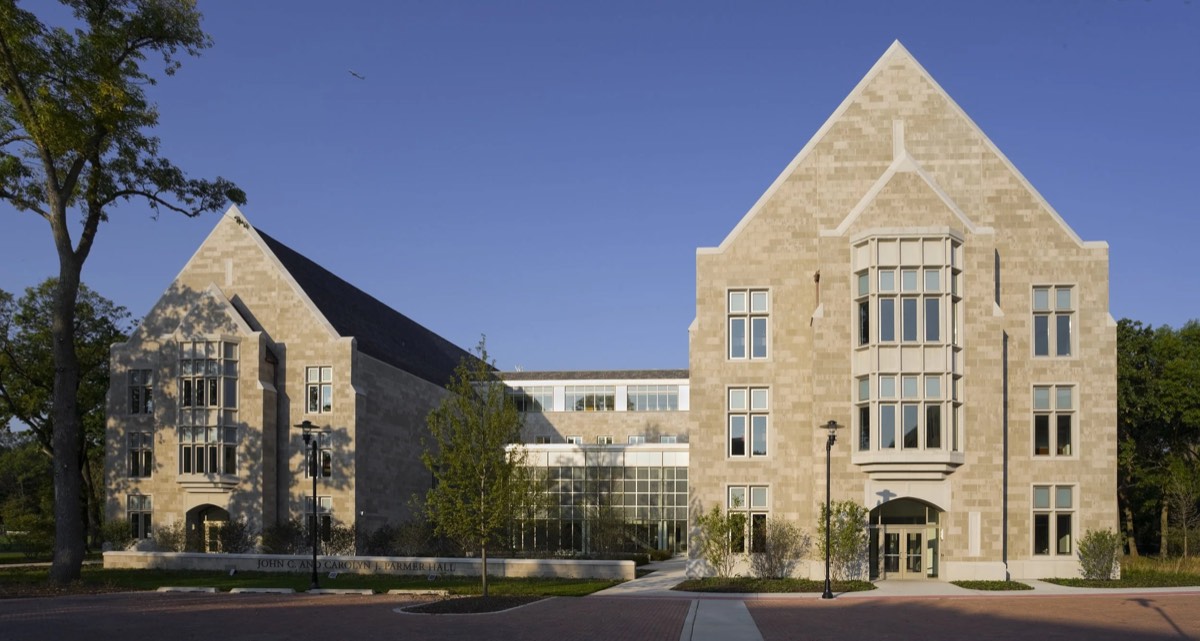
John C. and Carolyn J. Parmer Hall at Dominican University in River Forest, home of the Physician Assistant program
John C. and Carolyn J. Parmer Hall on Dominican University’s River Forest campus, home of its Physician Assistant program.
PREMIUM · MATCH AI

Is Dominican University (IL) a fit for you?

Unlock your personalized category, ranked school list, and reasons based on your profile. One Match AI purchase gives you the same results on PA School Finder and in your Toolkit.

SafetyTargetReachNot yet eligible
Unlock my school matches →
Dominican University (Illinois) — overview Current official program policy checked September 13, 2026 · Checked 2026-09-13
BEYOND THE NUMBERS

Admissions insights

What this program looks for in applicants

Holistic, rolling review considers academic preparation, patient-related experience, recommendations and writing. Additional consideration goes to current Dominican students/alumni, veterans, first-generation applicants and applicants from backgrounds underrepresented in medicine or with economic/environmental disadvantage. These are selection considerations, not guarantees. Forty-five hours of PA shadowing and optional GRE results above the 50th percentile are preferred.

Summarized from the program’s admissions information. Confirm current selection criteria with the program.

Program admissions information

How this program interviews

VirtualMultiple mini-interview (MMI)

The program says all selected applicants interview virtually through Zoom, beginning in June and continuing through summer/fall. PAEA identifies an MMI; the direct program page does not describe the station format. Follow the invitation for the current schedule and format. Offers arrive by phone and email; final decisions may continue through the end of January.

Source checked Sep 13, 2026. Interview formats and dates can change between cycles.

Program interview information
YOUR STARTING POINT

Admissions & prerequisites

Admission requirements

Overall GPA3.0 minimumBoth cumulative and science CASPA GPAs must be at least 3.0, with no exceptions. Every prerequisite needs C or better; C-minus does not qualify. A separate aggregate prerequisite GPA minimum is not published.
Science GPA3.0 minimumCASPA science GPA of 3.0 is required without exceptions; Class of 2027 average was 3.83.
Patient-care experience750 combined HCE/PCE hoursAt application, complete at least 750 paid or volunteer healthcare/patient-care hours involving patient contact or interaction. This is a combined HCE/PCE requirement, not a separately published direct-patient-care cutoff. Direct hands-on care above 750 hours strengthens an application. Record duties and supervisor contacts in CASPA; an attestation is strongly encouraged. Later hour updates are not accepted.
GRENot requiredGRE is optional; a score above the 50th percentile is viewed favorably. PAEA lists no required standardized tests, supporting no CASPer or PA-CAT requirement. English-proficiency policy is a separate question and is not established by that list.
Recommendations3 minimumAt least three recommendations are required. A professor, supervisor and certified practicing PA are strongly recommended evaluator choices; those roles are recommendations, not three mandatory categories. A PA letter is not required.
PA shadowing45 hours preferredPA shadowing is preferred at application, not mandatory. Observation while working alongside a PA can count, but the same hours cannot count as both shadowing and HCE/PCE. PAEA accepts virtual shadowing and does not accept virtual healthcare experience; confirm proposed activities with admissions.
Bachelor’s degreeU.S. degree before enrollmentA bachelor’s from a regionally accredited U.S. institution is required before enrollment; international degrees and WES evaluations do not substitute. PAEA separately states international applicants are not accepted and DACA applicants are accepted.
PrerequisitesC or betterNo more than two prerequisites may be pending at application; all must be complete by September 1. Identify pending courses and degrees in CASPA and provide registration proof if interviewed. CASPA GPAs are not recalculated after those courses finish. Complete the required U.S. bachelor’s degree before enrollment.
CASPA deadlineAugust 1, 2026 — passedAugust 1, 2026 was the CASPA submission deadline for January 2027 entry and has passed. PAEA specifies Blue/Submit status; the program reviews files after verification, which can take additional time. No later cycle deadline is established here. The September 1, 2026 prerequisite deadline has also passed.
Supplemental applicationNot requiredUse CASPA only. The program requires its CASPA writing questions but accepts no supplemental materials. A separate program application fee is not published; CASPA service fees are separate.
English proficiencyConfirm with admissionsA current program-specific English-test policy is not established in the reviewed sources. Do not infer a waiver from the U.S.-degree rule or PAEA’s standardized-test list.

Prerequisite coursework

Semester credits; alternative six-credit combined or seven-credit separate A&P routes

Review each course, its lab, and the program’s policies. Your links are planning records; the program decides equivalency.

CourseCreditsLabMin gradeYour coursework
Human Anatomy — separate-course route
Course notes & alternatives

Three lecture credits plus one human anatomy lab credit. Pair with Physiology below OR replace both rows with the complete Human A&P I/II series: six total credits including a one-credit human anatomy lab.

4Semester creditsRequiredCSign in to plan
Human or Vertebrate Physiology — separate-course route
Course notes & alternatives

Pair with four-credit Human Anatomy. The alternative Human A&P I/II series replaces both separate courses and needs six total credits with the anatomy lab.

3Semester creditsNot requiredCSign in to plan
Biochemistry
Course notes & alternatives

No laboratory required; required in addition to Organic Chemistry.

3Semester creditsNot requiredCSign in to plan
Microbiology
Course notes & alternatives

Must be within the biology department and include a one-credit laboratory.

4Semester creditsRequiredCSign in to plan
General Chemistry I and II
Course notes & alternatives

Two-course sequence totaling seven semester credits, including a one-credit lab. The source does not require a separate lab for each semester.

7Semester creditsRequiredCSign in to plan
Organic Chemistry
Course notes & alternatives

Includes a one-credit laboratory.

4Semester creditsRequiredCSign in to plan
Genetics
Course notes & alternatives

Upper-level course with a biology prerequisite.

3Semester creditsNot specifiedCSign in to plan
Medical Terminology
Course notes & alternatives

Must be a college-credit course; a noncredit certificate does not establish this requirement.

1Semester creditsNot specifiedCSign in to plan
Statistics or approved alternative
Course notes & alternatives

Biostatistics, Behavioral Statistics or Epidemiology also accepted.

3Semester creditsNot specifiedCSign in to plan
Psychology
Course notes & alternatives

General, Developmental or Abnormal Psychology accepted.

3Semester creditsNot specifiedCSign in to plan

Policies that can change your plan

Course grades and age
Both cumulative and science CASPA GPAs must be at least 3.0, with no exceptions. Every prerequisite needs C or better; C-minus does not qualify. A separate aggregate prerequisite GPA minimum is not published. Choose one complete A&P route: Human Anatomy 4 credits including a one-credit lab plus Human or Vertebrate Physiology 3 credits without a required lab; OR a two-course Human A&P I/II series totaling at least 6 credits including a one-credit human anatomy lab. Do not add both routes. Each course can satisfy only one prerequisite. Science courses must be within seven years of the entering cohort; that limit is not published for every non-science course.
Online, community-college and lab policies
Online lectures and community-college credits from regionally accredited institutions are accepted. Labs normally must be in person. Online labs are accepted only for applicants unable to attend in-person labs during 2020 or 2021 because of COVID-19, and an in-person lab satisfying another lab requirement must have been completed within seven years of the new cohort start.
Credit and course equivalents
AP credit is not accepted for any prerequisite. A CLEP policy is not published. Equivalent quarter hours are accepted; the school gives 1 quarter hour = 0.667 semester hour. Higher-level courses are favored; introductory or survey courses may be insufficient.
Experience examples
Accepted examples include CNA/MA, EMT, nursing, athletic training, home health, behavioral or ophthalmic technician, physical therapy/rehab aide, ER technician, phlebotomy, scribing, pharmacy technician and dental assistant. Clerical work, coaching, laboratory technician, veterinary technician, personal training and babysitting do not meet the published examples. The program evaluates actual duties.
Transfer and advanced standing
No advanced credit is awarded for prior professional experience, courses, degrees, certifications or training. Graded transfer courses can satisfy admission prerequisites. Disclose prior PA-program enrollment and supply transcripts. PAEA lists no program transfer or part-time option.
Health and screening
Before orientation, complete health examination, TB/immunity documentation, health insurance, background/sex-offender check and ten-panel drug screen. Repeat required health/screening steps before clinical training at student expense. Meet technical standards with reasonable accommodation.
Progression and graduation
Maintain a 3.0 aggregate GPA for good standing. Lower standing or a course grade of C or below prompts program review and possible remediation. Complete sequential coursework, summative assessment, capstone and all obligations in good standing within three years.
Employment and interruptions
Outside work is strongly discouraged; notify the program director in writing if working is necessary. Work does not excuse coursework and students may not substitute for program staff. Deceleration may be permitted once and can delay graduation or increase costs; withdrawal and return require a new CASPA application.
Deposit and refunds
The $1,500 seat deposit is nonrefundable and applied to tuition at matriculation. Offer letters set payment deadlines. Published tuition refunds after official withdrawal are 100% in week one, then 80%, 60%, 40%, 20% through week five and none afterward; fees are nonrefundable.
PANCE years and cohorts
The July 6, 2026 NCCPA report lists Class of 2025 first-time results of 27/30 (90%), national 91%, and ultimate 100%. The latest five program-assigned class labels, 2021–2025, pool 134/148 first-time passes (90.5%, calculated); these are five cohorts, not five distinct graduation years. Class of 2021 and Class of 2022 both show graduation year 2022. For five distinct graduation years 2021–2025, all six listed classes pool 161/176 first-time passes (91.5%, calculated). The annual table uses graduation years: the two classes graduating in 2022 combine to 53/61 (86.9%, calculated), while all other annual rates are the published rounded figures. The report also lists Class of 2020 with graduation year 2021: 27/28 first-time (96%), national 93%, ultimate 100%. Do not substitute all-attempt or ultimate results for first-time results.
Published attrition
For Classes 2021–2025, published entering sizes are 30 each, graduates 30/30/28/29/30, and attrition 0%/0%/6.67%/3.33%/0%. The 2023 graduation-rate cell says 96.67%, but its published 28 graduates out of 30 calculates to 93.33%; this is an unresolved source inconsistency. The other printed graduation rates are 100%/100%/96.67%/100% for 2021/2022/2024/2025. Attrition means permanent loss from the course of study.

Choose one complete A&P route: Human Anatomy 4 credits including a one-credit lab plus Human or Vertebrate Physiology 3 credits without a required lab; OR a two-course Human A&P I/II series totaling at least 6 credits including a one-credit human anatomy lab. Do not add both routes. Each course can satisfy only one prerequisite. Science courses must be within seven years of the entering cohort; that limit is not published for every non-science course.

When courses must be complete: No more than two prerequisites may be pending at application; all must be complete by September 1. Identify pending courses and degrees in CASPA and provide registration proof if interviewed. CASPA GPAs are not recalculated after those courses finish. Complete the required U.S. bachelor’s degree before enrollment.

Dominican University (Illinois) — prerequisites Current official program policy checked September 13, 2026 · Checked 2026-09-13
BUILD YOUR TIMELINE

Dates & application steps

CASPA submission deadline — passedAug 1, 2026 · Passed

August 1, 2026 was the CASPA submission deadline for January 2027 entry and has passed. PAEA specifies Blue/Submit status; the program reviews files after verification, which can take additional time. No later cycle deadline is established here. The September 1, 2026 prerequisite deadline has also passed.

Published date
Prerequisite completion deadline — passedSep 1, 2026 · Passed

For the January 2027 entering cohort; no more than two courses could be pending at application.

Published date
Next listed entering classJanuary 2027

January 2027 entry is listed by PAEA and the cohort-specific cost page. Exact orientation dates come from the program.

General interview windowJune through summer/fall

The program says all selected applicants interview virtually through Zoom, beginning in June and continuing through summer/fall. PAEA identifies an MMI; the direct program page does not describe the station format. Follow the invitation for the current schedule and format. Offers arrive by phone and email; final decisions may continue through the end of January.

Ready to start an application plan?

Keep your essays, checklist, and personal targets together.

Plan application →
Dominican University (Illinois) — paea Updated February 23, 2026; January 2027 entry and August 1, 2026 deadline · Checked 2026-09-13
THE FINANCIAL PICTURE

Know what the total includes

Published cost estimate

January 2027 matriculants, full 24-month estimate
Resident tuition$116,918 published full-program tuition
Nonresident tuition$116,918 published full-program tuition

Confirm current entering cohort

Required program fees$3,257
Additional expenses$13,273.10
Living & transportation$83,051
Estimated cost of attendanceIncludes resident tuition, required fees, additional expenses and living costs
$216,499.10

For January 2027 matriculants, published tuition is $116,918 at $1,103 per credit across 106 credits. Listed mandatory fees total $3,257, so tuition plus those fees is $120,175. The estimated full cost of attendance is $216,499.10, including living expenses and other allowances; individual spending and future rates can change.

See additional expenses & assumptions
Year 1 tuition$66,180
Year 2 tuition$50,738
Tuition per semester credit$1,103
Student fee per semester$250
Student fees across six semesters$1,500
Lab fee per semester$172
Lab fees across six semesters$1,032
Clinical education fees — two years$600
One-time matriculation fee$25
Degree fee$100
Year 1 living allowance$41,526
Year 2 living allowance$41,525
Books, laptop, equipment, uniforms and supplies$2,394
Unsubsidized loan fees$5,861
Health insurance and medical requirements$4,820
Year 1 background and drug screening$113.20
Year 2 background and drug screening$84.90
Combined background and drug screening$198.10
Year 1 estimated attendance cost$116,577.20
Year 2 estimated attendance cost$99,921.90

Mandatory fees sum to $3,257: $1,500 student + $1,032 lab + $600 clinical + $25 matriculation + $100 degree. Other allowances sum to $13,273.10, excluding living costs. The $1,500 seat deposit is credited against tuition, not an extra charge; it differs from the $25 matriculation fee. PAEA says resident and nonresident tuition do not differ. Financial aid and GI Bill/Yellow Ribbon participation are available subject to eligibility; contact [email protected].

Plan for the application, too.

Keep application fees separate from the cost of attending.

Dominican University (Illinois) — costs January 2027 matriculants, full 24-month estimate · Checked 2026-09-13
HOW YOU’LL LEARN

Curriculum & clinical training

01Year 1 — 60 credits

Didactic study

January–December across 18 spring, 21 summer and 21 fall credits. Clinical medicine, pharmacology, diagnostic reasoning, patient assessment, anatomy, pathophysiology, professional practice, evidence-based medicine and Medical Spanish.

02Year 2 — 46 credits

Clinical study and completion

January–December: two-credit clinical bridge, ten four-credit rotations, two-credit capstone seminar and two one-credit evidence-based medicine courses. Core rotations cover emergency, internal, family and behavioral medicine, pediatrics, women’s health/OB-GYN and surgery; three rotations are electives.

The published sequence totals 106 credits. Anatomy combines virtual Anatomage-table work with traditional cadaver study. Rotation order varies. Graduate competencies include evaluating clinical evidence, patient advocacy and diagnosis of common primary-care medical and behavioral problems.

Dominican University (Illinois) — curriculum Current official program policy checked September 13, 2026 · Checked 2026-09-13
WHO STUDIES HERE

The admitted class

Class of 2027

Published class averages
Overall GPA3.86
Science GPA3.83
Combined HCE/PCE hours2,469
Compare published cohorts
ClassOverall GPAScience GPACombined HCE/PCE hours
20233.763.683,198
20243.833.802,451
20253.653.573,583
20263.833.782,702
20273.863.832,469

Class of 2027: 30 students, average age 23, 40% from outside Illinois, 27% underrepresented in medicine, 3% veterans, 30% first-generation, 10% male/90% female and 3% with prior graduate degrees. Its averages are cumulative GPA 3.86, science GPA 3.83 and 2,469 combined HCE/PCE hours. Experience averages are not direct-PCE-only figures. PAEA’s unlabelled 3.83/3.78 averages match the older Class of 2026, not the current Class of 2027 table. GRE averages are not provided for Classes 2026/2027; the exam became optional with the 2024–2025 application cycle.

Class averages describe an admitted cohort. They are not minimums or acceptance probabilities.

Dominican University (Illinois) — class Accepted Classes 2023–2027 · Checked 2026-09-13
OUTCOMES & OVERSIGHT

The program’s track record

Graduate outcomes

PANCE pass rates

See first-time program performance with clearly dated national context.

  • First-time PANCE pass rate: 90%

The July 6, 2026 NCCPA report lists Class of 2025 first-time results of 27/30 (90%), national 91%, and ultimate 100%. The latest five program-assigned class labels, 2021–2025, pool 134/148 first-time passes (90.5%, calculated); these are five cohorts, not five distinct graduation years. Class of 2021 and Class of 2022 both show graduation year 2022. For five distinct graduation years 2021–2025, all six listed classes pool 161/176 first-time passes (91.5%, calculated). The annual table uses graduation years: the two classes graduating in 2022 combine to 53/61 (86.9%, calculated), while all other annual rates are the published rounded figures. The report also lists Class of 2020 with graduation year 2021: 27/28 first-time (96%), national 93%, ultimate 100%. Do not substitute all-attempt or ultimate results for first-time results.

Program reporting year not recorded; direct comparison unavailable.

  • Five-year first-time PANCE pass rate: 91.5%

Program reporting period not recorded; direct comparison unavailable.

Graduation & attrition

2025 graduating cohort

Published attrition0%
Entering students30
Graduates30

For Classes 2021–2025, published entering sizes are 30 each, graduates 30/30/28/29/30, and attrition 0%/0%/6.67%/3.33%/0%. The 2023 graduation-rate cell says 96.67%, but its published 28 graduates out of 30 calculates to 93.33%; this is an unresolved source inconsistency. The other printed graduation rates are 100%/100%/96.67%/100% for 2021/2022/2024/2025. Attrition means permanent loss from the course of study.

Dominican University (Illinois) — attrition Graduated Classes 2021–2025 · Checked 2026-09-13

Accreditation history

Continued
First accreditedSeptember 8, 2016
Next reviewJuly 2030
  1. September 2016First accredited

    ARC-PA history records the program’s initial accreditation.

  2. September 2020Continued accreditation

    Continued status followed the final provisional review.

  3. June 2023Class-size request not approved

    ARC-PA did not approve the proposed increase; the current maximum remains 30.

  4. March 2024PANCE analysis accepted

    ARC-PA accepted the required analysis of the 2022 cohort result with no further information requested.

  5. January 2026Class-size report accepted

    ARC-PA accepted the report concerning a count above the approved entering class size, with no further information requested.

Accreditation-Continued. ARC-PA’s current history lists initial accreditation in September 2016, maximum class size 30 and next review July 2030; the program website still says September 2030. ARC-PA accepted the January 2026 class-size report and March 2024 analysis of the 2022 cohort’s low PANCE performance, with no further information requested. A proposed class-size increase was not approved in June 2023.

Dominican University (Illinois) — accreditation Current history through January 2026; March 2026 PDF path · Checked 2026-09-13
ARC-PA currently accredited programs — sponsoring-institution directory Directory as retrieved 2026-09-26; scheduled review dates are provisional timing and may change · Checked 2026-09-26
Dominican University (Illinois) — pance NCCPA report printed July 6, 2026; program-assigned Classes 2020–2025, distinct from graduation-year column · Checked 2026-09-13
CHECK THE EVIDENCE

Sources you can open

Follow the source for the policy or cohort you are reviewing. A check date is separate from the year a figure describes.

Rankings & information still to verify

The U.S. News PA rank uses the 2025 PA edition, matched to the listed program and campus. It reflects peer-assessed reputation, not admissions odds or a personal fit score. Programs without a separate entry are labeled “Unranked.”

Unpublished policies and unverified cohort statistics are left open for confirmation.

PA School Finder × PA Life Applicant ToolkitOne program record. One application plan.