
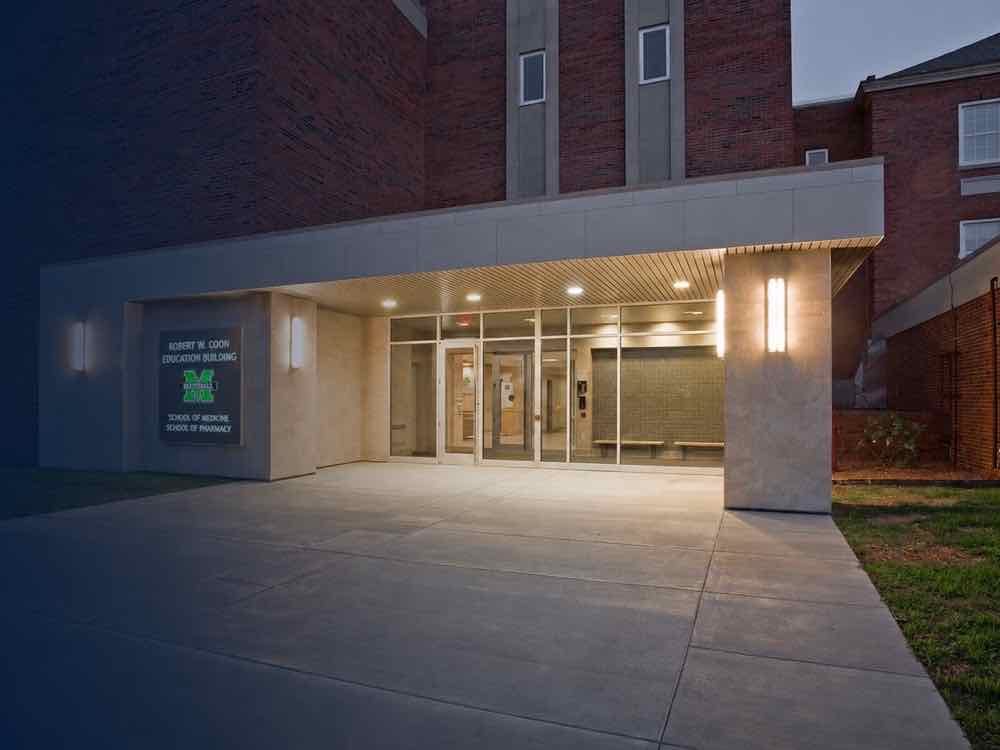
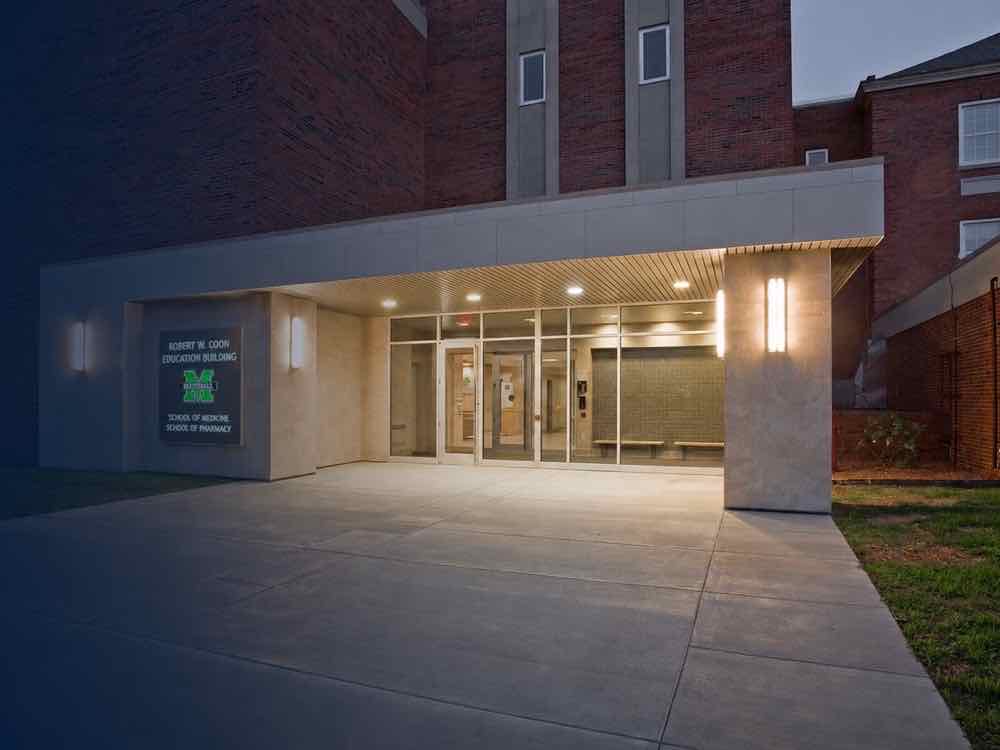
A closer look
Prepares students to care for culturally diverse and rural populations in primary and specialty care.
Mission & approach
The Marshall University Physician Assistant Program is dedicated to providing high-quality medical education to develop a competent physician assistant workforce to meet needs in primary and specialty care. Graduates of our program will contribute to the quality of life in their communities and regions through excellent health care. Building upon this foundation, we strive to fulfill the need for care in rural underserved areas and to engage our physician assistants in lifelong learning in an academic community that promotes diversity.
Check my fit with this school
Check three basics
Enter any GPA or patient care hours you know. We’ll compare them with this school’s published numbers. This is a starting point, not an eligibility decision.
The quick check needs JavaScript.
Admissions insights
What this program looks for in applicants
Objective scoring rubric using academic record (cumulative/science/prereq GPA), Casper assessment, 3 recommendations, entrance exam (GRE or MCAT, upper-50% preferred but not weighted heavily), personal statement, and interview. West Virginia residents receive additional rubric points (mission-driven). Marshall undergraduate graduates verified by Sept 1 receive a guaranteed interview if minimums…
Summarized from the program’s admissions information. Confirm current selection criteria with the program.
Program admissions information2026 PAEA Virtual Admissions Fair
The advice here was aimed squarely at nontraditional applicants: start with the program's published prerequisite-recency rule, and if healthcare work or other circumstances might warrant an individual look, contact the program with the specific courses and circumstances rather than quietly disqualifying yourself. The team also offered a pearl that applies to every program you research: accreditation standards require PA programs to publish their admission requirements on their own website, so the program's page is the authority, not an aggregator or a forum post. Didactic days were described honestly as roughly a full working day, mixing lecture with hands-on lab from the first semester.
Shared at the fair on Aug 22, 2026; paraphrased program-level notes. This is a past event, not an upcoming session. Confirm current guidance with the program.
About these fair notes
PAEA Virtual PA Admissions Fair (CareerEco), August 22 2026 - program-level, paraphrased; qualitative only
How this program interviews
Applicants are scored on academic record, Casper, recommendations, entrance exam, personal statement and interview using an objective rubric; those offered an interview are notified by email with a date, a supplemental application and technical standards.
Source checked Aug 1, 2026. Interview formats and dates can change between cycles.
Program interview informationAdmissions & prerequisites
Admission requirements
Prerequisite coursework
Semester credits (quarter credits converted by 0.667)Review each course, its lab, and the program’s policies. Your links are planning records; the program decides equivalency.
Courses shown as alternatives in the table are not all required. Confirm the accepted route with the program.
- A&P route: Human Anatomy + Human Physiology OR Combined Human Anatomy and Physiology I and II
- Organic Chemistry or Biochemistry: Organic Chemistry I with lab OR Biochemistry
- College Algebra substitution: College Algebra OR College Physics
| Course | Credits | Lab | Min grade |
|---|---|---|---|
General Chemistry with associated labCourse notes & alternativesMinimum 8 semester credits total. The number of courses is not specified. | 8Semester credits (quarter credits converted by 0.667) | Required | C |
StatisticsCourse notes & alternatives3 semester credits. No lab requirement specified. | 3Semester credits (quarter credits converted by 0.667) | Not specified | C |
| Human Anatomy 4 semester credits, lab required. Alternative route: two-semester combined Human Anatomy and Physiology sequence with associated labs totaling 8 credits. | 4Semester credits (quarter credits converted by 0.667) | Required | C |
| Human Physiology 3 semester credits; lab not specified for the separate course. The alternative combined A&P route requires two semesters with labs totaling 8 credits. | 3Semester credits (quarter credits converted by 0.667) | Not specified | C |
| Combined Human Anatomy and Physiology I and II2 course(s) Alternative to separate Human Anatomy and Human Physiology; two semesters with associated labs, total 8 semester credits. | 8Semester credits (quarter credits converted by 0.667) | Required | C |
| Organic Chemistry I with lab Alternative: Biochemistry for 3 semester credits. Organic Chemistry route is 4 credits. | 4Semester credits (quarter credits converted by 0.667) | Required | C |
| Biochemistry Alternative to Organic Chemistry I with lab; 3 semester credits. Lab not specified. | 3Semester credits (quarter credits converted by 0.667) | Not specified | C |
Microbiology with labCourse notes & alternatives3 semester credits. | 3Semester credits (quarter credits converted by 0.667) | Required | C |
Medical TerminologyCourse notes & alternativesOne semester; 1–3 credits. The exact number accepted depends on the course. | Not publishedSemester credits (quarter credits converted by 0.667) | Not specified | C |
PsychologyCourse notes & alternatives3 semester credits. No lab requirement specified. | 3Semester credits (quarter credits converted by 0.667) | Not specified | C |
| College Algebra 3 semester credits. College-level Pre-Calculus, Calculus, or Physics may replace it. Physics is not a math-only equivalent, so confirm the course is accepted. | 3Semester credits (quarter credits converted by 0.667) | Not specified | C |
| College Physics Alternative to College Algebra; 3 semester credits. Confirm course equivalency with program. | 3Semester credits (quarter credits converted by 0.667) | Not specified | C |
Policies that can change your plan
In-progress prerequisites are accepted for preliminary admission, but all must be complete before your start term. Letter grades are required; AP, IB and CLEP credit is not accepted. In-person and virtual labs are both accepted, and in-person labs are encouraged. For Anatomy and Physiology you have two options: Human Anatomy with lab (4 credits) plus Human Physiology (3 credits), or a two-semester combined Anatomy and Physiology sequence with labs totaling 8 credits. College Algebra may be replaced by physics, pre-calculus, or calculus.
Dates & application steps
Your application must be verified by the deadline.
Know what the total includes
Published cost estimate
Confirm current cohortConfirm rates for your entering cohort
$68,922 total tuition to completion (tuition only), for the January 2027 cohort now recruiting, using 2026-2027 published rates. This is a total, not a rate: the program multiplies per-semester full-time university tuition ($9,846 and $14,191) to reach the program total. Per-semester fees ($1,008 resident / $1,603 nonresident) are not included.
Curriculum & clinical training
Didactic phase
Medical sciences, assessment, clinical medicine, pharmacology, procedures, evidence-based practice and professional topics build toward supervised practice.
Clinical phase
The listed curriculum includes two primary-care experiences, psychiatry, internal medicine and a subspecialty, women’s health, pediatrics, general surgery, emergency medicine, orthopedics, an elective and senior seminar.
The Huntington program is 28 months with January entry and 122 curriculum credits. Clinical rotation lengths and a guaranteed placement distance are not published.
The admitted class
Class of 2028; entered January 2026
Published class statisticsAverage prerequisite GPA: 3.6. Figures describe the entering PA class at Marshall University.
Compare published cohorts
| Class | Published GPA | Published science-related GPA | Published experience hours |
|---|---|---|---|
| Class of 2028; entered January 2026 | 3.64Average Overall GPA | 3.52Average Science GPA | Not recordedPatient-care hours: not published. |
Published class statistics describe the named cohort or population. They are not admission minimums or acceptance probabilities.
The program’s track record
Graduate outcomes
PANCE pass rates
See first-time program performance with clearly dated national context.
- First-time PANCE pass rate: 90%
No 5-year average yet - only THREE graduating cohorts (2023-2025); 90% first-time across them (69/77)
- Five-year first-time PANCE pass rate: Not available yet
Five-year first-time results are not yet available.
Accreditation history
Accredited-ContinuedSources you can open
Links to the program’s own pages and the official directories we use.
- PA School Finder contact record
- Marshall University program page-qualified class profile
- Marshall University curriculum
- PA School Finder deadline record
- ARC-PA currently accredited programs — sponsoring-institution directory
- Marshall University program page
About the U.S. News rank
The U.S. News PA rank uses the 2025 PA edition, matched to the listed program and campus. It reflects peer-assessed reputation, not admissions odds or a personal fit score. Programs without a separate entry are labeled “Unranked.”
How competitive are you for this program?
Match AI compares your full profile with this program and every other one, then sorts your list into Reach, Target and Safety.