Address & Contact

Our Address

3420 Forbes Avenue, Murdoch Building, 2nd Floor Pittsburgh, PA

GPS

40.4389, -79.9602

Telephone
Email

-

← Find PA SchoolsProgram profile
PROGRAM PROFILE

University of Pittsburgh – Hybrid Program Physician Assistant Program

Pittsburgh, Pennsylvania · Master of Science

Application deadline TBD Summer 2027Exact date not yet published
Tuition Resident: $109,980 published cohort/track amountNonresident: $109,980 published cohort/track amount · Tuition-only estimate for all students; no residency differential. Entering-cohort rates not confirmed.
Class size 100 studentsMaximum published class size; current entering-cohort target should be confirmed with the program.
Program length 24 monthsFull program
GRE requirement Not requiredThe GRE is not required, and the program does not publish another standardized admissions-test requirement.
Patient-care minimum 500 direct hands-on hoursAt least 500 hours of direct, hands-on patient care must be complete by the admissions deadline. Observation and shadowing do not count.
Overall GPA minimum 3.00 · limited graduate-degree exceptionThe program expects a 3.00 overall GPA. Applicants below 3.00 may receive discretionary review only after completing an entire master's or doctoral degree.
Science GPA minimum 3.00 prerequisite-science GPAA 3.00 GPA is required across the designated prerequisite science courses. This is not published as a CASPA total science-GPA cutoff.
Recommendations 3 specified professional lettersThree letters are required: one patient-care supervisor, one character reference, and one prior instructor or formal trainer.
International applicants Restricted · no F-1-only enrollmentForeign degrees require course-by-course WES or ECE evaluation.
English proficiency / TOEFL Confirm with SHRSEnglish testing may apply, but SHRS does not assign PA Hybrid to a published score group. Do not infer either the residential PA threshold or a generic hybrid threshold; confirm the exam and score requirement with SHRS. The current requirement remains unconfirmed.
PANCE pass rate 76%First-time pass rate · Reporting year not recordedFive-year first-time: Not available yet
U.S. News PA rank Unranked2025 PA edition · Peer-assessed reputationNo published rank for this program in this edition.
THE PROGRAM

A closer look

The mission of the Physician Assistant Studies Hybrid Program is to develop highly qualified Physician Assistants who will serve as collaborative leaders in patient care, professional service and advocacy for all populations.

24-month programNot required500 direct hands-on hours
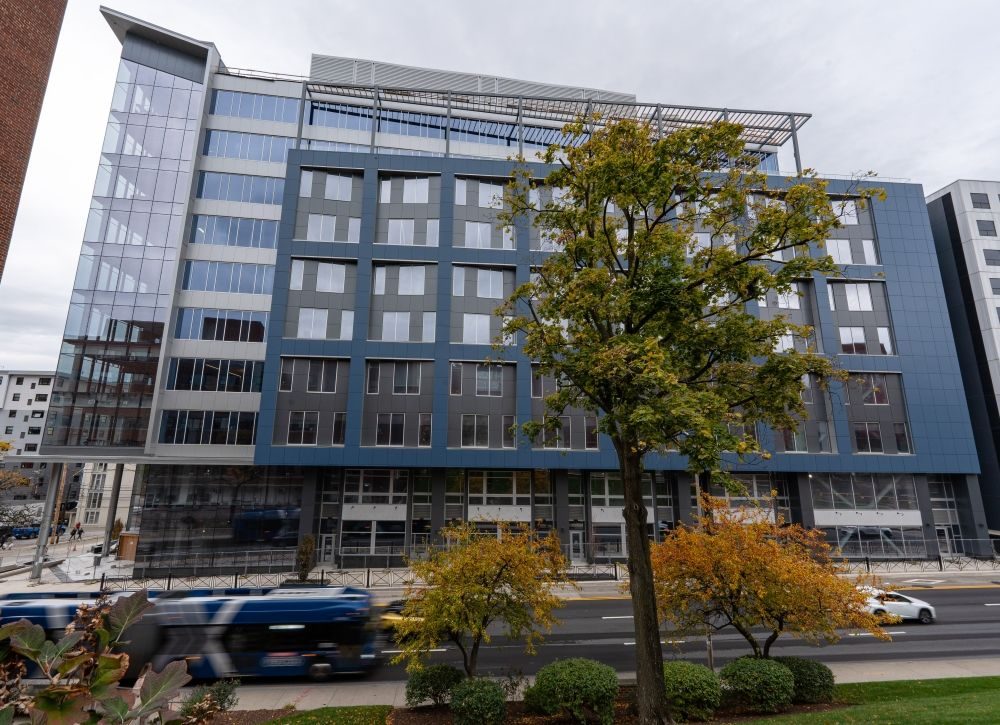
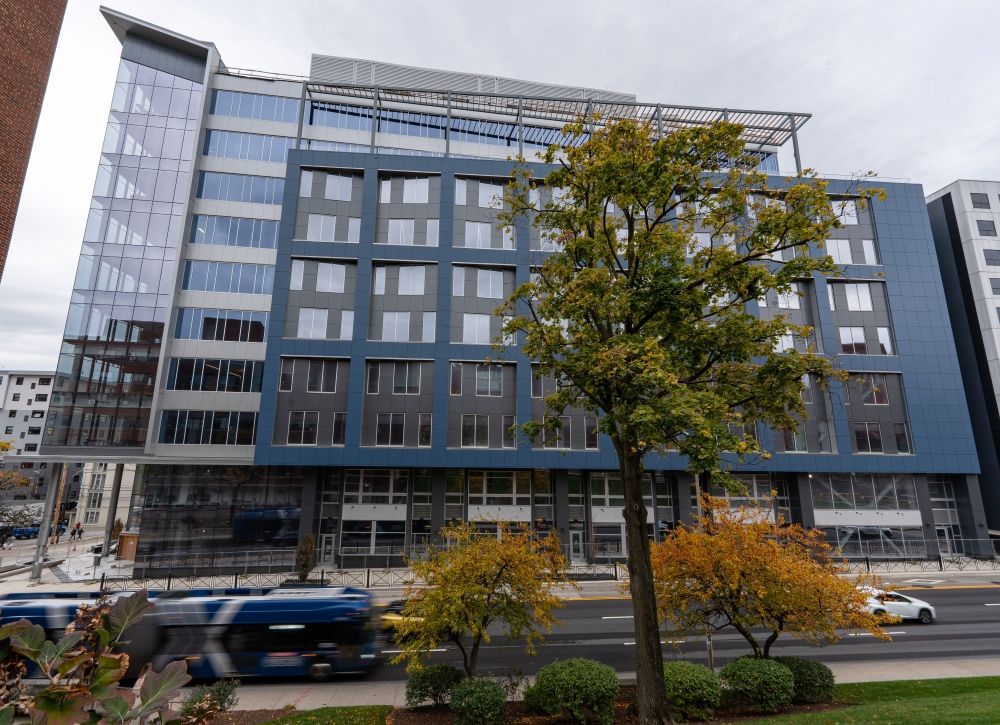
University of Pittsburgh Fifth and Halket building, home of Physician Assistant Studies and hybrid immersion labs
University of Pittsburgh’s Fifth and Halket building, home of Physician Assistant Studies and hybrid immersion and clinical-skills space. Photo courtesy of Pitt SHRS.
PREMIUM · MATCH AI

Is University of Pittsburgh – Hybrid Program a fit for you?

Unlock your personalized category, ranked school list, and reasons based on your profile. One Match AI purchase gives you the same results on PA School Finder and in your Toolkit.

SafetyTargetReachNot yet eligible
Unlock my school matches →
BEYOND THE NUMBERS

Admissions insights

What this program looks for in applicants

Holistic points-based screening: healthcare experience amount/level (more and higher-level PCE scored higher), degree (graduate degree scored above the required bachelor's), undergraduate and prerequisite-science GPAs, personal statement quality, and letters of reference. Highest-scoring applicants invited to individual + group interviews (scored on adaptability, conflict management, professional knowledge, empathetic listening, critical thinking, leadership, ethics). Final composite score determines admit/waitlist/deny; ranked waitlist. No in-state preference. Encourages applicants from Health Professions Shortage Areas and underrepresented communities.

Summarized from the program’s admissions information. Confirm current selection criteria with the program.

Program admissions information

How this program interviews

VirtualIndividual + Group

The hybrid program interviews online in September with decisions in October, using individual interviews plus a group exercise conducted by the program director, faculty and practising PAs. The published rubric covers adaptability and stress management, conflict management, professional knowledge and learning ability, and approach to professional challenges individually, then listening, critical thinking, leadership and collaboration, inclusivity and cultural humility, and ethics and professionalism in the group setting. A composite of the CASPA screening score and the interview evaluation decides acceptance, waitlist or denial.

Source checked Jul 26, 2026. Interview formats and dates can change between cycles.

Program interview information
YOUR STARTING POINT

Admissions & prerequisites

Admission requirements

GRENot requiredThe GRE is not required, and the program does not publish another standardized admissions-test requirement.
Patient care500 direct hands-on hoursAt least 500 hours of direct, hands-on patient care must be complete by the admissions deadline. Observation and shadowing do not count.
Overall GPA3.00 · limited graduate-degree exceptionThe program expects a 3.00 overall GPA. Applicants below 3.00 may receive discretionary review only after completing an entire master's or doctoral degree.
Science GPA3.00 prerequisite-science GPAA 3.00 GPA is required across the designated prerequisite science courses. This is not published as a CASPA total science-GPA cutoff.
Recommendations3 specified professional lettersThree letters are required: one patient-care supervisor, one character reference, and one prior instructor or formal trainer.
International applicantsRestricted · no F-1-only enrollmentApplicants must be U.S. citizens, permanent residents, or dual citizens. F-1-only applicants cannot enroll because the didactic year exceeds the online-course allowance. Foreign degrees require course-by-course WES or ECE evaluation.
English proficiencyConfirm with SHRSEnglish testing may apply, but SHRS does not assign PA Hybrid to a published score group. Do not infer either the residential PA threshold or a generic hybrid threshold; confirm the exam and score requirement with SHRS.

Prerequisite coursework

Semester courses; semester-credit minimum published only for Medical Terminology

Review each course, its lab, and the program’s policies. Your links are planning records; the program decides equivalency.

Choose one complete option in each group

Courses shown as alternatives in the table are not all required. Confirm the accepted route with the program.

  • Anatomy and physiology route: Anatomy with lab + Physiology OR Anatomy and Physiology combined, term 1 + Anatomy and Physiology combined, term 2
CourseCreditsLabMin gradeYour coursework
Science-major Biology with lab2 course(s)
Course notes & alternatives

Two semesters of science-major biology with lab. Current Pitt catalog requires the same semester sequence for PAS-Hybrid.

Not publishedSemester courses; semester-credit minimum published only for Medical TerminologyRequiredCSign in to plan
Science-major Chemistry with lab2 course(s)
Course notes & alternatives

Two semesters of science-major chemistry with lab. Current Pitt catalog requires the same semester sequence for PAS-Hybrid.

Not publishedSemester courses; semester-credit minimum published only for Medical TerminologyRequiredCSign in to plan
Microbiology with lab
Course notes & alternatives

One semester; lab required.

Not publishedSemester courses; semester-credit minimum published only for Medical TerminologyRequiredCSign in to plan
Anatomy with lab

One-semester Anatomy with lab is one route paired with one semester Physiology; the anatomy component must be human-focused.

Not publishedSemester courses; semester-credit minimum published only for Medical TerminologyRequiredCSign in to plan
Physiology

One semester paired with Anatomy with lab in one route; physiology must cover human homeostasis, growth, nutrition, reproduction, and immune function. A separate lab is not stated as required in this route.

Not publishedSemester courses; semester-credit minimum published only for Medical TerminologyNot specifiedCSign in to plan
Anatomy and Physiology combined, term 1

Alternative route: two semesters of combined Anatomy & Physiology, with lab in each semester, per current Pitt prerequisite rubric.

Not publishedSemester courses; semester-credit minimum published only for Medical TerminologyRequiredCSign in to plan
Anatomy and Physiology combined, term 2

Alternative route: two semesters of combined Anatomy & Physiology, with lab in each semester, per current Pitt prerequisite rubric.

Not publishedSemester courses; semester-credit minimum published only for Medical TerminologyRequiredCSign in to plan
Statistics
Course notes & alternatives

One semester; accepted examples include General Statistics, Biostatistics, Research Methods, Quantitative Methods, and Applied Statistics. Course content should include probability, distributions, confidence intervals, group comparisons, regression, ANOVA, and chi-square.

Not publishedSemester courses; semester-credit minimum published only for Medical TerminologyNot specifiedCSign in to plan
Medical Terminology
Course notes & alternatives

One semester; at least 1 college credit. Transcripted academic credit is required; certificate courses do not qualify.

1Semester courses; semester-credit minimum published only for Medical TerminologyNot specifiedCSign in to plan
English Composition/Writing2 course(s)
Course notes & alternatives

Two semesters. Writing-intensive courses in any subject may count if graded writing assignments are a significant course component and the course is transcripted for academic credit; certificate courses are not accepted.

Not publishedSemester courses; semester-credit minimum published only for Medical TerminologyNot specifiedCSign in to plan
Psychology
Course notes & alternatives

One semester; acceptable examples include Introductory, General, Developmental, or Abnormal Psychology.

Not publishedSemester courses; semester-credit minimum published only for Medical TerminologyNot specifiedCSign in to plan

Policies that can change your plan

Minimum grade
C
Course age
No expiration
AP / CLEP (combined catalog field)
Limited
Course age
No prerequisite expiration date.
A&P routes
Anatomy with lab + Physiology OR two combined A&P semesters with lab in each semester.
Course credit ambiguity
Official program materials specify course-semester counts, not per-course credits except Medical Terminology (minimum 1 credit). PAEA lists numerical credits that differ in at least one subject; ask program to resolve before using exact credits.
Cycle
PAEA lists Aug 1, 2026 deadline/Jan 2027 start, now past; current official website says applications open Spring 2027 and close TBD Summer 2027.

C or higher; 3.0 minimum overall and prerequisite-science GPA. No prerequisite expiration. AP/dual-enrollment courses may count when credit appears on a college transcript. Required courses and labs must be from an accredited institution; current rubric says online courses may qualify if institutional accreditation and content are adequate. Current catalog credits from PAEA differ from the University’s current semester-based catalog/course list (notably Microbiology); do not map PAEA credit estimates into specific requirement rows without applicant-specific evaluation.

University of Pittsburgh 2026–2027 graduate catalog, PAS-Hybrid requirements 2026–2027 catalog; next application cycle begins Spring 2027 · Checked 2026-09-24
BUILD YOUR TIMELINE

Dates & application steps

Application deadlineTBD Summer 2027

Exact date not yet published

Program startsFollowing January; exact entering date not yet published

Exact entering date not yet published.

Ready to start an application plan?

Keep your essays, checklist, and personal targets together.

Plan application →
THE FINANCIAL PICTURE

Know what the total includes

Published cost estimate

2026–2027 official estimated cost sheet; entering cohort not named
Resident tuition$109,980 published cohort/track amount
Nonresident tuition$109,980 published cohort/track amount

Tuition-only estimate for all students; no residency differential. Entering-cohort rates not confirmed.

Required program fees$13,050
Tuition + required feesExcludes living and other expenses
$123,030

Official2026–2027 Pittsburgh Hybrid cost sheet updated August12,2026: $109,980 tuition plus $13,050 mandatory fees equals $123,030. Flat-rate tuition applies to all students with no resident/nonresident differential. Entering cohort is not named; these are estimates, not a confirmed2028 entering-cohort price. Immersion travel, living and incidental costs are separate.

Plan for the application, too.

Keep application fees separate from the cost of attending.

Pittsburgh Hybrid official2026–2027 tuition and mandatory fee estimate 2026–2027 official estimated cost sheet; entering cohort not named · Checked 2026-10-03
HOW YOU’LL LEARN

Curriculum & clinical training

0112 months

Online didactic education and immersion

Asynchronous and synchronous online coursework includes required laboratory immersion experiences in Pittsburgh.

0212 months

Clinical education

Eight supervised experiences cover seven core specialties and an elective; transition-to-practice training includes a final immersion.

Two-year, six-term hybrid route. The program evaluates and provides clinical sites and preceptors; relocation may be necessary when local sites are unavailable.

University of Pittsburgh – Hybrid Program official curriculum/program source Current posted curriculum; cohort-specific year not stated unless qualified · Checked 2026-09-26
WHO STUDIES HERE

The admitted class

Recorded average GPA3.61
Recorded science GPA3.60

Cohort year and experience averages need verification.

Published class statistics describe the named cohort or population. They are not admission minimums or acceptance probabilities.

OUTCOMES & OVERSIGHT

The program’s track record

Graduate outcomes

PANCE pass rates

See first-time program performance with clearly dated national context.

  • First-time PANCE pass rate: 76%

No 5-year average yet - only TWO graduating cohorts (2024-2025); 66% first-time across them (123/185)

Program reporting year not recorded; direct comparison unavailable.

  • Five-year first-time PANCE pass rate: Not available yet

Five-year first-time results are not yet available.

Accreditation history

Provisional
First accreditedSeptember 24, 2022
Next reviewJanuary 2027

A complete dated action history has not been added to this record.

ARC-PA currently accredited programs — sponsoring-institution directory Directory as retrieved 2026-09-26; scheduled review dates are provisional timing and may change · Checked 2026-09-26
CHECK THE EVIDENCE

Sources you can open

Follow the source for the policy or cohort you are reviewing. A check date is separate from the year a figure describes.

Rankings & information still to verify

The U.S. News PA rank uses the 2025 PA edition, matched to the listed program and campus. It reflects peer-assessed reputation, not admissions odds or a personal fit score. Programs without a separate entry are labeled “Unranked.”

Unpublished policies and unverified cohort statistics are left open for confirmation.

PA School Finder × PA Life Applicant ToolkitOne program record. One application plan.