
Tuition + fees $150,701
2026–27 graduate-entry seven-term estimate
Check my fit with this school
Check three basics
Enter any GPA or patient care hours you know. We’ll compare them with this school’s published numbers. This is a starting point, not an eligibility decision.
The quick check needs JavaScript.
A closer look
A 27-month Massachusetts PA program with a 40-student total cohort and five graduate-entry seats for the January 2028 cohort.
Mission & approach
The MS in PA Studies program prepares students for healthcare careers through a rigorous, comprehensive curriculum emphasizing compassionate patient care, medical knowledge, and professional skills, rooted in the College's Humanics philosophy (educating spirit, mind, and body).
Admissions insights
What this program looks for in applicants
Selection looks at your overall GPA (minimum 3.0) and prerequisite science and math GPA (minimum 3.0); at least 500 healthcare experience hours, including at least 30 hours shadowing a PA; three evaluations, preferably from a faculty member, supervisor, or coach; and a 500–600 word personal statement.
Summarized from the program’s admissions information. Confirm current selection criteria with the program.
Program admissions informationHow this program interviews
An interview is required for selected finalists. The interview format, and whether it is held virtually or on campus, is not described.
Source checked Aug 1, 2026. Interview formats and dates can change between cycles.
Program interview informationAdmissions & prerequisites
Admission requirements
Prerequisite coursework
Semester creditsReview each course, its lab, and the program’s policies. Your links are planning records; the program decides equivalency.
Courses shown as alternatives in the table are not all required. Confirm the accepted route with the program.
- Biology II alternative: Biology II with lab OR Advanced biology course with lab
- Mathematics alternative: Pre-Calculus OR Higher-level mathematics course
| Course | Credits | Lab | Min grade |
|---|---|---|---|
General Chemistry I with lab1 course(s)Course notes & alternativesPart of an 8-credit two-course sequence. The program says all prerequisites must be completed within 10 years, though the course table lists no course-specific expiration; confirm with the program. | 4Semester credits | Required | C+ |
General Chemistry II with lab1 course(s)Course notes & alternativesPart of an 8-credit two-course sequence. The program says all prerequisites must be completed within 10 years, though the course table lists no course-specific expiration; confirm with the program. | 4Semester credits | Required | C+ |
Biology I with lab1 course(s)Course notes & alternativesPart of an 8-credit two-course sequence. The program says all prerequisites must be completed within 10 years, though the course table lists no course-specific expiration; confirm with the program. | 4Semester credits | Required | C+ |
| Biology II with lab1 course(s) Advanced 200-level or higher biology may substitute. The program says all prerequisites must be within 10 years, though the course table lists no course-specific expiration; confirm with the program. | 4Semester credits | Required | C+ |
| Advanced biology course with lab1 course(s) A 200-level or higher course may substitute for Biology II. Confirm lab equivalence and credits with the program. The program says all prerequisites must be within 10 years; confirm with the program. | 4Semester credits | Required | C+ |
| Pre-Calculus1 course(s) A higher-level math alternative is allowed. The program says all prerequisites must be within 10 years, though the course table lists no course-specific expiration; confirm with the program. | 3Semester credits | Not specified | C+ |
| Higher-level mathematics course1 course(s) Alternative to Pre-Calculus; the program must review exact equivalence. The program says all prerequisites must be within 10 years; confirm with the program. | 3Semester credits | Not specified | C+ |
Human Anatomy and Physiology I and II with labs2 course(s)Course notes & alternativesTwo-course sequence; within 10 years. | 8Semester credits | Required | C+ |
Microbiology1 course(s)Course notes & alternativesLab not specified; within 10 years. | 3Semester credits | Not specified | C+ |
Organic Chemistry I with lab1 course(s)Course notes & alternativesWithin 10 years. | 4Semester credits | Required | C+ |
Biochemistry1 course(s)Course notes & alternativesLab not specified; within 10 years. | 3Semester credits | Not specified | C+ |
Statistics1 course(s)Course notes & alternativesWithin 10 years. | 3Semester credits | Not specified | C+ |
Policies that can change your plan
Anatomy and physiology, microbiology, organic chemistry, biochemistry, and statistics have a 10-year limit in the prerequisite table, and the program says all prerequisites must be within 10 years. If your chemistry, biology, or math courses are older, check with the program. Whether AP or CLEP credit is accepted for PA prerequisites is not confirmed.
Dates & application steps
CASPA closes April 1, 2027 for the graduate-entry cohort beginning January 2028.
This is the expected start of the entering class.
Know what the total includes
Published cost estimate
2026–27 graduate-entry seven-term estimate$1,212 credit × 112 required credits · 2026–27 rate and 112-credit course load; $14,957 in billed fees and $2,954 in estimated indirect costs are separate.
Estimated direct charges are $150,701: $135,744 in tuition plus $14,957 in billed fees. The college also estimates $2,954 for average loan fees and variable supplies. A further $41,724 for living, travel, and personal costs is not included. Prices for future cohorts may change.
Curriculum & clinical training
Didactic instruction
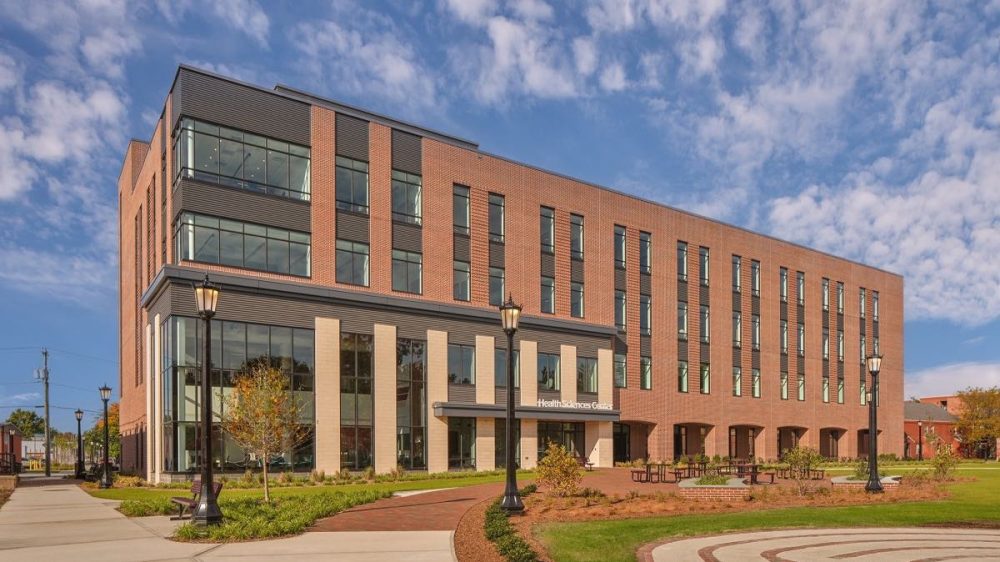
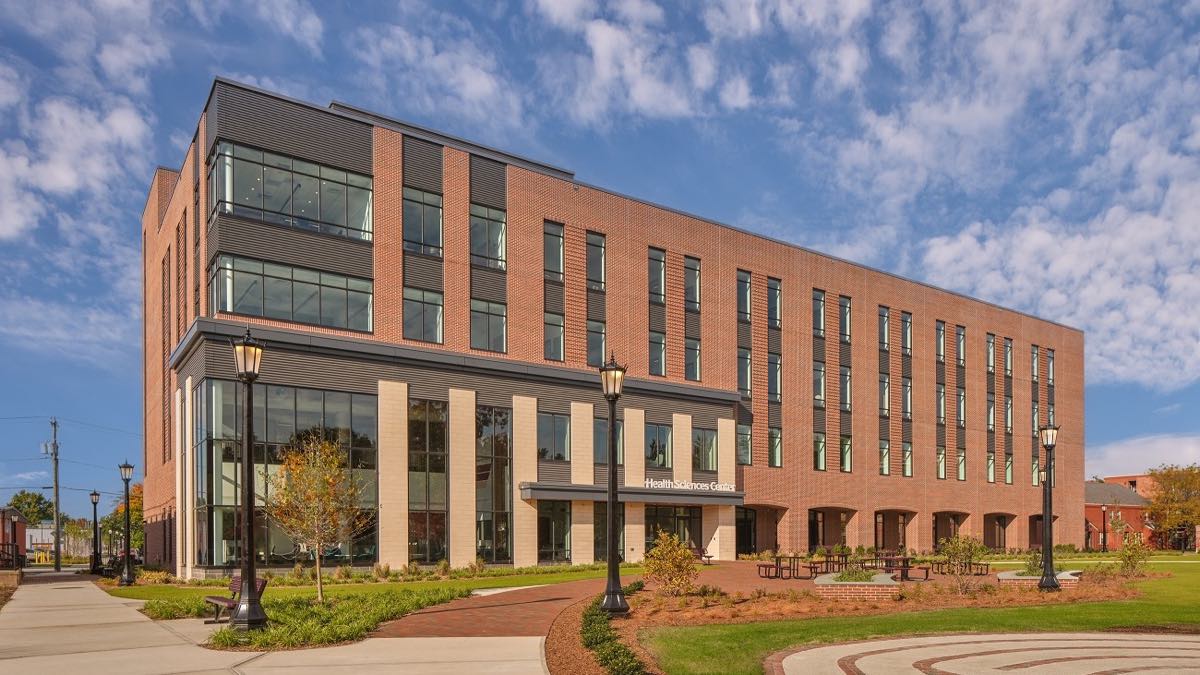
Medical-science coursework and hands-on skills development in the Brown Cooper Health Sciences Center.
Clinical training
Eleven four-week rotations develop clinical practice across patient-care settings.
The professional graduate sequence is full time, starts in January and lasts 27 months over seven semesters. Undergraduate Pre-PA and graduate-entry admissions routes feed the professional phase.
The admitted class
Published class statistics describe the named cohort or population. They are not admission minimums or acceptance probabilities.
The program’s track record
Graduate outcomes
PANCE pass rates
See first-time program performance with clearly dated national context.
- First-time PANCE pass rate: 100%
- Five-year first-time PANCE pass rate: 97%
Accreditation history
ContinuedSources you can open
Links to the program’s own pages and the official directories we use.
- Program program page
- Program program page
- Program program page
- Current graduate PA admissions requirements
- 2026–27 graduate-entry tuition/fees and indirect estimates
- ARC-PA currently accredited programs — sponsoring-institution directory
About the U.S. News rank
The U.S. News PA rank uses the 2025 PA edition, matched to the listed program and campus. It reflects peer-assessed reputation, not admissions odds or a personal fit score. Programs without a separate entry are labeled “Unranked.”
How competitive are you for this program?
Match AI compares your full profile with this program and every other one, then sorts your list into Reach, Target and Safety.