
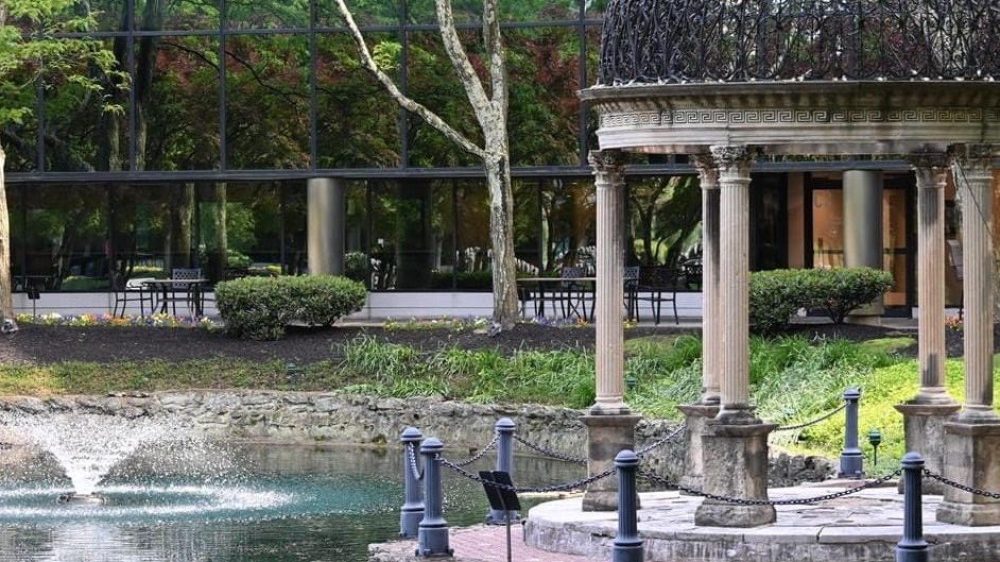
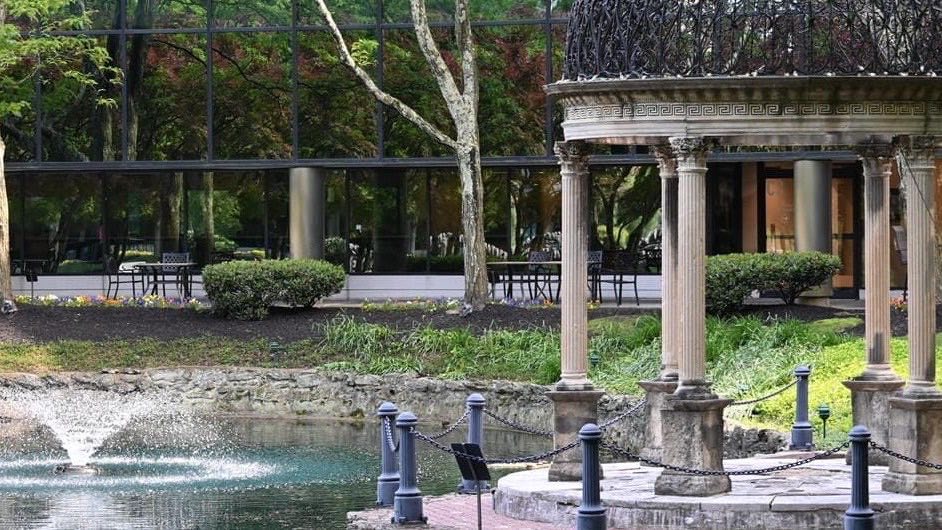
Salus at Drexel University Physician Assistant Program
Elkins Park, Pennsylvania · Master of Medical Science
Tuition + fees $122,192
2026–27 rates for the 117-credit, nine-quarter program (Drexel's totals assume no annual increase); full program
A closer look
A full-time, 25-month Master of Medical Science program at Drexel’s Elkins Park campus. The curriculum totals 109 semester credits, with 12 didactic months and 13 clinical months. This is the Salus program in the College of Medicine, distinct from Drexel’s other PA program.
Mission & approach
Prepare collaborative clinicians to serve communities worldwide with sound clinical judgment, compassion and integrity.
Check my fit with this school
Check three basics
Enter any GPA or patient care hours you know. We’ll compare them with this school’s published numbers. This is a starting point, not an eligibility decision.
The quick check needs JavaScript.
Admissions insights
What this program looks for in applicants
Selection weighs academic preparation, motivation, activities, work history, achievements, essays, recommendations and communication. Priority includes eligible affiliated applicants, three or more science courses per semester, Biology/Chemistry/Physics GPA 3.5 or higher, more direct patient care, prior healthcare professionals and PA shadowing across disciplines. These priorities do not…
Summarized from the program’s admissions information. Confirm current selection criteria with the program.
Program admissions informationHow this program interviews
An invitation may include discussion with admissions, a campus tour and meetings with faculty and students. The program allows online interviews on request, while another listing says traditional on-site interviews. Follow your invitation and confirm availability.
Source checked Sep 13, 2026. Interview formats and dates can change between cycles.
Program interview informationAdmissions & prerequisites
Admission requirements
Prerequisite coursework
Semester credits. You may take paired A&P or separate Anatomy and Physiology, and either Statistics or Biostatistics.Review each course, its lab, and the program’s policies. Your links are planning records; the program decides equivalency.
| Course | Credits | Lab | Min grade |
|---|---|---|---|
Anatomy and Physiology I OR AnatomyCourse notes & alternativesPaired with A&P II or Physiology. Laboratory required; three-credit courses may be reviewed individually. The combined sequence is not an extra requirement beyond the separate route. | 4Semester credits | Required | C |
Anatomy and Physiology II OR PhysiologyCourse notes & alternativesPaired with A&P I or Anatomy. Laboratory required; three-credit courses may be reviewed individually. | 4Semester credits | Required | C |
Biology ICourse notes & alternativesLaboratory required; three-credit courses may be reviewed individually. | 4Semester credits | Required | C |
Biology IICourse notes & alternativesLaboratory required; three-credit courses may be reviewed individually. | 4Semester credits | Required | C |
Chemistry ICourse notes & alternativesLaboratory required; three-credit courses may be reviewed individually. | 4Semester credits | Required | C |
Chemistry IICourse notes & alternativesLaboratory required; three-credit courses may be reviewed individually. | 4Semester credits | Required | C |
MicrobiologyCourse notes & alternativesLaboratory recommended, not required. | 3Semester credits | Preferred | C |
Organic ChemistryCourse notes & alternativesLaboratory recommended, not required. Biochemistry is recommended separately, not listed as an Organic Chemistry substitute. | 3Semester credits | Preferred | C |
PsychologyCourse notes & alternativesThe program does not specify a particular psychology subfield for this required course. | 3Semester credits | Not specified | C |
Statistics OR BiostatisticsCourse notes & alternativesEither named course satisfies the listed subject requirement. | 3Semester credits | Not specified | C |
English CompositionCourse notes & alternativesThree semester credits in composition. | 3Semester credits | Not specified | C |
Policies that can change your plan
- Coursework policies
- Pass grades from spring/summer 2020 can satisfy prerequisites; other Pass grades need case-by-case review. A Fail or Incomplete does not satisfy a prerequisite. Pass/no-pass courses do not count toward the GPA. No blanket AP/CLEP or online-course policy is stated, so confirm your specific credits.
- Recommended preparation
- Medical Terminology is strongly recommended. Genetics, immunology, embryology, histology, biochemistry, physics, cell biology, public speaking, ethics and developmental or abnormal psychology are recommended, not additional required courses.
- Patient-care examples
- Examples include CNA, medical assistant, EMT/paramedic, nurse/midwife, ER scribe, phlebotomy, radiologic or ultrasound technology, respiratory therapy, athletic training, patient transport, hands-on clinical research and patient-contact hospital volunteering. Home-health duties need verification. Clerical work, pharmacy-assistant work, veterinary work and dental-assistant work generally do not count as direct care. The list is not exhaustive; admissions reviews the actual role.
- International applicants
- International applicants are considered. Foreign and French-Canadian transcripts need a course-by-course evaluation from a NACES-member agency (National Association of Credential Evaluation Services) documenting postsecondary work. Recommended agencies are WES (World Education Services), The Evaluation Company and IEE. Submit the evaluation through CASPA. DACA applicants are also considered. English requirements and exemptions are conditional.
- Deposit
- $1,000 nonrefundable matriculation fee: $500 within 14 days of the acceptance letter and $500 by April 15. Offers after April 15 give their own payment instructions. Payments are applied toward first-term fees, so the deposit is not an extra cost on top of tuition.
- Deferral
- A written request, required deposits and a matriculation supplement are needed. The admissions page says the deferral request is due by May 1; the selection-process page says May 15. Plan for May 1 and confirm with the program. Deferral is limited to one admission cycle, with written intent to resume due by April 1 of the deferred year.
- Transfer and advanced standing
- No advanced placement for prior external academic work or experience. All program courses are required. A returning student who withdrew or was dismissed may receive placement under an individual readmission/remediation plan.
- Clinical sites and travel
- The program coordinates clinical sites and preceptors. Students may suggest sites for program evaluation but may not solicit their own placements. Reliable transportation is needed; up to 60 miles each way is considered commutable. For a required core placement beyond 60 miles, the program offers housing with reasonable utilities. Students pay travel, meals, parking, excess utilities and housing for self-requested locations or alternatives to offered housing.
- Employment and format
- Full-time study; employment is strongly discouraged but not absolutely prohibited. Students cannot replace program faculty or clinical/clerical staff. There is no part-time, distance, or on-campus housing option.
- Health, screening and technical standards
- Health insurance, medical and immunization documentation, background/child-abuse clearances, fingerprinting and drug screening are required. Students pay compliance costs; adverse findings can prevent clinical placement or completion. Reasonable accommodations are considered through the university and program. A suitable maintained laptop is also required.
- Graduation
- Program policy requires passing all pass/fail assessments, C or better in graded courses and a cumulative program GPA of at least 3.0, plus all required didactic and clinical work. These are program progression rules, separate from admission GPA.
- Academic partnerships
- Western New England has a 3+2 pathway with up to four reserved seats. It requires 100 undergraduate semester hours and a 3.7 GPA, with the bachelor's awarded after the first Salus year. The 4+2 partners offer guaranteed interviews, not guaranteed admission: Caldwell, Cedar Crest, Chestnut Hill, Immaculata, Indiana University of Pennsylvania, Keystone and Messiah list a 3.5 GPA, and Rosemont lists 3.7. Additional agreement, admissions and successful-interview conditions apply. August 1 is required for WNE, Keystone and Rosemont and strongly recommended for the other partners. Confirm the details of your individual agreement.
- Post-baccalaureate route
- Successful completion of the university’s Health Sciences certificate—25 credits, GPA 3.0 or higher and no more than two C grades—plus a complete CASPA application and all PA minimums provides an interview opportunity in the general applicant pool, not guaranteed admission.
- Attrition and graduation
- For the classes of 2023, 2024 and 2025: entering 50/50/51, graduating 49/46/49, attrition 2.0%/8.0%/3.9%, and graduation 98.0%/92.0%/96.1%. The approved maximum entering class is 50 each year. Other pages cite 3.3% overall and 3.0%, without matching class counts, so use each class's figures rather than a headline number. The school counts dismissal, withdrawal or deceleration as attrition.
- PANCE by graduating class
- Graduating classes 2021–2025: first-time candidates passed 49/49, 47/47, 49/49, 46/46 and 49/49 (240/240 combined, 100%). First-time and ultimate pass rates were 100% each year. National first-time rates for those years were 93%, 92%, 92%, 92% and 91%. These results come from the NCCPA report of January 30, 2026, which does not include a 2026 graduating class.
- Financial aid
- The school provides financial-aid and external-scholarship information. Award eligibility, amounts and availability need to be confirmed with the university or sponsor; no scholarship is assumed in the cost estimates.
- Class of 2027 profile
- The profile (updated August 21, 2025) reports 50 full-time students, all with bachelor's degrees, ages 19–25 with a mean of 22 years 1 month. This describes a past entering class, not admission age requirements.
Complete all prerequisites within ten years of anticipated entry and before enrollment. Having no more than two outstanding at interview is recommended, not a hard maximum. Each requires a C (2.0) or better. The six anatomy/physiology, biology and chemistry courses normally require four semester credits each with labs, though three-credit courses may receive individual review. Both paired A&P I/II and separate Anatomy/Physiology routes are accepted. Microbiology and Organic Chemistry labs are recommended, not required. There is no separate prerequisite GPA minimum.
When courses must be complete: Complete the bachelor’s and all prerequisites before enrollment. Prerequisites must be within ten years of entry; at most two pending at interview is a recommendation. Accrue and report the 300 direct-care hours by application. The 20 PA-shadowing hours are a separate requirement.
Dates & application steps
Applications must be received by December 1, 2026 for August 2027 entry and are reviewed once verified. One listing gives the required CASPA status as Blue/Submit-only, so confirm the required status and allow time for processing. Selection is rolling until the class is full.
The exact start day is not published.
The program gives July as the general start of interviews and uses rolling selection. The exact interview day for the current cycle is not given.
Know what the total includes
Published cost estimate
2026–27 rates for the 117-credit, nine-quarter program (Drexel's totals assume no annual increase); full programTuition only, from the school’s published rates for this cohort. Rates can change.
2026–27 rates for the 117-credit, nine-quarter program (Drexel's totals assume no annual increase): full-program tuition is $114,192 ($976 per quarter credit x 117 credits ($59,536 + $44,896 + $9,760)). Rates can change for later cohorts, so confirm with the program. Required fees for the same cohort total $8,000: program fee $570 x 9 quarters ($5,130) + general fee $280 x 9 quarters ($2,520) + first-year program fee $300 + immunization fee $50. Tuition plus required fees = $122,192. Not included: Drexel student health insurance (waivable with other coverage), clinical-site compliance fees, housing and transportation.
See additional expenses & assumptions
Required fees for the same cohort total $8,000: program fee $570 x 9 quarters ($5,130) + general fee $280 x 9 quarters ($2,520) + first-year program fee $300 + immunization fee $50. Tuition plus required fees = $122,192. Not included: Drexel student health insurance (waivable with other coverage), clinical-site compliance fees, housing and transportation.
Curriculum & clinical training
Didactic —61 credits
Basic science, physiology/pathophysiology, clinical medicine, pharmacology, examination, advanced skills, evidence-based problem solving and early patient contact.
Clinical —48 credits
Supervised rotations plus capstone work and transition to practice. The current catalog totals 45 rotation credits and 3 credits of capstone/transition work.
The 109-credit catalog names Emergency Medicine, General Surgery, Internal Medicine, Prenatal Care/Women's Health, Pediatrics, Behavioral/Mental Health, Family Medicine/Primary Care 1 and 2, and two electives. Rotation order varies by student. The sample plan spans seven terms, including a final fall segment, which does not mean seven equal tuition-bearing semesters. Early experience includes faculty-supervised history, examination and documentation at a community hospital, followed by observational clinical exposure during spring and summer.
The admitted class
Class of 2027
Published class statisticsCompare published cohorts
| Class | Published GPA | Published science-related GPA | Published experience hours |
|---|---|---|---|
| 2022 | 3.69 | 3.63 | Not recorded |
| 2023 | 3.68 | 3.62 | Not recorded |
| 2024 | 3.69 | 3.61 | Not recorded |
| 2025 | 3.70 | 3.66 | Not recorded |
| 2026 | 3.80 | 3.77 | Not recorded |
| 2027 | 3.81 | 3.77 | Not recorded |
Class of 2027 averages: overall GPA 3.81, science GPA 3.77, prerequisite GPA 3.82 and BCP (biology, chemistry, physics) GPA 3.76, with 74 science credits and an applicant-to-enrollee ratio of 18:1. A separate August 21, 2025 profile lists 1,638 applicants, 50 full-time students and a single average GPA of 3.82 without saying which type of GPA it is; those counts do not match the 18:1 ratio. No acceptance rate is listed. Another listing gives an average science GPA of 3.85 for an unstated class, which does not replace the Class of 2027 figures.
Published class statistics describe the named cohort or population. They are not admission minimums or acceptance probabilities.
The program’s track record
Graduate outcomes
PANCE pass rates
See first-time program performance with clearly dated national context.
- First-time PANCE pass rate: 100%
NCCPA report printed January 30, 2026: first-time candidates passed 49/49 in 2021,47/47 in 2022,49/49 in 2023,46/46 in 2024 and 49/49 in 2025. Each published first-time and ultimate rate is 100%. National first-time rates are 93%,92%,92%,92%,91%, respectively. The calculated pooled 2021–2025 result is 240/240=100%; the filename 2026 is not a 2026 graduating-class result.
- Five-year first-time PANCE pass rate: 100%
Graduation & attrition
2025 graduating cohort
For the classes of 2023, 2024 and 2025: entering 50/50/51, graduating 49/46/49, attrition 2.0%/8.0%/3.9%, and graduation 98.0%/92.0%/96.1%. The approved maximum entering class is 50 each year. Other pages cite 3.3% overall and 3.0%, without matching class counts, so use each class's figures rather than a headline number. The school counts dismissal, withdrawal or deceleration as attrition.
Accreditation history
Continued- March 2007Initial accreditation
ARC-PA first accredited the Salus program in March 2007.
- March 2024Accreditation-Continued
The history records Continued status and a maximum entering class size of 50, with the next review in 2034.
- March 2025Sponsor-change review
ARC-PA reviewed the change-of-sponsor application and requested further information about the program name and Elkins Park cohort. Current program materials identify Drexel as sponsor.
Accreditation-Continued under Drexel University sponsorship. ARC-PA lists the next review as March 2034. ARC-PA also reviewed the change of sponsor from Salus University to Drexel University in March 2025 and asked for more information.
Sources you can open
Links to the program’s own pages and the official directories we use.
- Salus at Drexel — catalog
- Salus at Drexel — website
- Salus at Drexel — paea
- ARC-PA currently accredited programs — sponsoring-institution directory
- Salus at Drexel — accreditation
- Salus at Drexel — attritionImage
- Salus at Drexel — experience
- Salus at Drexel — pance
- Salus at Drexel — classProfile
- Salus at Drexel — programAccreditation
- Salus at Drexel — affiliates
- Salus at Drexel — selection
- Salus at Drexel — costs
- Salus at Drexel — admissions
- Salus at Drexel — attrition
- Salus at Drexel — curriculum
- Salus at Drexel — clinical
- Salus at Drexel — overview
- Salus at Drexel — policies
- Salus at Drexel — mission
- Salus at Drexel — scholarships
About the U.S. News rank
The U.S. News PA rank uses the 2025 PA edition, matched to the listed program and campus. It reflects peer-assessed reputation, not admissions odds or a personal fit score. Programs without a separate entry are labeled “Unranked.”
How competitive are you for this program?
Match AI compares your full profile with this program and every other one, then sorts your list into Reach, Target and Safety.