Miami University Physician Assistant Program
Oxford, Ohio · Master of Medical Science in Physician Associate Studies
Tuition + fees $119,000
Current 27-month estimate; entering class not stated
A closer look
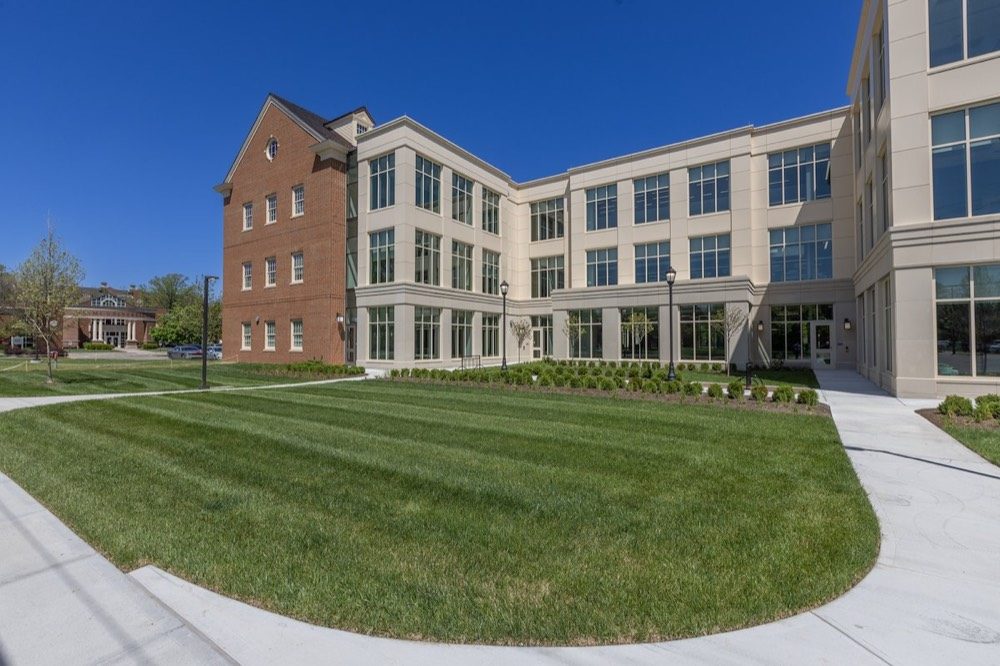
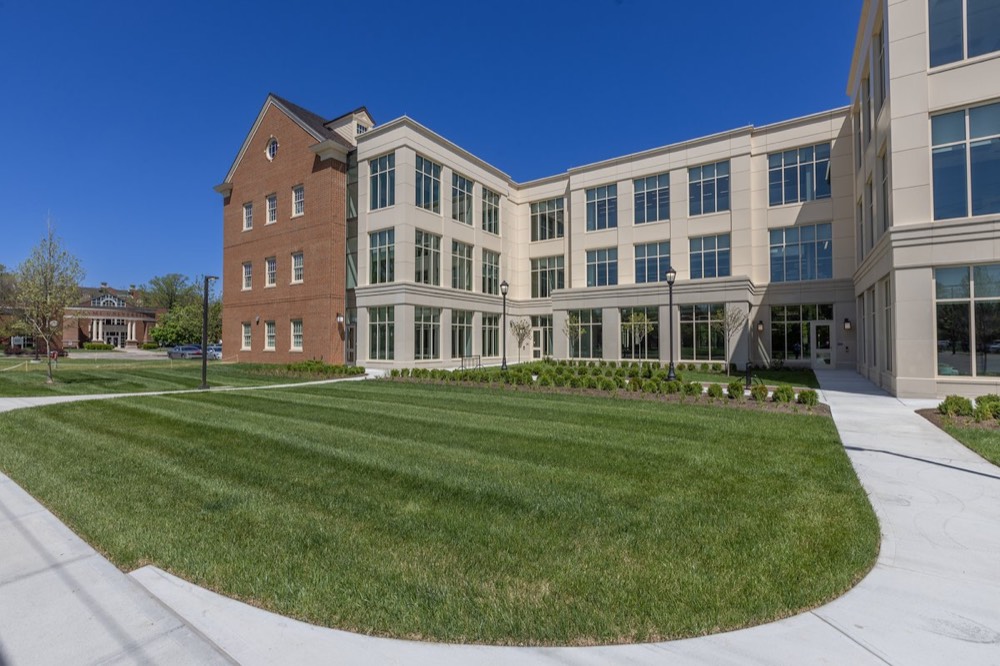
A full-time, in-person, 27-month, 114-credit MMSc program on Miami University’s Oxford campus, with about 15 months of didactic training and 12 months of clinical rotations.
Mission & approach
Create compassionate, dynamic, well-rounded professional clinicians interested in rural medicine and clinical research who enrich the medical sciences and serve communities, especially rural and underserved populations.
Check my fit with this school
Check three basics
Enter any GPA or patient care hours you know. We’ll compare them with this school’s published numbers. This is a starting point, not an eligibility decision.
The quick check needs JavaScript.
Admissions insights
What this program looks for in applicants
Holistic review considers academics, recommendations, community service, communication, integrity, professionalism, compassion, life experience and PA motivation. Preferences include Miami alumni, veterans, more direct patient care and shadowing, higher GPAs, research, rural/partially rural/Appalachian Ohio residence, leadership, volunteerism, first-generation or economically disadvantaged background, underrepresented identities and overcoming adversity.
Summarized from the program’s admissions information. Confirm current selection criteria with the program.
Program admissions informationHow this program interviews
Qualified applicants are invited to interview. Miami says a panel assesses readiness, with a rolling interview window from June to January. The program page does not say whether interviews are on campus or online, so confirm the format with the program.
Source checked Sep 13, 2026. Interview formats and dates can change between cycles.
Program interview informationAdmissions & prerequisites
Admission requirements
Prerequisite coursework
Course or semester quantities; Miami states it has no credit-hour minimumReview each course, its lab, and the program’s policies. Your links are planning records; the program decides equivalency.
| Course | Credits | Lab | Min grade |
|---|---|---|---|
General BiologyCourse notes & alternativesWithin 10 years. | one yearcoursework; no specific credit-hour minimum | Required | C |
General ChemistryCourse notes & alternativesWithin 10 years. | one yearcoursework; no specific credit-hour minimum | Required | C |
Human AnatomyCourse notes & alternativesWithin 5 years. | one semestercoursework; no specific credit-hour minimum | Required | C |
Human PhysiologyCourse notes & alternativesWithin 5 years. A two-semester combined A&P sequence with labs is acceptable. | one semestercoursework; no specific credit-hour minimum | Required | C |
MicrobiologyCourse notes & alternativesWithin 10 years. | one semestercoursework; no specific credit-hour minimum | Required | C |
Organic ChemistryCourse notes & alternativesWithin 10 years; required in addition to Biochemistry. | one semestercoursework; no specific credit-hour minimum | Required | C |
BiochemistryCourse notes & alternativesWithin 10 years; required in addition to Organic Chemistry. | one semestercoursework; no specific credit-hour minimum | Not specified | C |
PsychologyCourse notes & alternativesWithin 10 years. | one semestercoursework; no specific credit-hour minimum | Not required | C |
Abnormal or Developmental PsychologyCourse notes & alternativesWithin 10 years; either subject satisfies this requirement. | one semestercoursework; no specific credit-hour minimum | Not required | C |
StatisticsCourse notes & alternativesWithin 10 years. | one semestercoursework; no specific credit-hour minimum | Not required | C |
Medical TerminologyCourse notes & alternativesWithin 10 years. | Course or certificateno specific credit-hour minimum | Not required | C |
Policies that can change your plan
- How experience hours are classified
- Miami's admission requirements list a minimum of 400 patient-care hours, paid or voluntary, and highly recommend more direct hands-on care. Accepted roles include hands-on jobs plus scribing and pharmacy technician experience. Miami does not say all 400 hours must be direct care, and no recency window is published. The FAQ on the same page now also says 400.
- Shadowing hours
- Miami's admission requirements list a minimum of 40 hours shadowing a PA in a clinical setting. The FAQ on the same page now also says 40.
- Course recency
- Required courses: one year each of General Biology with lab and General Chemistry with lab; one semester each of Human Anatomy with lab, Human Physiology with lab, Microbiology with lab, Organic Chemistry with lab, Biochemistry, Psychology, Abnormal or Developmental Psychology, Statistics, and Medical Terminology as a course or certificate. Miami specifies no credit-hour minimum. Grade C or higher is required, with no more than two C grades. Anatomy and Physiology with labs must be within five years of matriculation; all other prerequisites within ten years. AP and CLEP may satisfy courses but are excluded from the minimum-GPA calculation. Online/hybrid core science is case-by-case and generally disfavored; online labs are generally not accepted.
- AP/CLEP
- Accepted for prerequisites but excluded from minimum-GPA calculation.
- Tests
- GRE is required within five years of matriculation. Miami publishes no minimum, takes your best scores across attempts, and encourages 300 combined verbal/quantitative plus a writing score above 4. MCAT, PA-CAT and GMAT are not accepted as substitutes. CASPer is not published, so check with the program.
- Recommendations
- Three recommendations are required: one from a PA, MD or DO; one from a current/prior college professor or supervisor; and one from another professional colleague or mentor. Family members are prohibited. A PA-specific letter is not mandatory because MD or DO satisfies the clinician category.
- Application fees
- Miami has no supplemental application and no program-specific supplemental fee. CASPA charges $185 for the first program and $65 for each additional program; Miami's FAQ still lists the older $184/$61 amounts. Do not assume application costs are zero.
- Selection
- Holistic review considers academics, recommendations, community service, communication, integrity, professionalism, compassion, life experience and PA motivation. Preferences include Miami alumni, veterans, more direct patient care and shadowing, higher GPAs, research, rural/partially rural/Appalachian Ohio residence, leadership, volunteerism, first-generation or economically disadvantaged background, underrepresented identities and overcoming adversity.
- International and English
- International applicants are accepted with conditions and exceptions. Non-U.S. transcripts need a course-by-course evaluation from WES (World Education Services) or ECE (Educational Credential Evaluators) that also gives grade equivalence. The program does not sponsor visas, and DACA applicants are not considered. English proficiency is satisfied by a bachelor's degree or higher from an accredited U.S. university; a bachelor's degree or higher, or citizenship, from a listed exempt country; or a qualifying test. Current regular-admission minimums are TOEFL 4.0 on the scale used after January 2026 (80 on the prior scale), TOEFL Essentials 9, IELTS 6.5, PTE 54 or Duolingo 110. Scores are valid for two years and must be valid at application. English-medium study in a country whose official language is not English does not waive testing, and Miami does not offer conditional admission below the minimum. The PA program has no separate citizenship or permanent-residency rule, and U.S. coursework alone does not waive English testing.
- Cost scope
- Miami lists $119,000 total tuition for seven semesters at $17,000 each, which includes institutional/lab fees, textbooks, equipment, certifications, liability insurance and memberships. Residency does not change tuition. Additional costs: health insurance $4,302 (can be waived with proof), two background/drug screens $500, parking $780, Oxford living $22,080, and clinical travel/housing $16,500. With tuition, these add to $163,162, while Miami prints a total of $163,662, a $500 difference. The $1,500 deposit is credited to tuition and is not an extra cost.
- Advanced standing and transfers
- No advanced standing, acceleration or transfer admission.
- Attendance and employment
- No part-time option; employment during the rigorous didactic and clinical phases is discouraged.
- Clinical placement
- Miami assigns clinical sites and preceptors; students do not arrange their own placements.
- Outcomes
- Class of 2025: 25 first-time takers and a 92% pass rate (23/25), versus 91% nationally, per the NCCPA report dated May 6, 2026 (which replaces an older October 2025 report showing 23 takers and 91%). Miami and NCCPA call 92% a five-year average, but only one class is listed, so no five-year figure is available. The Class of 2025 entered 26, graduated 25 and had one attrition (3.8% attrition, 96.2% graduation). Classes 2026 and 2027 each show 36 entering and 0% attrition, but these classes are in progress and the outcomes are not final.
Required courses: one year each of General Biology with lab and General Chemistry with lab; one semester each of Human Anatomy with lab, Human Physiology with lab, Microbiology with lab, Organic Chemistry with lab, Biochemistry, Psychology, Abnormal or Developmental Psychology, Statistics, and Medical Terminology as a course or certificate. Miami specifies no credit-hour minimum. Grade C or higher is required, with no more than two C grades. Anatomy and Physiology with labs must be within five years of matriculation; all other prerequisites within ten years. AP and CLEP may satisfy courses but are excluded from the minimum-GPA calculation. Online/hybrid core science is case-by-case and generally disfavored; online labs are generally not accepted.
When courses must be complete: Up to two prerequisites may be in progress in the semester before May matriculation; all must be complete before matriculation. Miami also permits an achievable plan for outstanding healthcare and shadowing hours by the program deadline.
Dates & application steps
The program opens applications at the end of April each year; CASPA opened April 30, 2026.
The 2026–27 CASPA portal is open, and the December 1, 2026 deadline is still ahead. The deadline applies to a CASPA application in Blue (submitted-only) status. Miami reviews applications on a rolling basis, and interviews run June through January until the class fills.
The program starts each May; the exact day is not published.
The program says it starts in May and finishes in August, 27 months later. No exact day is published.
Know what the total includes
Published cost estimate
Current 27-month estimate; entering class not statedMiami lists $119,000 total tuition for seven semesters at $17,000 each, which includes institutional/lab fees, textbooks, equipment, certifications, liability insurance and memberships. Residency does not change tuition. Additional costs: health insurance $4,302 (can be waived with proof), two background/drug screens $500, parking $780, Oxford living $22,080, and clinical travel/housing $16,500. With tuition, these add to $163,162, while Miami prints a total of $163,662, a $500 difference. The $1,500 deposit is credited to tuition and is not an extra cost.
Estimated cost of attendance
Each is a full published estimate including tuition and fees above. Do not add the two totals together.
See additional expenses & assumptions
Tuition is the same regardless of residency and already includes the listed fees. The deposit is credited to tuition and not counted twice. The program's printed attendance total is shown as published, though it is $500 more than the listed components add up to.
Curriculum & clinical training
About 15 months / first four semesters
Systems-based classroom, laboratory, POCUS, simulation and research training.
12 months / final three semesters
Eleven rotations including core medicine disciplines, orthopedics, structured experiences and three electives, plus capstone and summative work.
Credits by semester: 22 + 21 + 22 + 17 + 11 + 9 + 12 = 114. The curriculum is full time and on campus.
The admitted class
Matriculant profile; class year not stated (directory updated January 15, 2026)
Published class statisticsCompare published cohorts
| Class | Published GPA | Published science-related GPA | Published experience hours |
|---|---|---|---|
| Matriculant profile; class year not stated (directory updated January 15, 2026) | 3.70 | Not recorded | Not recorded |
Matriculants average a 3.7 overall GPA, and the class has 32 women and 4 men. No class year, science GPA, experience average, GRE average or acceptance rate is given.
Published class statistics describe the named cohort or population. They are not admission minimums or acceptance probabilities.
The program’s track record
Graduate outcomes
PANCE pass rates
See first-time program performance with clearly dated national context.
- First-time PANCE pass rate: 92%
Current NCCPA report dated May 6, 2026: Class of 2025 had 25 first-time takers and a 92% pass rate, which is 23/25. The national 2025 first-time rate was 91%. Miami and NCCPA label 92% a five-year average, but only one class is listed, so the public five-year field remains insufficient-history. An older October 2025 report showed 23 takers and 91%; it is superseded by the May 2026 report.
- Five-year first-time PANCE pass rate: Not available yet
Five-year first-time results are not yet available.
Graduation & attrition
2025 graduating cohort
The Class of 2025 entered 26, graduated 25 and had one attrition (3.8% attrition, 96.2% graduation). Classes 2026 and 2027 each show 36 entering and 0% attrition, but these classes are in progress and the outcomes are not final.
Accreditation history
Provisional- September 2022Initial Accreditation-Provisional
ARC-PA approved up to 36 students before the first cohort enrolled.
- June 2025Provisional Monitoring
Accreditation-Provisional continued; one area of noncompliance; Final Provisional review scheduled July 2027.
- January 2026Follow-up report accepted
ARC-PA accepted evidence addressing Standard B4.01b and required no further information.
ARC-PA first accredited Miami in September 2022. After June 2025 Provisional Monitoring it continued Accreditation-Provisional, noted one area of noncompliance and scheduled the Final Provisional evaluation for July 2027. A January 2026 follow-up report was accepted with no further information required. Maximum class size is 36.
Sources you can open
Links to the program’s own pages and the official directories we use.
- CASPA fee schedule
- Miami graduate international and English policy
- Miami PA overview and seven-semester curriculum
- NCCPA Five Year First Time Taker Summary Report
- Miami PA 2025 patient-care and shadowing verification forms
- Miami accreditation, attrition and PANCE page
- Miami University PA admission requirements and FAQs
- Miami PA tuition and attendance estimate
- Program-maintained PAEA directory
- ARC-PA currently accredited programs — sponsoring-institution directory
- ARC-PA Miami University accreditation history
About the U.S. News rank
The U.S. News PA rank uses the 2025 PA edition, matched to the listed program and campus. It reflects peer-assessed reputation, not admissions odds or a personal fit score. Programs without a separate entry are labeled “Unranked.”
How competitive are you for this program?
Match AI compares your full profile with this program and every other one, then sorts your list into Reach, Target and Safety.