
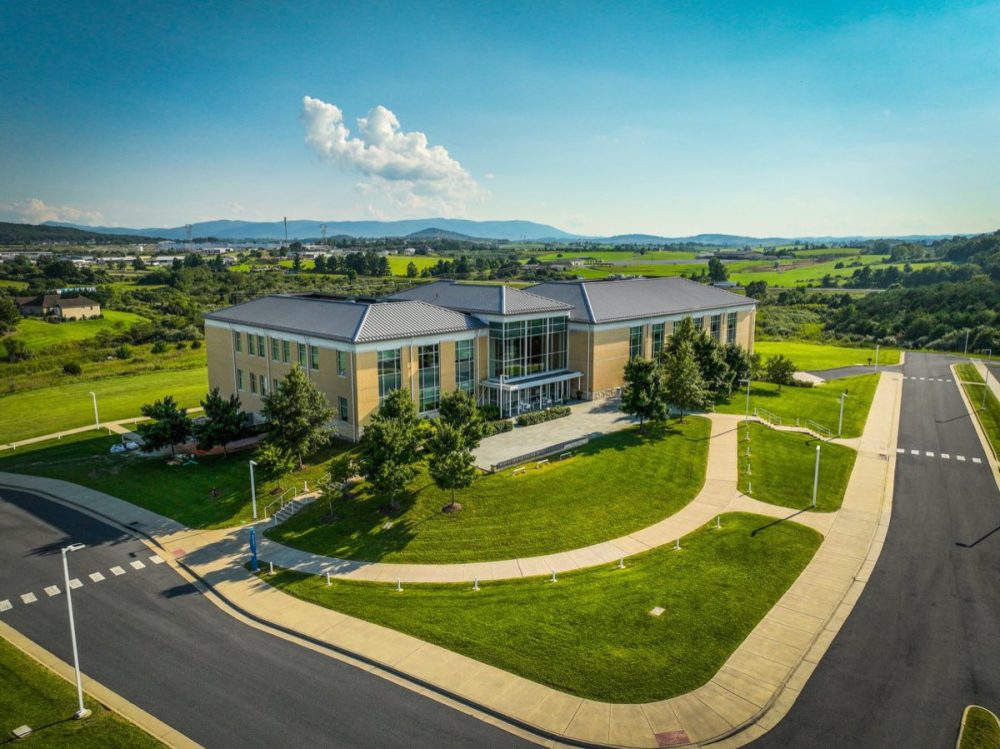
Mary Baldwin University (Murphy Deming College of Health Sciences) Physician Assistant Program
Fishersville, Virginia · MSPA
Fees not published
Projected full-program tuition at published 2026–27 term rates
A closer look
Mary Baldwin University's Murphy Deming PA program is a 27-month on-campus MSPA program in Fishersville, Virginia.
Mission & approach
The mission of the Master of Science in Physician Assistant (MSPA) Program at Mary Baldwin University is to academically and clinically prepare students for PA practice as compassionate, effective, qualified clinicians able to serve in a variety of medical specialty areas and settings in collaboration with licensed physicians.
Check my fit with this school
Check three basics
Enter any GPA or patient care hours you know. We’ll compare them with this school’s published numbers. This is a starting point, not an eligibility decision.
The quick check needs JavaScript.
Admissions insights
What this program looks for in applicants
Holistic review weighing GPA, work/volunteer and life experiences, references, personal essay, Casper SJT, and interview; favorable consideration for applicants from western VA/eastern WV region and articulation-partner schools
Summarized from the program’s admissions information. Confirm current selection criteria with the program.
Program admissions informationHow this program interviews
The Admissions Committee invites only selected candidates and an interview does not guarantee acceptance; applicants are responsible for their own travel expenses to attend.
Source checked Aug 1, 2026. Interview formats and dates can change between cycles.
Program interview informationAdmissions & prerequisites
Admission requirements
Prerequisite coursework
Semester credits; ranges are shown where the program gives one.Review each course, its lab, and the program’s policies. Your links are planning records; the program decides equivalency.
Courses shown as alternatives in the table are not all required. Confirm the accepted route with the program.
- Anatomy and physiology route: Human Anatomy + Human Physiology OR Combined Anatomy and Physiology sequence
- Chemistry route: Organic Chemistry OR Biochemistry
| Course | Credits | Lab | Min grade |
|---|---|---|---|
Biology (additional course)Course notes & alternatives3–4 semester credits; any biology course in addition to Anatomy, Physiology, and Microbiology; lab required. | 3-4Semester credits; ranges are shown where the program gives one. | Required | C |
| Human Anatomy 3–4 semester credits with lab. May be completed in a combined A&P route totaling 8 credits with labs. | 3-4Semester credits; ranges are shown where the program gives one. | Required | C |
| Human Physiology 3–4 semester credits with lab. May be completed in a combined A&P route totaling 8 credits with labs. | 3-4Semester credits; ranges are shown where the program gives one. | Required | C |
| Combined Anatomy and Physiology sequence Alternative to separate Human Anatomy and Human Physiology: Human A&P I and II with labs, 8 semester credits total. Must cover all organ systems. Program review is required for equivalency. | 8Semester credits; ranges are shown where the program gives one. | Required | C |
MicrobiologyCourse notes & alternatives3–4 semester credits; lab required. | 3-4Semester credits; ranges are shown where the program gives one. | Required | C |
ChemistryCourse notes & alternatives3–4 semester credits; lab required. The program lists this prerequisite simply as "Chemistry"; confirm which course level qualifies. | 3-4Semester credits; ranges are shown where the program gives one. | Required | C |
| Organic Chemistry 3–4 semester credits; lab preferred, not required. Alternative to Biochemistry. | 3-4Semester credits; ranges are shown where the program gives one. | Preferred | C |
| Biochemistry 3–4 semester credits; lab preferred, not required. Alternative to Organic Chemistry. | 3-4Semester credits; ranges are shown where the program gives one. | Preferred | C |
Psychology2 course(s)Course notes & alternatives6 semester credits: one introductory plus one upper-level Psychology course OR two upper-level Psychology courses. Abnormal and developmental Psychology are preferred, not mandatory. | 6Semester credits; ranges are shown where the program gives one. | Not specified | C |
StatisticsCourse notes & alternatives3 semester credits; may be from Biology, Mathematics, Psychology, or Business. A Psychology course used for Statistics cannot also count toward Psychology. | 3Semester credits; ranges are shown where the program gives one. | Not specified | C |
Medical TerminologyCourse notes & alternatives1–2 semester credits with a grade of C or better, or an accepted Medical Terminology certificate. This prerequisite may be completed by October 1; certificate equivalency requires program review. | 1-2Semester credits; ranges are shown where the program gives one. | Not specified | C |
Policies that can change your plan
- International eligibility
- Visa sponsorship is not available. Confirm eligibility with the program if you are not a U.S. citizen or permanent resident.
- English proficiency
- Conditional: applies when English is not your primary language, regardless of citizenship. TOEFL 570 (paper) or 88 (internet). Applicants with a U.S. bachelor's or graduate degree are exempt.
- Admission tests
- GRE within five years, with no minimum score. CASPer is required for interview consideration; the Duet assessment is not required.
- Minimum course grade
- C or better in all prerequisite courses.
- Course recency
- Anatomy, Physiology, Chemistry, and Medical Terminology within 10 years of matriculation.
- Alternative routes
- Separate Human Anatomy plus Human Physiology, or combined Human A&P I and II with labs totaling 8 credits. Organic Chemistry or Biochemistry. Confirm equivalency with the program.
- Psychology and Statistics
- One introductory plus one upper-level Psychology course OR two upper-level courses; a Psychology course used for Statistics cannot also count toward Psychology.
- Medical Terminology certificate
- An accepted certificate may satisfy the course requirement, but equivalency is not automatic.
All prerequisite courses require a C or better. Anatomy, Physiology, Chemistry, and Medical Terminology must be within 10 years of matriculation. The catalog permits a Medical Terminology certificate; confirm certificate equivalency and the Chemistry course with the program. Psychology has two permitted two-course routes, and a Psychology course used for Statistics cannot be double-counted.
When courses must be complete: Your bachelor's degree and all prerequisites except Medical Terminology must be complete by September 1. Medical Terminology may be completed by October 1. Your CASPA application must be submitted and verified by October 1; confirm the current cycle with the program.
Dates & application steps
CASPA verified deadline.
Know what the total includes
Projected tuition estimate
Projected full-program tuition at published 2026–27 term rates$14,560 semester × 5 projected semesters + $7,280 semester × 2 projected semesters · Current-rate estimate; later tuition rates may change. Excludes fees and living costs.
Estimate at current rates: five fall/spring semesters at $14,560 plus two summer semesters at $7,280 = $87,360. The seven-term schedule reflects the January start, 27-month length and published curriculum. The school publishes 2026–27 term rates, not a fixed full-program tuition, so later rates can change. Required fees and living costs are not included.
Curriculum & clinical training
Didactic instruction
Lectures, discussion, interprofessional and problem-based learning, case work, clinical skills and hospital experiences build the foundation. Early clinical exposure begins in the first year.
Clinical phase
Six-week rotations cover family and internal medicine, emergency medicine, pediatrics, women’s health, behavioral/mental health and general surgery.
Didactic instruction is followed by clinical training. Local hospital and healthcare partnerships support early field experiences; later rotations are not guaranteed to be local.
The admitted class
Published class statistics describe the named cohort or population. They are not admission minimums or acceptance probabilities.
The program’s track record
Graduate outcomes
PANCE pass rates
See first-time program performance with clearly dated national context.
- First-time PANCE pass rate: 100%
- Five-year first-time PANCE pass rate: 99%
Accreditation history
ContinuedSources you can open
Links to the program’s own pages and the official directories we use.
- Mary Baldwin 2026–27 MSPA catalog
- Mary Baldwin PA FAQs
- Mary Baldwin Physician Assistant Cost and Aid
- Mary Baldwin University (Murphy Deming College of Health Sciences) curriculum
- PA School Finder contact record
- Mary Baldwin PAEA directory
- ARC-PA currently accredited programs — sponsoring-institution directory
- PA School Finder catalog record
About the U.S. News rank
The U.S. News PA rank uses the 2025 PA edition, matched to the listed program and campus. It reflects peer-assessed reputation, not admissions odds or a personal fit score. Programs without a separate entry are labeled “Unranked.”
How competitive are you for this program?
Match AI compares your full profile with this program and every other one, then sorts your list into Reach, Target and Safety.