Address & Contact

Our Address

800 S. Duke St. Durham, NC 27701

GPS

35.9908612, -78.9097887

Telephone
← Find PA SchoolsProgram profile
PROGRAM PROFILE

Duke University Medical Center Physician Assistant Program

Durham, North Carolina · Master of Health Sciences

Application deadline Sep 1, 2026Passed · Must be CASPA-verified by this date — submit weeks earlier
Tuition $110,654Same for residents and nonresidents
Fees not published
Class of 2028 / Fall 2026 entry; Class of 2029 tuition not yet published
Class size 90 studentsProgram plans to select 90; ARC-PA maximum is 92. These are different measures.
Program length 24 monthsFull program
GRE requirement RequiredEvery applicant. For this cycle, take the GRE between January 1, 2022 and August 15, 2026. Send scores to CASPA using code 0422.
Patient-care minimum 1,000 hours by May 1Direct hands-on roles; no updates after CASPA submission.
Overall GPA minimum No published minimumNo GPA cutoff stated in the published policy.
Science GPA minimum No published minimumNo GPA cutoff stated in the published policy.
PANCE pass rate 100%First-time pass rateFive-year first-time: 93%
U.S. News PA rank #1 (tie)2025 PA edition · Peer-assessed reputation
THE PROGRAM

A closer look

A Durham PA program focused on primary care, community partnerships and clinical preparation.

Cadaver dissectionSimulation and standardized patientsEarly hospital interactionsPrimary care focus

Mission & approach

Prepares leaders to deliver equitable, patient-centered care through primary care education and community partnerships.

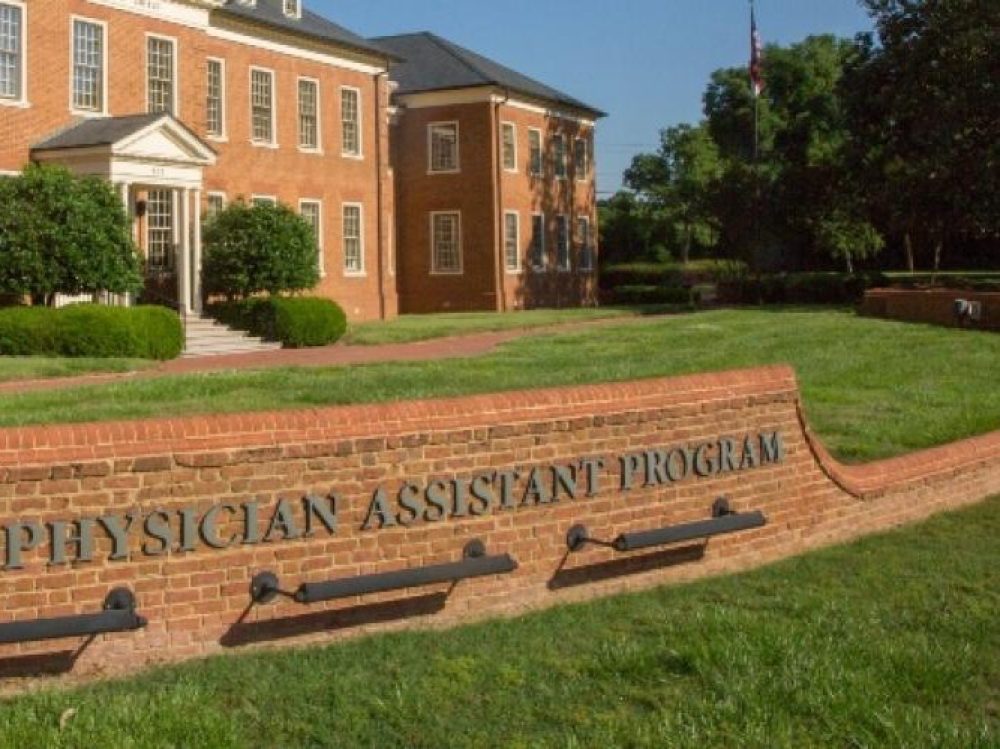
Program campus
Program campus
Duke PA program Checked 2026-09-13
YOUR PROFILE & THIS PROGRAM

Check my fit with this school

START HERE · FREE CHECK

Check three basics

Enter any GPA or patient care hours you know. We’ll compare them with this school’s published numbers. This is a starting point, not an eligibility decision.

The quick check needs JavaScript.

BEYOND THE NUMBERS

Admissions insights

What this program looks for in applicants

Mission-driven holistic review favoring service and increasing access to primary care in rural/underserved communities. Objective measures: overall/natural-science/prerequisite GPA, GRE scores, number of natural-science credits, number of patient-care hours. Preference for non-academic attributes: leadership, significant volunteerism, multilingual, born/reared in North Carolina or long-standing…

Summarized from the program’s admissions information. Confirm current selection criteria with the program.

Program admissions information

How this program interviews

Virtual

Two individual interviews plus a group exercise via Zoom. Admissions decisions follow interviews; no deferments.

Source checked Sep 13, 2026. Interview formats and dates can change between cycles.

Program interview information
YOUR STARTING POINT

Admissions & prerequisites

Admission requirements

GPANo published minimumAdmission is competitive; published class GPA ranges are not cutoffs or averages.
Patient care1,000 hours by May 1Direct hands-on roles; no updates after CASPA submission.
GRERequired for every applicantFor this cycle, take the GRE between January 1, 2022 and August 15, 2026. Send scores to CASPA using code 0422.
Recommendations3 referencesAt least one healthcare professional who supervised patient care; no friends/family.
ShadowingRecommendedNot required and does not count toward patient-care hours.
Application$70 processing feeSupplemental questions are part of the CASPA application. Waivers are available through the routes the program lists.
InterviewZoom: two individual interviews plus a group exerciseAbout 250 applicants are invited to interview; the program plans to enroll 90.
International educationAdditional US courseworkA foreign bachelor's degree requires at least 30 semester hours at a regionally accredited U.S. institution.
English proficiency / TOEFLNot requiredThe program explicitly states that English-proficiency testing is not required.

Prerequisite coursework

Semester credits (quarter-credit equivalents shown in notes)

Review each course, its lab, and the program’s policies. Your links are planning records; the program decides equivalency.

CourseCreditsLabMin grade
Anatomy

4 quarter credits; combined two-course A&P sequence may satisfy both anatomy and physiology.

3Semester credits (quarter-credit equivalents shown in notes)PreferredB−
Physiology

4 quarter credits; combined sequence requires 6 semester / 8 quarter credits total. One accelerated course does not satisfy both.

3Semester credits (quarter-credit equivalents shown in notes)PreferredB−
Microbiology
Course notes & alternatives

4 quarter credits.

3Semester credits (quarter-credit equivalents shown in notes)Not specifiedB−
Biology course of choice
Course notes & alternatives

4 quarter credits; named recommended subjects are not mandatory.

3Semester credits (quarter-credit equivalents shown in notes)Not specifiedB−
Second biology course of choice
Course notes & alternatives

4 quarter credits; a separate course.

3Semester credits (quarter-credit equivalents shown in notes)Not specifiedB−
Chemistry course of choice with lab
Course notes & alternatives

5 quarter credits including lab.

4Semester credits (quarter-credit equivalents shown in notes)RequiredB−
Second chemistry course of choice with lab
Course notes & alternatives

5 quarter credits including lab; not specifically organic chemistry.

4Semester credits (quarter-credit equivalents shown in notes)RequiredB−
Statistics
Course notes & alternatives

3 quarter credits.

2Semester credits (quarter-credit equivalents shown in notes)Not specifiedB−

Policies that can change your plan

Course grade
B− or better; Pass accepted only with documented equivalent course score.
Course age
Courses must be taken no earlier than January 1, ten years before the year you apply.
Outstanding courses
Up to two courses; finish by December 31 of the application year.
Online and community college
Courses and labs accepted from regionally accredited institutions.
Exam credit
AP and other credit-by-examination do not satisfy prerequisites.
Biochemistry
May count as biology or chemistry; one course cannot count as both.
Biology recommendations
Genetics, cell biology, molecular biology, embryology, histology and immunology are suggestions, not six extra required subjects.

When courses must be complete: Finish prerequisite courses by December 31, 2026 for August 2027 entry. Complete your bachelor's degree before matriculation.

Duke prerequisites Checked 2026-09-13
BUILD YOUR TIMELINE

Dates & application steps

CASPA verification deadlineSep 1, 2026 · Passed

2026–2027 application cycle; this deadline has passed.

Published date
Complete patient-care minimumMay 1, 2026 · Passed

1,000 qualifying hours; now passed for this application year.

Published date
Last acceptable GRE test dateAug 15, 2026 · Passed

Scores from January 1, 2022 or later; now passed for this application year.

Published date
Complete prerequisitesDec 31, 2026

At most two outstanding courses at application.

Published date
Next listed entering classAugust 2027

The exact matriculation day is not confirmed.

Duke application Checked 2026-09-13
THE FINANCIAL PICTURE

Know what the total includes

Published cost estimate

Class of 2028 / Fall 2026 entry; Class of 2029 tuition not yet published
Resident tuitionConfirm with program
Nonresident tuitionConfirm with program
Required program feesConfirm with program
Tuition + required feesFull attendance estimate not recorded
Confirm with program

Class of 2028 tuition is $55,327 per year. The 2026–2027 financial-aid budgets describe two different cohorts, so their fees and cost of attendance cannot be combined into one complete Class of 2028 figure.

See additional expenses & assumptions
Class of 2028 Year 1 tuition$55,327
Class of 2028 Year 2 tuition$55,327

First-year 2026–2027 COA: $95,854; direct costs $62,758 including $7,431 fees. Second-year 2026–2027 COA: $94,252 for the earlier cohort; includes $53,456 tuition. Annual Duke insurance is additional if selected. $1,125 acceptance payment contains $475 tuition deposit + $475 registration + $100 screening + $75 background check; do not count all $1,125 as tuition deposit.

Duke tuition and fees Checked 2026-09-13
HOW YOU’LL LEARN

Curriculum & clinical training

01Year 1

Preclinical learning

58 credits; laboratory, simulation, cadaver dissection and clinical interactions.

02Year 2

Clinical training

51 credits; supervised practice and didactic coursework.

109 academic credits over 24 months. Program arranges clinical placements. Plan for at least two rotations away from Durham; housing is provided for assigned rotations over 50 miles, with separate rules for requested distant/out-of-network rotations.

Duke curriculum Checked 2026-09-13
WHO STUDIES HERE

The admitted class

Fall 2026 matriculants

Published class statistics
Overall GPANot recorded
Science GPANot recorded
Patient-care hoursNot recorded
Compare published cohorts
ClassPublished GPAPublished science-related GPAPublished experience hours
Fall 2026 matriculantsNot recordedNot recordedNot recorded

These are middle 50% ranges for Fall 2026 matriculants, not averages: overall GPA 3.655–3.935; natural-science GPA 3.605–3.925; healthcare hours 2,238–6,033. The current class target is 90. Class of 2025 attrition: 4.3% (92 entered, 88 graduated). The program also reports Class of 2026 attrition of 2.3%; cohort counts include students who joined later.

Published class statistics describe the named cohort or population. They are not admission minimums or acceptance probabilities.

OUTCOMES & OVERSIGHT

The program’s track record

Graduate outcomes

PANCE pass rates

See first-time program performance with clearly dated national context.

  • First-time PANCE pass rate: 100%

2025 first-time 100% (88/88); 2021–2025 first-time93%; NCCPA report July8,2026.

  • Five-year first-time PANCE pass rate: 93%

Accreditation history

Continued
First accreditedSeptember 1972
Next reviewJanuary 2028
  1. September 2020Report accepted

    ARC-PA accepted the self-study reporting response; no further information requested.

  2. March 2018Accreditation-Continued

    Next comprehensive evaluation March 2028; maximum entering class 92.

  3. September 1972First accredited

    Initial accreditation date as reported by ARC-PA.

ARC-PA Duke history Checked 2026-09-13
Duke NCCPA PANCE report Checked 2026-09-13
CHECK THE EVIDENCE

Sources you can open

Links to the program’s own pages and the official directories we use.

About the U.S. News rank

The U.S. News PA rank uses the 2025 PA edition, matched to the listed program and campus. It reflects peer-assessed reputation, not admissions odds or a personal fit score. Programs without a separate entry are labeled “Unranked.”

YOUR NEXT STEP

How competitive are you for this program?

Match AI compares your full profile with this program and every other one, then sorts your list into Reach, Target and Safety.

PA School Finder × My PA School PlannerOne program record. One application plan.