
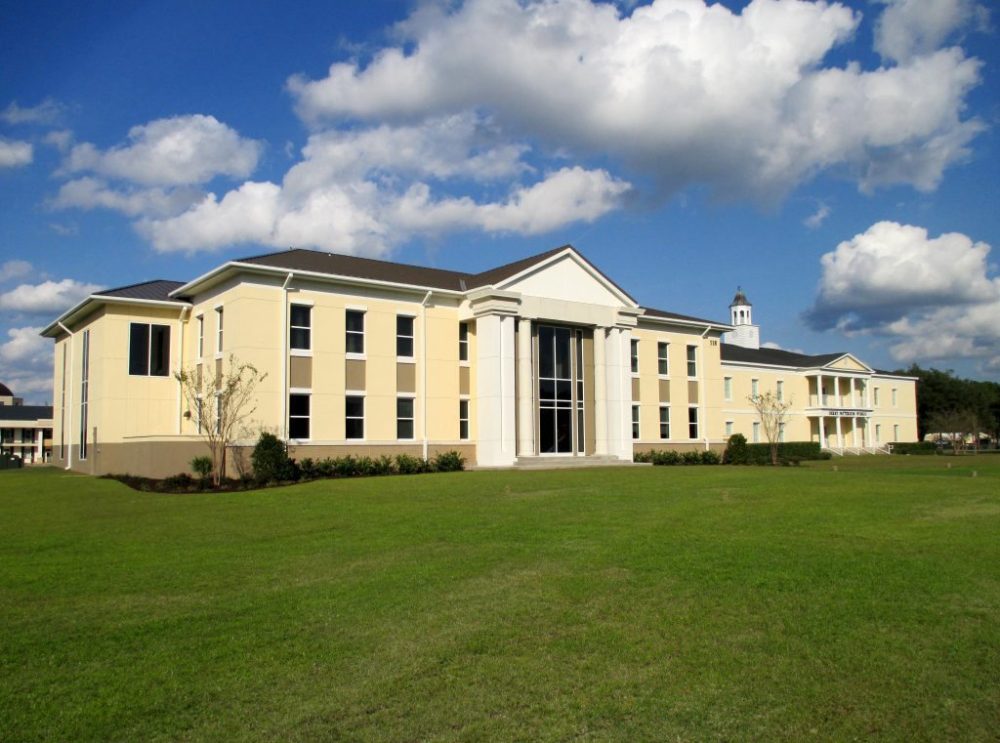
Charleston Southern University Physician Assistant Program
North Charleston, South Carolina · Master of Medical Science in Physician Assistant Studies
Tuition + fees $99,750
Current published rate table; six-semester, 24-month program
A closer look
A full-time, residential, 24-month Christian MMSPAS program using systems-based instruction, simulation, problem-based learning and nine clinical rotations.
Mission & approach
To educate compassionate and highly motivated individuals in a Christian environment who excel in providing patient-centered care, practicing as an interprofessional team, serving as leaders in their communities and advancing the PA profession.

Check my fit with this school
Check three basics
Enter any GPA or patient care hours you know. We’ll compare them with this school’s published numbers. This is a starting point, not an eligibility decision.
The quick check needs JavaScript.
Admissions insights
What this program looks for in applicants
Rolling review may fill seats before September 1. The program uses CASPA-calculated cumulative and science GPAs and invites its most competitive applicants. Required: 3.0 cumulative/science GPA, B or higher in each prerequisite, 1,000 direct PCE hours, and two letters including one qualifying clinician or healthcare supervisor observer. Interviews are primarily in person with limited virtual slots.
Summarized from the program’s admissions information. Confirm current selection criteria with the program.
Program admissions informationHow this program interviews
Required interview. The university conducts interviews primarily in person and offers a limited number of virtual slots, first come, first served. A national program directory lists the format as MMI (multiple mini interview).
Interview formats and dates can change between cycles.
Admissions & prerequisites
Admission requirements
Prerequisite coursework
Semester creditsReview each course, its lab, and the program’s policies. Your links are planning records; the program decides equivalency.
| Course | Credits | Lab | Min grade |
|---|---|---|---|
Human Anatomy and Physiology sequenceCourse notes & alternativesSemester hours; no double counting. | 8Semester credits | Required | B |
MicrobiologyCourse notes & alternativesSemester hours; no double counting. | 3Semester credits | Required | B |
Biology OR GeneticsCourse notes & alternativesEither Biology or Genetics satisfies this single three-credit requirement. | 3Semester credits | Not required | B |
General ChemistryCourse notes & alternativesSemester hours; no double counting. | 8Semester credits | Not required | B |
Organic ChemistryCourse notes & alternativesSemester hours; no double counting. | 4Semester credits | Required | B |
StatisticsCourse notes & alternativesSemester hours; no double counting. | 3Semester credits | Not required | B |
Policies that can change your plan
- Advanced placement and transfer
- Transfer students are not accepted, according to a national program directory. The university does not publish a pathway for advanced-placement credit.
- Course delivery
- Online prerequisite courses and labs are accepted when completed through a regionally accredited US institution.
- Clinical sites
- Most sites are within 60 miles of Charleston, but travel may be required. Students do not have to provide or solicit preceptors or clinical sites.
All prerequisites require B (3.0) or higher and semester hours. Only Anatomy and Physiology expire after seven years; all other prerequisites have no expiration. Biology or Genetics is one alternative three-credit requirement, not two requirements. General Chemistry may consist of any chemistry course. No course may count twice. Online courses and labs are accepted. Pandemic pass grades are accepted only for classes taken January 1, 2020 through September 1, 2022. Survey courses, AP, CLEP, exam credit, competency training, work experience, foreign prerequisites and IB credit do not satisfy prerequisites.
When courses must be complete: Bachelor degree conferred by September 1, 2026. Up to two prerequisites may be in progress; both must finish with B or higher by September 1 and official transcripts must reach CSU by October 1.
Dates & application steps
Per the university's current application page.
For January 2027 entry, CASPA opens April 30 and your application must be submitted and verified by September 1, 2026. The required $75 supplemental application to the university is sent only after CASPA verification and is due September 5, 2026 at 11:59 p.m. EST. The bachelor's degree and any two outstanding prerequisites are due September 1; transcripts for outstanding courses must reach the university by October 1.
11:59 p.m. EST; invitation follows CASPA verification.
A selected candidate forfeits the seat if the transcript is not received.
Per the university's current admissions page.
Know what the total includes
Published cost estimate
Current published rate table; six-semester, 24-month programConfirm rates for your entering cohort
Tuition is $16,000 per semester ($48,000 per three-semester year), or $96,000 for all six semesters. Required university-billed fees add $3,750, for $99,750 in direct program cost. The university estimates indirect costs at $30,300 per year, or $60,600 over two program years; adding that to direct cost gives $160,350. The university does not publish these two-year totals itself; they are simple multiples of its annual figures. Tuition and fees may change. Health insurance and travel for a distant rotation are not included.
Estimated cost of attendance
Each is a full published estimate including tuition and fees above. Do not add the two totals together.
See additional expenses & assumptions
Direct cost covers six semesters over two program years. The $60,600 indirect and $160,350 combined figures double the university's $30,300 annual indirect allowance; the university does not publish them as two-year totals. Health insurance and off-area clinical travel are not included.
Curriculum & clinical training
Systems-based instruction
Traditional lectures, occasional flipped classroom, small-group problem-based learning, simulation and practical training.
Nine five-week rotations
Family medicine, internal medicine, emergency medicine, surgery, pediatrics, psychiatry, women’s health and two electives.
Full-time, residential, year-round program totaling 102 semester credits over six semesters.
The admitted class
Most recent incoming class (year not stated)
Published class statisticsCompare published cohorts
| Class | Published GPA | Published science-related GPA | Published experience hours |
|---|---|---|---|
| Most recent incoming class (year not stated) | 3.90 | 3.89 | Not recorded |
Reported incoming-class averages are a 3.90 overall GPA and a 3.89 science GPA. The class year is not stated.
Published class statistics describe the named cohort or population. They are not admission minimums or acceptance probabilities.
The program’s track record
Graduate outcomes
PANCE pass rates
See first-time program performance with clearly dated national context.
- First-time PANCE pass rate: 97%
NCCPA report generated March 13, 2026: first-time 2025 rate 34/35 (97%). The five graduation years 2021–2025 total 160 passes among 168 first-time takers (95.238% derived); CSU separately publishes the rounded five-year first-time taker average as 95%.
- Five-year first-time PANCE pass rate: 95%
Graduation & attrition
2025 graduating cohort
Class of 2025: 35 entered, 35 graduated, 0% attrition and 100% graduation. Class of 2024: 37 entered, 35 graduated, 5.4% attrition. Class of 2023: 35 entered, 33 graduated, 5.7% attrition.
Accreditation history
Continued- September 2017Accreditation-Provisional
Approved for 25 students in the first class, 30 in the second and 35 in the third.
- March 2022Accreditation-Continued
Continued accreditation; approved maximum class size 35.
- March 2025Program change accepted
Credits changed from 99 to 102 effective November 1, 2025; no further information was requested.
- January 2026Report on exceeding approved class size accepted
ARC-PA accepted the required report and requested no further information.
ARC-PA Accreditation-Continued status. First accredited September 2017; next review April 2032; maximum class size 35. ARC-PA accepted the January 2026 and September 2023 reports on exceeding class size and requested no further information.
Sources you can open
Links to the program’s own pages and the official directories we use.
- PAEA profile updated February 9, 2026
- ARC-PA currently accredited programs — sponsoring-institution directory
- ARC-PA history through January 2026
- International Admissions
- CSU MMSPAS program
- CSU admissions timeline
- CSU current application requirements
- CSU PA tuition and fees
- CSU six-semester curriculum
- CSU current FAQ
- CSU goals and attrition outcomes
- NCCPA report generated March 13, 2026
About the U.S. News rank
The U.S. News PA rank uses the 2025 PA edition, matched to the listed program and campus. It reflects peer-assessed reputation, not admissions odds or a personal fit score. Programs without a separate entry are labeled “Unranked.”
How competitive are you for this program?
Match AI compares your full profile with this program and every other one, then sorts your list into Reach, Target and Safety.