
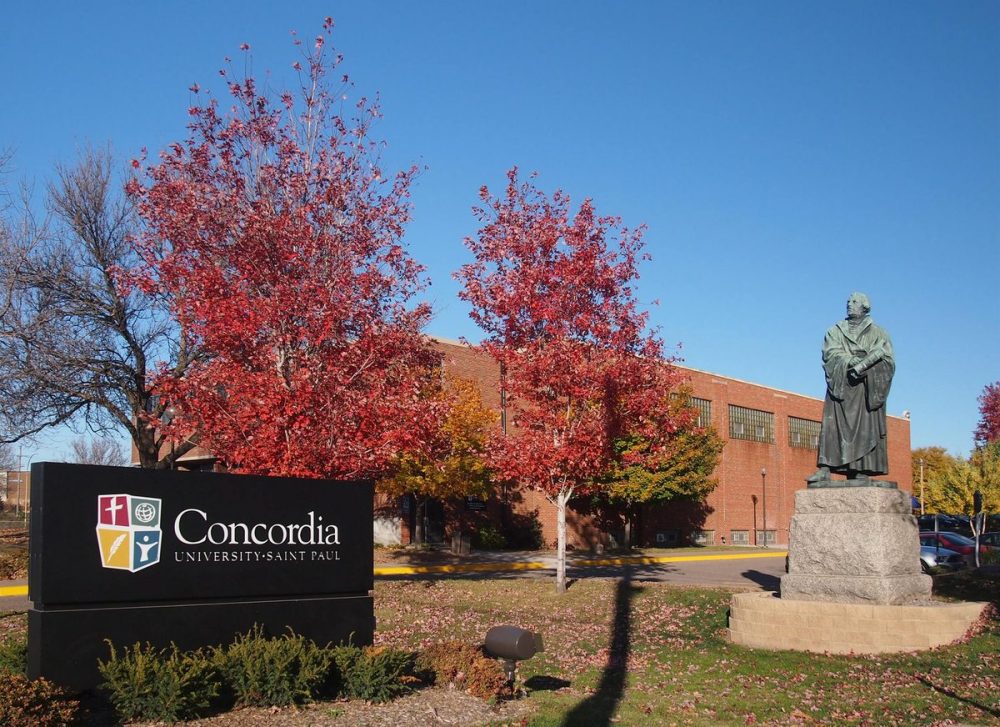
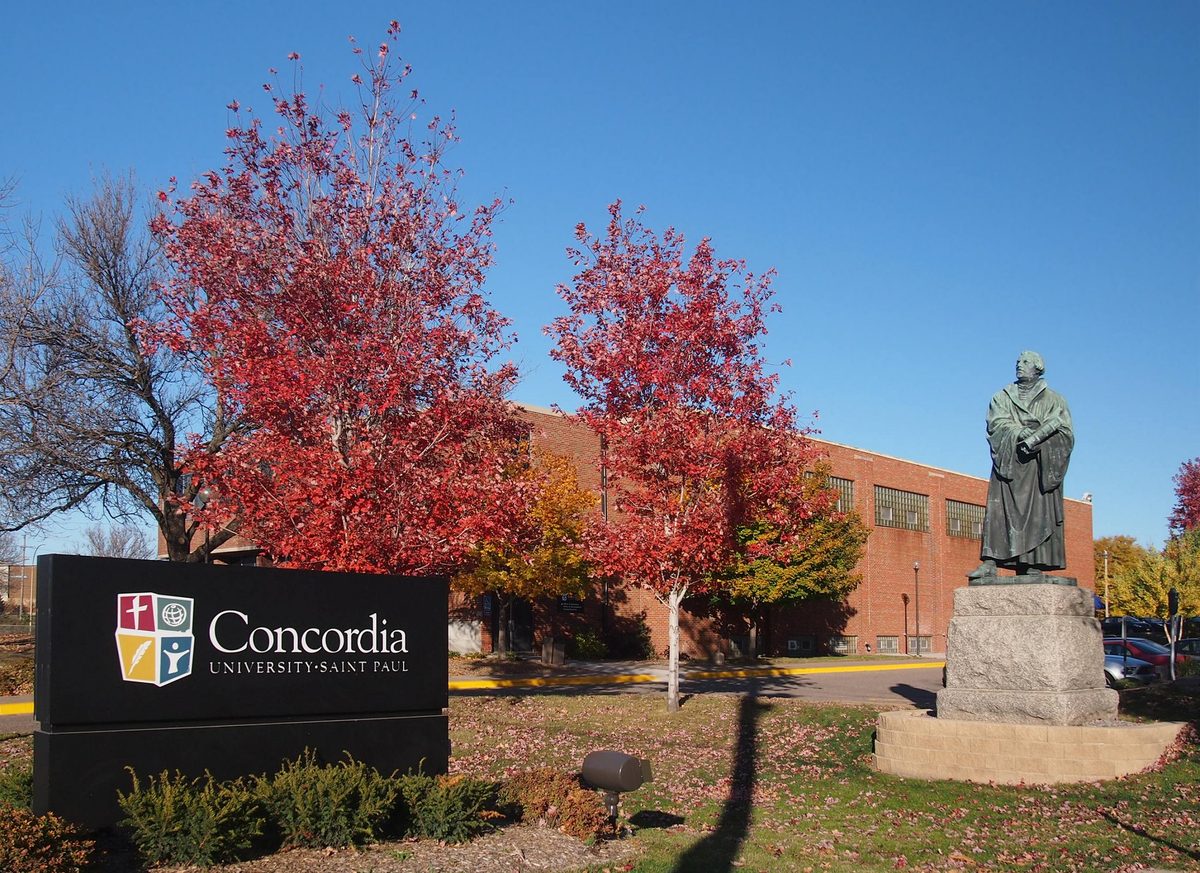
Concordia University, St. Paul Physician Assistant Program
St. Paul, Minnesota · Master of Science in Physician Assistant Studies
Tuition + fees $105,525
Inaugural cohort entering January 2027 (Concordia notes its rates are not yet final); full program
A closer look
The first four consecutive semesters are didactic, and the program arranges clinical sites so students do not have to find their own preceptors.
Mission & approach
Prepares compassionate physician assistants to deliver evidence-based care to diverse populations and improve access to healthcare.
Check my fit with this school
Check three basics
Enter any GPA or patient care hours you know. We’ll compare them with this school’s published numbers. This is a starting point, not an eligibility decision.
The quick check needs JavaScript.
Admissions & prerequisites
Admission requirements
Prerequisite coursework
Semester courses; minimum credits not publishedReview each course, its lab, and the program’s policies. Your links are planning records; the program decides equivalency.
Courses shown as alternatives in the table are not all required. Confirm the accepted route with the program.
- Anatomy and physiology route: Human or Animal Anatomy + Human or Animal Physiology OR Sequenced Anatomy & Physiology courses (both required)
| Course | Credits | Lab | Min grade |
|---|---|---|---|
| Human or Animal Anatomy1 course(s) One semester. Associated lab encouraged, not required. Must be 200-level or higher. | Not publishedSemester courses; minimum credits not published | Preferred | Not specified |
| Human or Animal Physiology1 course(s) One semester. Associated lab encouraged, not required. Must be 200-level or higher. | Not publishedSemester courses; minimum credits not published | Preferred | Not specified |
| Sequenced Anatomy & Physiology courses (both required)2 course(s) A sequenced A&P course pair can fulfill the separate Anatomy and Physiology requirements, but both courses are required; one semester of combined A&P cannot fulfill both. Labs encouraged. | Not publishedSemester courses; minimum credits not published | Preferred | Not specified |
Microbiology1 course(s)Course notes & alternativesOne semester at the 200 level or higher. An associated lab is optional. | Not publishedSemester courses; minimum credits not published | Not required | Not specified |
Biochemistry1 course(s)Course notes & alternativesOne semester at the 200 level or higher. An associated lab is optional. | Not publishedSemester courses; minimum credits not published | Not required | Not specified |
Statistics1 course(s)Course notes & alternativesOne semester; any course level if it fulfills the requirement for a STEM-related degree. | Not publishedSemester courses; minimum credits not published | Not specified | Not specified |
Policies that can change your plan
- Minimum grade
- The program does not publish a minimum grade for prerequisite courses.
- Course level
- All prerequisite courses 200-level or higher except Statistics.
- Labs
- Anatomy/Physiology labs encouraged, not required; Microbiology and Biochemistry labs optional.
- Completion
- Up to two prerequisites may be outstanding or in progress at application; complete them before the program starts.
- Course recency
- No limit on how old your courses can be is published.
You may have no more than two prerequisites incomplete or in progress at application, and all must be completed before starting the program. AP and PSEO credit are not accepted. Credit requirements for individual courses, course grades and expiration rules are not published.
When courses must be complete: No more than two prerequisites may remain incomplete/in progress at application; complete all before starting the PA program.
Dates & application steps
Your CASPA application must be verified by the CASPA deadline. The program does not list the exact date, so check CASPA.
Start date of the inaugural cohort.
Know what the total includes
Published cost estimate
Inaugural cohort entering January 2027 (Concordia notes its rates are not yet final); full programTuition only, from the school’s published rates for this cohort. Rates can change.
Inaugural cohort entering January 2027 (Concordia notes its rates are not yet final): full-program tuition is $101,325 ($965 per credit x 105 credits). Rates can change for later cohorts, so confirm with the program. Required fees for the same cohort total $4,200: Concordia's published total program fees (didactic lab fees and clinical-phase course fees). Tuition plus required fees = $105,525. Not included: health insurance, books, equipment, the international student fee (international students only) and living costs.
Curriculum & clinical training
Didactic study
Foundational medical science is followed by clinical knowledge and skill development across consecutive semesters.
Clinical education
Seven core specialty rotations and two electives are followed by capstone and summative work.
The 28-month, 105-credit program begins in January and concludes in May. Core rotations include emergency, family, internal, pediatric, psychiatric, surgical, and women’s health care.
The admitted class
Published class statistics describe the named cohort or population. They are not admission minimums or acceptance probabilities.
The program’s track record
Graduate outcomes
PANCE pass rates
See first-time program performance with clearly dated national context.
- First-time PANCE pass rate: No graduates yet
No graduates yet; inaugural class planned January 2027.
First-time program results are not yet available; no graduates have been reported.
- Five-year first-time PANCE pass rate: No graduates yet
Five-year first-time results are not yet available.
Accreditation history
ProvisionalSources you can open
Links to the program’s own pages and the official directories we use.
- ARC-PA currently accredited programs — sponsoring-institution directory
- Concordia St. Paul PA admissions, requirements and FAQ
- Concordia University, St. Paul curriculum
About the U.S. News rank
The U.S. News PA rank uses the 2025 PA edition, matched to the listed program and campus. It reflects peer-assessed reputation, not admissions odds or a personal fit score. Programs without a separate entry are labeled “Unranked.”
How competitive are you for this program?
Match AI compares your full profile with this program and every other one, then sorts your list into Reach, Target and Safety.