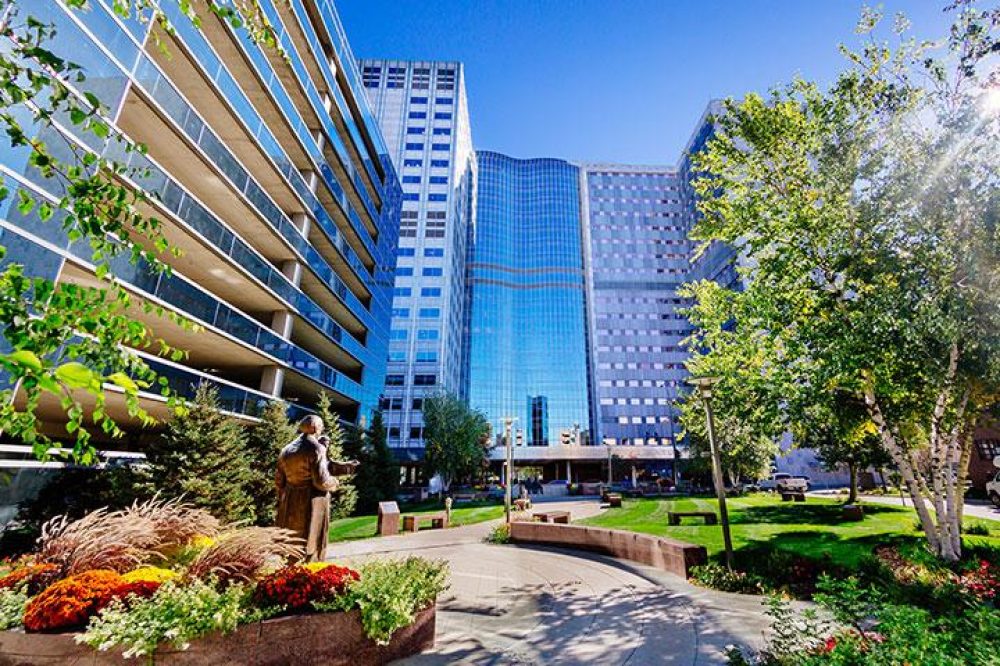
Address & Contact

Our Address

Mayo Clinic PA Program 200 First Street SW Rochester, MN 55905

GPS

44.02243, -92.46675

Telephone
← Find PA SchoolsProgram profile
PROGRAM PROFILE

Mayo Clinic School of Health Sciences Physician Assistant Program

Rochester, Minnesota · Masters

Application deadline Aug 1, 2026Passed · Received by deadline (app + transcripts + 2 references)
Tuition Resident: $110,000 published full-program tuitionNonresident: $110,000 published full-program tuition · Confirm current entering cohort
Class size 24 studentsProgram cohort size
Program length 24 monthsFull program
GRE requirement Not requiredGRE is not required. The current application materials state that GRE is not required.
Patient-care minimum 500 hours500 direct patient-care hours plus at least two 4-hour PA-shadowing experiences. The current page publishes the 500-hour DPC minimum and two half-day PA-shadowing requirement.
Overall GPA minimum 3.503.5 cumulative GPA; the program director may consider the last 60 credits as an alternative. The page publishes the 3.50 cumulative threshold and discretionary last-60-credit alternative.
Science GPA minimum 3.503.5 biology/chemistry science GPA; the program director may consider the last 60 credits as an alternative. The page publishes the 3.50 science threshold and discretionary last-60-credit alternative.
Recommendations 3 letters: academic potential, health-care commitment, and familiarity with the PA role; a PA is preferred for the third when possible.The current application page publishes the three recommendation perspectives.
International applicants ConditionalVisa sponsorship is unavailable; eligibility is limited to U.S. citizens, U.S. nationals, permanent residents, asylees, and refugees. Accepted with conditions.
English proficiency / TOEFL ConditionalIf the applicant's primary language is not English: TOEFL iBT above 89 with speaking at least 25. The current PA page publishes the language trigger, total threshold, and speaking minimum.
PANCE pass rate 96%First-time pass rate · Reporting year not recordedFive-year first-time: Not available yet
U.S. News PA rank Unranked2025 PA edition · Peer-assessed reputationNo published rank for this program in this edition.
THE PROGRAM

A closer look

Current, source-bound PA admissions requirements and program facts.

Mission & approach

To develop extraordinary PAs through transformational learning, providing optimal health care within patient-centered care teams, distinguished by the exceptional leadership and professionalism common to Mayo Clinic values.

mayo-clinic-minnesota-MEYR6203-card
PREMIUM · MATCH AI

Is Mayo Clinic School of Health Sciences a fit for you?

Unlock your personalized category, ranked school list, and reasons based on your profile. One Match AI purchase gives you the same results on PA School Finder and in your Toolkit.

SafetyTargetReachNot yet eligible
Unlock my school matches →
BEYOND THE NUMBERS

Admissions insights

What this program looks for in applicants

Three goals: academic potential, commitment to health care, familiarity with PA role. Preference factors: maturity, compassion/service, resilience, leadership, commitment to practice locally (Midwest residents served by Mayo Clinic Health System), military service. Mayo employees demonstrating local commitment favored. Most seats filled via 3+2 pipeline; only ~1 Pre-PA seat for Class of 2029 — extremely limited.

Summarized from the program’s admissions information. Confirm current selection criteria with the program.

Program admissions information
YOUR STARTING POINT

Admissions & prerequisites

Admission requirements

GRENot RequiredGRE is not required. The current application materials state that GRE is not required.
Patient care500 direct patient-care hours plus at least two 4-hour PA-shadowing experiences.The current page publishes the 500-hour DPC minimum and two half-day PA-shadowing requirement.
Overall GPA3.5 cumulative GPA; the program director may consider the last 60 credits as an alternative.The page publishes the 3.50 cumulative threshold and discretionary last-60-credit alternative.
Science GPA3.5 biology/chemistry science GPA; the program director may consider the last 60 credits as an alternative.The page publishes the 3.50 science threshold and discretionary last-60-credit alternative.
Recommendations3 letters: academic potential, health-care commitment, and familiarity with the PA role; a PA is preferred for the third when possible.The current application page publishes the three recommendation perspectives.
International applicantsAccepted with conditionsVisa sponsorship is unavailable; eligibility is limited to U.S. citizens, U.S. nationals, permanent residents, asylees, and refugees. Foreign education may be evaluated for eligible applicants. The page publishes the four U.S.-worker categories, no-sponsorship rule, and foreign-credential process.
English proficiencyConditionalIf the applicant's primary language is not English: TOEFL iBT above 89 with speaking at least 25. The current PA page publishes the language trigger, total threshold, and speaking minimum.

Prerequisite coursework

Semester hours; category minimums published, individual course credits mostly unspecified

Review each course, its lab, and the program’s policies. Your links are planning records; the program decides equivalency.

CourseCreditsLabMin gradeYour coursework
Anatomy with lab
Course notes & alternatives

One course; individual minimum credit not published. Science prerequisite within 7 years of admission.

Not publishedSemester hours; category minimums published, individual course credits mostly unspecifiedRequiredCSign in to plan
Physiology with lab
Course notes & alternatives

One course; individual minimum credit not published. Science prerequisite within 7 years.

Not publishedSemester hours; category minimums published, individual course credits mostly unspecifiedRequiredCSign in to plan
Biology or Zoology2 course(s)
Course notes & alternatives

Two courses, at least one with lab; individual credits not published. Science prerequisite within 7 years.

Not publishedSemester hours; category minimums published, individual course credits mostly unspecifiedNot specifiedCSign in to plan
Microbiology with lab
Course notes & alternatives

One course; individual minimum credit not published. Science prerequisite within 7 years.

Not publishedSemester hours; category minimums published, individual course credits mostly unspecifiedRequiredCSign in to plan
General/Inorganic Chemistry with lab
Course notes & alternatives

One course; part of chemistry category with a 15-semester-hour total, at least 3 upper-division hours. Chemistry category total (15 semester hours, including 3 upper-division) is aggregate across applicable chemistry courses, not an additional course requirement.

Not publishedSemester hours; category minimums published, individual course credits mostly unspecifiedRequiredCSign in to plan
Organic Chemistry with lab
Course notes & alternatives

One course; part of chemistry category minimum 15 semester hours. Chemistry category total (15 semester hours, including 3 upper-division) is aggregate across applicable chemistry courses, not an additional course requirement.

Not publishedSemester hours; category minimums published, individual course credits mostly unspecifiedRequiredCSign in to plan
Biochemistry
Course notes & alternatives

One course; lab not specified. Part of chemistry category minimum 15 semester hours. Chemistry category total (15 semester hours, including 3 upper-division) is aggregate across applicable chemistry courses, not an additional course requirement.

Not publishedSemester hours; category minimums published, individual course credits mostly unspecifiedNot specifiedCSign in to plan
Additional Chemistry courses
Course notes & alternatives

The current web page lists 1–2 additional chemistry courses; the 2026 prerequisite review form provides three additional chemistry entry fields. Chemistry total is at least 15 semester hours, 3 upper division. Resolve count/course allocation with program. Chemistry category total (15 semester hours, including 3 upper-division) is aggregate across applicable chemistry courses, not an additional course requirement.

Not publishedSemester hours; category minimums published, individual course credits mostly unspecifiedNot specifiedCSign in to plan →This requirement needs an individual course review; completion has not been confirmed.
Statistics or Biostatistics
Course notes & alternatives

One course; Math category minimum 3 semester hours. Science prerequisites within 7 years; this is not a science prerequisite unless program classifies it as such.

3Semester hours; category minimums published, individual course credits mostly unspecifiedNot specifiedCSign in to plan
Developmental Psychology
Course notes & alternatives

One course; Psychology category totals at least 6 semester hours across Developmental and Abnormal Psychology. No time limit on non-science prerequisites.

Not publishedSemester hours; category minimums published, individual course credits mostly unspecifiedNot specifiedCSign in to plan
Abnormal Psychology
Course notes & alternatives

One course; Psychology category totals at least 6 semester hours. No time limit on non-science prerequisites.

Not publishedSemester hours; category minimums published, individual course credits mostly unspecifiedNot specifiedCSign in to plan
English Composition I and II / writing-intensive courses2 course(s)
Course notes & alternatives

One course for each of two composition requirements; current web page lists English category minimum 7 semester hours. The 2026 form says English 6 hours, so category credits and whether med terminology counts toward the stated total need confirmation.

Not publishedSemester hours; category minimums published, individual course credits mostly unspecifiedNot specifiedCSign in to plan
Medical Terminology
Course notes & alternatives

One course listed under the English requirements; individual credit minimum and inclusion in English-category credit total are unclear.

Not publishedSemester hours; category minimums published, individual course credits mostly unspecifiedNot specifiedCSign in to plan

Policies that can change your plan

Applicant track
These requirements apply to the traditional pathway. Other pathways need separate review.
Biology total
The 16 semester hours apply across the biology category; they are not an additional course requirement.
Chemistry total
The 15 semester hours apply across the chemistry category; they are not an additional course requirement.
Coursework confirmation
Some course details or accepted substitutions need program review. Check the course notes, credits, labs, grades and current completion deadline before enrolling.

This profile applies to the traditional pre-PA pathway only; the 3+2 pathway follows partner-institution requirements. All prerequisites require C or better; science coursework must be within 7 years; all prerequisites must be complete at application. Biology category: at least 16 semester hours total, including at least 7 upper-division hours, across applicable biology courses; this is not an extra 16-credit course demand. Chemistry category: at least 15 semester hours total, including at least 3 upper-division hours, across applicable chemistry courses; this is not an extra course demand. The current webpage lists an English minimum of 7 semester hours, while the March 17, 2026 prerequisite form says 6. The webpage lists 1–2 additional chemistry courses while the form has three additional chemistry entry fields; form also has additional biology fields. Individual course credit allocation and whether Medical Terminology counts toward the English total are unclear. Keep manual review; do not infer missing credit allocations or resolve source conflicts.

When courses must be complete: Confirm the current course-completion deadline with the program.

Physician Assistant Program (Minnesota) How to Apply Current traditional pathway requirements; current 2026 form separately dated March 17, 2026 · Checked 2026-09-24
BUILD YOUR TIMELINE

Dates & application steps

Application deadlineAug 1, 2026 · Passed

Received by deadline (app + transcripts + 2 references)

2026–2027
Ready to start an application plan?

Keep your essays, checklist, and personal targets together.

Plan application →
THE FINANCIAL PICTURE

Know what the total includes

Published cost estimate

Confirm current cohort
Resident tuition$110,000 published full-program tuition
Nonresident tuition$110,000 published full-program tuition

Confirm current entering cohort

Required program feesConfirm with program
Tuition + required feesFull attendance estimate not recorded
Confirm with program

$110,000 TOTAL TUITION to completion (tuition only). COHORT YEAR: 2026-2027 rate; 24-month cohort entering July/August 2026. Verified 2026-08-04 by two independent agents. CONFIRMED with one caveat. Refetched both Mayo pages myself. Checks passed: (1) TOTAL, not a rate. (2) Tuition-only — the $4,017/yr program fee is correctly excluded, and Mayo does break tuition out on its own line, so basis_problem=false. (3) Multiplier right: curriculum page states '24-month program' and the credit table sums to 110 (Y1 Source: https://college.mayo.edu/academics/health-sciences-education/physician-assistant-program-minnesota/tuition-and-aid/ and https://co

Plan for the application, too.

Keep application fees separate from the cost of attending.

HOW YOU’LL LEARN

Curriculum & clinical training

01First 12 months

Didactic studies and clinical integration

Classroom work at Saint Mary’s Cascade Meadow campus in Rochester combines active medical-science learning with early Mayo Clinic patient-care experiences.

02Year 2

Clinical rotations

Consecutive one-month experiences include family medicine I and II, cardiology, emergency and internal medicine, pediatrics, behavioral medicine, OB/gynecology, surgery and three electives.

The Minnesota program is 24 months. Rotations span southern Minnesota, western Wisconsin and northern Iowa. Sequence depends on student needs and preceptor availability; schedules may include nights, weekends and on-call work.

Mayo Clinic School of Health Sciences official curriculum Current program page; publication year not stated · Checked 2026-09-26
WHO STUDIES HERE

The admitted class

Recorded average GPANot recorded
Recorded science GPANot recorded

Cohort year and experience averages need verification.

Published class statistics describe the named cohort or population. They are not admission minimums or acceptance probabilities.

OUTCOMES & OVERSIGHT

The program’s track record

Graduate outcomes

PANCE pass rates

See first-time program performance with clearly dated national context.

  • First-time PANCE pass rate: 96%

No 5-year average yet - only FOUR graduating cohorts (2022-2025); 89% first-time across all four (80/90)

Program reporting year not recorded; direct comparison unavailable.

  • Five-year first-time PANCE pass rate: Not available yet

Five-year first-time results are not yet available.

Accreditation history

Accredited-Continued
First accreditedMarch 7, 2020
Next reviewOctober 2034

A complete dated action history has not been added to this record.

ARC-PA currently accredited programs — sponsoring-institution directory Directory as retrieved 2026-09-26; scheduled review dates are provisional timing and may change · Checked 2026-09-26
CHECK THE EVIDENCE

Sources you can open

Follow the source for the policy or cohort you are reviewing. A check date is separate from the year a figure describes.

Rankings & information still to verify

The U.S. News PA rank uses the 2025 PA edition, matched to the listed program and campus. It reflects peer-assessed reputation, not admissions odds or a personal fit score. Programs without a separate entry are labeled “Unranked.”

Unpublished policies and unverified cohort statistics are left open for confirmation.

PA School Finder × PA Life Applicant ToolkitOne program record. One application plan.