
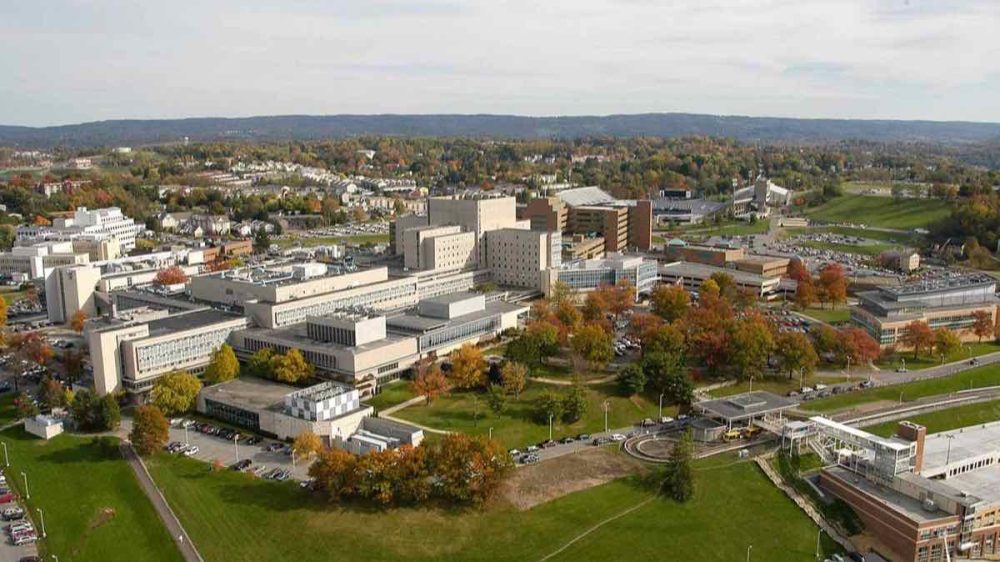
West Virginia University Physician Assistant Program
Morgantown, West Virginia · Masters
Tuition + fees $94,364 / $147,473 nonresident
Published full-program estimate
A closer look
A West Virginia PA program emphasizing clinical readiness, interprofessional care, and service to Appalachian and rural communities.
Mission & approach
The Division is dedicated to improving health and quality of life for people within and beyond West Virginia, providing physician assistants to meet health care needs through a high-quality education program that strives for excellence in education and clinical practice. It is committed to evidence-based practice and scholarship, and models how to address health disparity through an understanding of health policy and demographic risk factors, both locally and globally.
Check my fit with this school
Check three basics
Enter any GPA or patient care hours you know. We’ll compare them with this school’s published numbers. This is a starting point, not an eligibility decision.
The quick check needs JavaScript.
Admissions insights
What this program looks for in applicants
Point-based admission rubric weighting cumulative/prereq/science GPA, GRE (V,Q,AW), West Virginia residency (explicit preference; first tiebreaker), interview score, and strength of CASPA statement + WVU mission-question responses; HCE ranked in tiers (shadowing lowest -> scribe -> limited-judgment (MA) -> EMT/RT/dietitian -> paramedic/RN highest); tiebreakers: WV residency -> mission-question…
Summarized from the program’s admissions information. Confirm current selection criteria with the program.
Program admissions informationHow this program interviews
WVU typically conducts interviews in person on campus in August, though the admissions committee may hold some interviews via Zoom at its discretion.
Source checked Aug 1, 2026. Interview formats and dates can change between cycles.
Program interview informationAdmissions & prerequisites
Admission requirements
Prerequisite coursework
Semester credits unless notedReview each course, its lab, and the program’s policies. Your links are planning records; the program decides equivalency.
Courses shown as alternatives in the table are not all required. Confirm the accepted route with the program.
- Organic Chemistry or Biochemistry with lab: Organic Chemistry with lab OR Biochemistry with lab
- Separate Human Anatomy and Physiology or combined two-semester A&P sequence: Human Anatomy with lab + Human Physiology OR Combined Anatomy and Physiology I and II with labs
| Course | Credits | Lab | Min grade |
|---|---|---|---|
| Biology with lab | 4Semester credits unless noted | Required | C |
| General Chemistry with labs | 8Semester credits unless noted | Required | C |
| Organic Chemistry with lab | 4Semester credits unless noted | Required | C |
| Biochemistry with lab | 4Semester credits unless noted | Required | C |
| Human Anatomy with lab | 4Semester credits unless noted | Required | C |
| Human Physiology | 3Semester credits unless noted | Not specified | C |
| Combined Anatomy and Physiology I and II with labs2 course(s) Two semesters are required to replace separate Anatomy and Physiology. The combined credit breakdown is not stated. | Not publishedSemester credits unless noted | Required | C |
| Microbiology | 3Semester credits unless noted | Not specified | C |
| Psychology | 3Semester credits unless noted | Not specified | C |
| Statistics | 3Semester credits unless noted | Not specified | C |
| Medical Terminology | 1Semester credits unless noted | Not specified | C |
Policies that can change your plan
33 semester credits total. The minimum prerequisite GPA is 3.2 (not the average of accepted students). All prerequisites must be completed within ten years of matriculation at accredited U.S. institutions. AP is not accepted. A mammalian anatomy lab is acceptable, and a human anatomy lab is preferred.
When courses must be complete: No more than two prerequisites may be outstanding, planned or in progress when you apply; all must be completed before matriculation.
Dates & application steps
The prior-cycle deadline of 2026-08-01 has passed; the next deadline is not published.
Know what the total includes
Published cost estimate
Published full-program estimatePublished nonresident full-program tuition
Full-program tuition and required fees. Living, travel, insurance, and personal expenses may be additional.
Curriculum & clinical training
Medical and clinical preparation
66 credits of medical sciences, examination, pharmacology and clinical medicine. Coursework is in person except the behavioral-health course, which is taught virtually.
Clinical education and research
48 credits of core rotations, elective or rural-practice options, clinical seminars, research and comprehensive review.
114-credit curriculum on a spring-start sequence, with a 12-month clinical phase.
The admitted class
Class 2028
Published class statisticsClass of 2028 averages: CASPA cumulative undergraduate GPA 3.85, CASPA science GPA 3.83 and prerequisite GPA 3.87. The cumulative GPA covers undergraduate work only.
Compare published cohorts
| Class | Published GPA | Published science-related GPA | Published experience hours |
|---|---|---|---|
| Class 2028 | 3.85Mean Undergraduate cumulative GPA | 3.83Mean Science GPA | Not recordedPatient-care hours: not published. |
Published class statistics describe the named cohort or population. They are not admission minimums or acceptance probabilities.
The program’s track record
Graduate outcomes
PANCE pass rates
See first-time program performance with clearly dated national context.
- First-time PANCE pass rate: 88%
Latest class (2026): 88% passed the PANCE on the first try (22 of 25 takers). Earlier classes: 2025 92%, 2024 100%, 2023 91%, 2022 71%. The 5-year first-time average for 2022-2026 is 88% (107 of 121 takers), worked out from the program's report.
- Five-year first-time PANCE pass rate: 88%
Accreditation history
ContinuedSources you can open
Links to the program’s own pages and the official directories we use.
- West Virginia University curriculum/program program page
- West Virginia University program page
- West Virginia University program page-qualified class profile
- West Virginia University PA coursework requirements
- West Virginia University curriculum/program program page
- ARC-PA currently accredited programs — sponsoring-institution directory
About the U.S. News rank
The U.S. News PA rank uses the 2025 PA edition, matched to the listed program and campus. It reflects peer-assessed reputation, not admissions odds or a personal fit score. Programs without a separate entry are labeled “Unranked.”
How competitive are you for this program?
Match AI compares your full profile with this program and every other one, then sorts your list into Reach, Target and Safety.