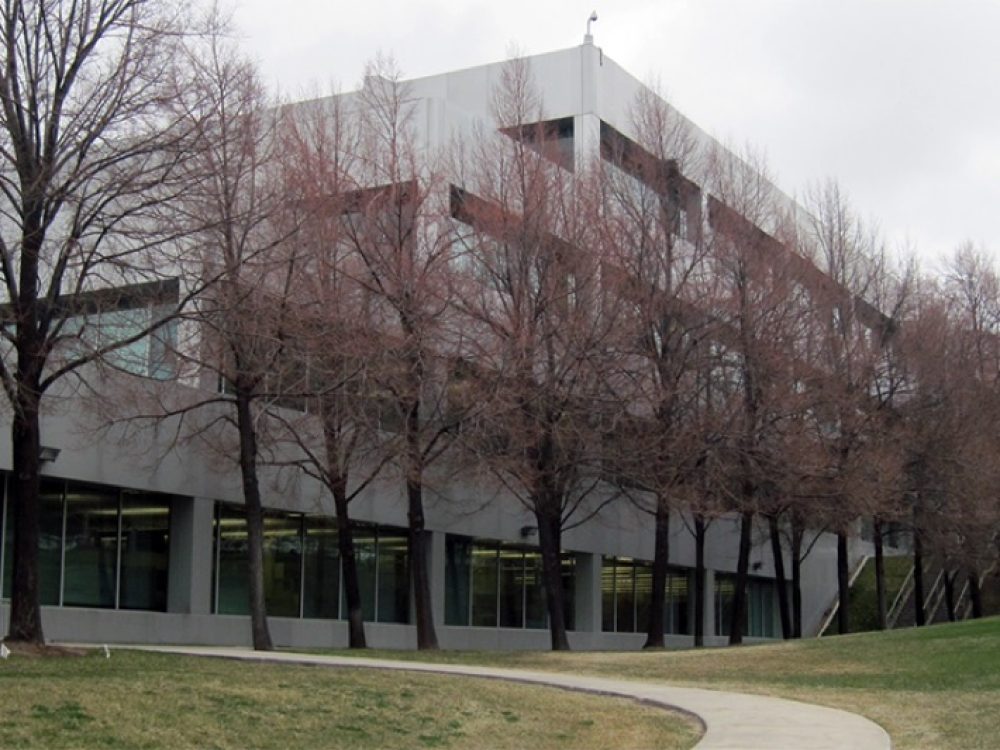
University of Utah (Salt Lake City) Physician Assistant Program
Salt Lake City, Utah · Masters
A closer look
A Salt Lake City PA program emphasizing primary care, service, and preparation for practice across Utah and the Mountain West.
Mission & approach
To improve the quality of health and access to care, with a commitment to the medically underserved, by educating students to become highly proficient, socially conscious, and accountable physician assistants (PAs) in the primary care model.
Check my fit with this school
Check three basics
Enter any GPA or patient care hours you know. We’ll compare them with this school’s published numbers. This is a starting point, not an eligibility decision.
The quick check needs JavaScript.
Admissions insights
What this program looks for in applicants
Evaluates academics (min 3.0 overall & science GPA; prereqs >=C), HCE (paid weighted over volunteer), and interview performance (incl. on-site anatomy/physiology/medical-terminology test). All prereqs complete by Aug 1 deadline.
Summarized from the program’s admissions information. Confirm current selection criteria with the program.
Program admissions informationHow this program interviews
Interviews are held in October on both the Salt Lake City and St. George campuses, and include a test of basic anatomy, physiology and general medical terminology given during the interview. The program scores academics, the quality and quantity of healthcare experience, and the personal statement, and states that the interview score determines both offers and the alternate ranking. Preference is given for mission fit and experience with underserved populations.
Source checked Jul 26, 2026. Interview formats and dates can change between cycles.
Program interview informationAdmissions & prerequisites
Admission requirements
Prerequisite coursework
Semester credits unless notedReview each course, its lab, and the program’s policies. Your links are planning records; the program decides equivalency.
Courses shown as alternatives in the table are not all required. Confirm the accepted route with the program.
- Separate Human Anatomy/Physiology or full-year combined A&P: Human Anatomy with lab + Human Physiology OR Combined Human A&P I and II sequence
| Course | Credits | Lab | Min grade |
|---|---|---|---|
| Human Anatomy with lab Three-credit human anatomy accepted if lab included and course accepted for science majors. | 4Semester credits unless noted | Required | C |
| Human Physiology Lab strongly recommended, not required. | 4Semester credits unless noted | Not required | C |
| Combined Human A&P I and II sequence2 course(s) Complete a full matched sequence; for quarter-system schools, at least ten quarter credits with labs. Do not mix separate and combined courses. | 8Semester credits unless noted | Required | C |
Biology related to the human bodyCourse notes & alternativesSix quarter units; lab credit may count toward them. Microbiology is strongly recommended but not individually required. | 4Semester credits unless noted | Not required | C |
Chemistry courseworkCourse notes & alternativesTwelve quarter units of any chemistry; lab credits may count toward them. | 8Semester credits unless noted | Not required | C |
Policies that can change your plan
- Cycle-specific recency
- Anatomy and physiology taken before Fall 2019 must be repeated by Fall 2026. Check the cutoff for your application cycle with the program.
Salt Lake City campus. Anatomy/Physiology taken before Fall 2019 must be repeated by Fall 2026 for the 2027 entering class; repeat labs are not required, and these repeats may be in progress during application. Other prerequisites do not expire. Exercise/sports science and kinesiology Anatomy/Physiology are not accepted. No AP, CLEP or audited coursework. Online courses and labs, and regionally accredited U.S. or Canadian institutions, are accepted. Pass/Fail is accepted only when the institution's passing grade is B or higher, with a separate Spring/Summer 2020 exception. Statistics, Genetics, Microbiology and writing are recommended, not additional required courses. See the program's admissions FAQs for lab details.
When courses must be complete: Complete all prerequisites, with transcripted grades and CASPA verification, by the time you submit your application (deadline August 1). The one exception: anatomy/physiology repeats may finish by Fall 2026.
Dates & application steps
The prior-cycle deadline of 2026-08-01 has passed; the next deadline is not published.
Know what the total includes
Published cost estimate
Published full-program estimatePublished nonresident full-program tuition
Published resident tuition plus required fees totals $97,208. The nonresident figures cannot be reliably totaled, so only nonresident tuition is shown.
Curriculum & clinical training
Didactic education
Graduate medical coursework includes weekly clinical experiences beginning at mid-year.
Clinical education
Full-time supervised rotations, a community-engagement master’s research project and summative examination.
27-month, seven-semester full-time program; Salt Lake City campus. The program provides clinical sites and preceptors.
The admitted class
2025–2027 class (program-wide)
Published class statisticsThis report covers students who entered in May 2025 and graduate in August 2027. Matriculated students average 3.69 overall and 3.65 science GPA; the applicant pool averages 3.47 and 3.37. The report covers the whole program (68 students) with no campus breakdown, so these are not Salt Lake City-only figures. Healthcare experience averages 6,577 hours (median 5,700); this is not a direct patient-care figure.
Compare published cohorts
| Class | Published GPA | Published science-related GPA | Published experience hours |
|---|---|---|---|
| 2025–2027 class (program-wide) | 3.69Mean total GPA | 3.65Mean science GPA | 6,577Mean health-care experience hours |
Published class statistics describe the named cohort or population. They are not admission minimums or acceptance probabilities.
The program’s track record
Graduate outcomes
PANCE pass rates
See first-time program performance with clearly dated national context.
- First-time PANCE pass rate: 98%
Latest class (2026): 98% of Salt Lake City campus students passed the PANCE on the first try (program-wide 98%, 58 of 61 takers across both campuses). Earlier Salt Lake City classes: 2025 95%, 2024 93%, 2023 95%, 2022 90%. The program does not publish campus-level takers, so there is no campus 5-year average. Across both campuses, 2022-2026, 92% passed on the first try (295 of 322 takers).
- Five-year first-time PANCE pass rate: Not available yet
Five-year first-time results are not yet available.
Accreditation history
ContinuedSources you can open
Links to the program’s own pages and the official directories we use.
- University of Utah (Salt Lake City) curriculum/program program page
- University of Utah (Salt Lake City) curriculum/program program page
- University of Utah (Salt Lake City) PA coursework requirements
- University of Utah (Salt Lake City) program page-qualified class profile
- University of Utah (Salt Lake City) program page
About the U.S. News rank
The U.S. News PA rank uses the 2025 PA edition, matched to the listed program and campus. It reflects peer-assessed reputation, not admissions odds or a personal fit score. Programs without a separate entry are labeled “Unranked.”
How competitive are you for this program?
Match AI compares your full profile with this program and every other one, then sorts your list into Reach, Target and Safety.