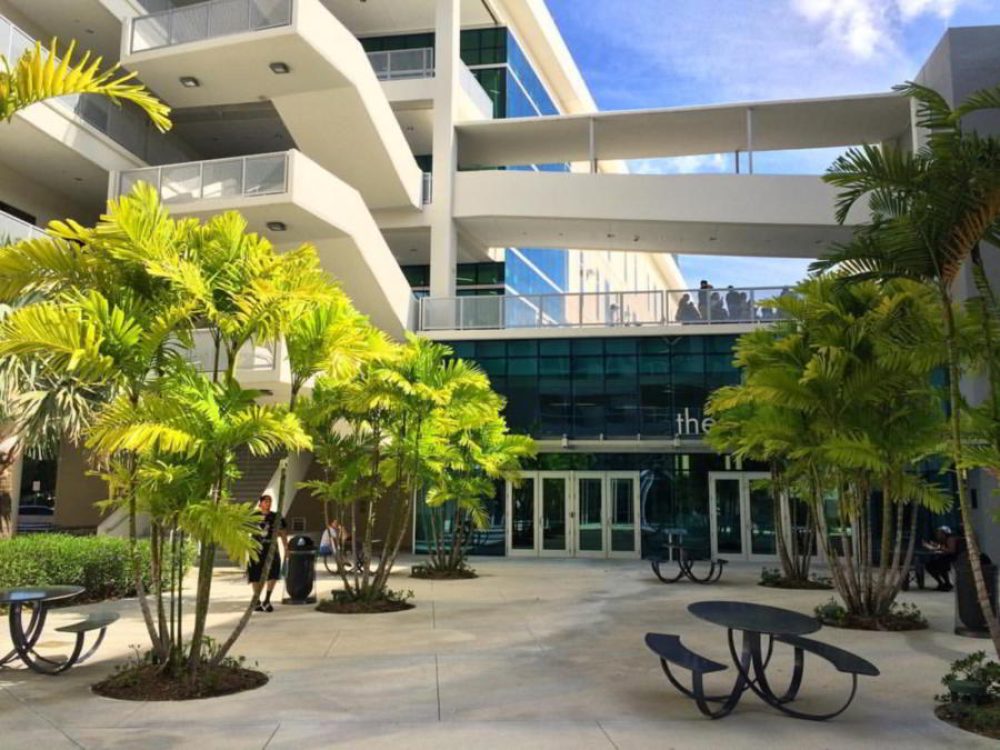
Address & Contact

Our Address

Medical Center Campus 950 NW 20th Street, Suite 2204 Building #2 Miami, FL 33127

GPS

25.810199600106, -80.204291190942

Telephone
← Find PA SchoolsProgram profile
PROGRAM PROFILE

Miami Dade College Physician Assistant Program

Miami, Florida · BAS in Health Science, Physician Assistant Studies + NSU Master of Health Science

Application deadline Oct 1, 2026October 1, 2026 Verified; dated cycle supersedes undated FAQ November 1.
Tuition Resident: $6,793.85 published cohort/track amountNonresident: Confirm with program · Clinical billing period is ambiguous; combined totals include fees
Class size 55 studentsARC-PA maximum and program’s stated annual seats: 55. This does not resolve differing historical enrollment counts across outcome tables.
Program length 27 monthsFull program
GRE requirement Policy unconfirmedPA-CAT is required: minimum 505 on all components; 525 or higher preferred. Current admissions does not explicitly confirm a GRE policy. Ask whether GRE is also needed.
Patient-care minimum No required minimumHealthcare experience is highly recommended, not required. No minimum hours are set. Direct patient care and PA shadowing may earn greater consideration; 50 hours of PA-C shadowing are suggested, not mandatory. Submit experience documentation with CASPA; the FAQ says additional hours are not accepted after submission.
Overall GPA minimum 3.00Minimum cumulative GPA 3.0, calculated by CASPA; baccalaureate degree in any discipline required.
Science GPA minimum Not published · see policyA 3.0 natural-science GPA is required, calculated by CASPA. The program specifically says natural science and does not define it as an unrestricted all-science GPA. Confirm which courses enter this calculation. A 3.50 science GPA appears in the competitive-selection guidance, not as a replacement minimum. See Requirements.
Recommendations 3 lettersThree letters: one must be from a physician assistant; the other two may be from faculty or other healthcare professionals.
International applicants Not publishedAn internationally recognized degree is permitted and foreign coursework has evaluation rules, but current PA pages do not establish visa/citizenship eligibility or a current English-test requirement. Confirm with admissions.
English proficiency / TOEFL Confirm with programConfirm with admissions. An internationally recognized degree is permitted and foreign coursework has evaluation rules, but current PA pages do not establish visa/citizenship eligibility or a current English-test requirement. Ask admissions about requirements for your credentials and citizenship status.
PANCE pass rate 100%First-time pass rate · Reporting year not recordedFive-year first-time: Not published
U.S. News PA rank Unranked2025 PA edition · Peer-assessed reputationNo published rank for this program in this edition.
THE PROGRAM

A closer look

A 27-month PA program based at Miami Dade College’s Medical Campus in Miami, with concurrent enrollment in Nova Southeastern University’s online Master of Health Science track. Students complete the MDC professional curriculum and NSU degree requirements before simultaneous graduation.

MDC Medical Campus training with regional clinical rotationsAffiliated NSU 30-credit Master of Health Science trackCommunity service and interprofessional educationOne selective clinical rotation with student preferences considered
Mission & approach

Educate culturally diverse primary-care PAs to serve medically underserved urban and rural communities in Florida, with academic excellence, professional standards and lifelong learning.

Miami Dade College Physician Assistant program
PREMIUM · MATCH AI

Is Miami Dade College a fit for you?

Unlock your personalized category, ranked school list, and reasons based on your profile. One Match AI purchase gives you the same results on PA School Finder and in your Toolkit.

SafetyTargetReachNot yet eligible
Unlock my school matches →
Miami Dade overview Current official page checked September 13, 2026 · Checked 2026-09-13
BEYOND THE NUMBERS

Admissions insights

What this program looks for in applicants

Applications are reviewed continuously and offers are made in stages until the class fills. Selection considers mission fit, academic preparation, communication, teamwork and community service. Preference includes Miami-Dade County residents, Florida residents, military veterans, healthcare/shadowing experience and PA-CAT 525 or higher. The policies page describes science GPA 3.50 or higher as competitive; the admissions minimum is natural-science 3.0.

Summarized from the program’s admissions information. Confirm current selection criteria with the program.

Program admissions information

How this program interviews

Oral interview +30-minute essay

Invitation response within 48 hours. Dated timeline lists essays/interviews June–December 2026. Panel/MMI structure and delivery modality unconfirmed.

Source checked Sep 13, 2026. Interview formats and dates can change between cycles.

Program interview information
YOUR STARTING POINT

Admissions & prerequisites

Admission requirements

Overall GPA3.00Minimum cumulative GPA 3.0, calculated by CASPA; baccalaureate degree in any discipline required.
Science GPA3.00 natural scienceA 3.0 natural-science GPA is required, calculated by CASPA. The program specifically says natural science and does not define it as an unrestricted all-science GPA. Confirm which courses enter this calculation. A 3.50 science GPA appears in the competitive-selection guidance, not as a replacement minimum.
Patient-care experienceNo required minimumHealthcare experience is highly recommended, not required. No minimum hours are set. Direct patient care and PA shadowing may earn greater consideration; 50 hours of PA-C shadowing are suggested, not mandatory. Submit experience documentation with CASPA; the FAQ says additional hours are not accepted after submission.
GREPolicy unconfirmedPA-CAT is required: minimum 505 on all components; 525 or higher preferred. Current admissions does not explicitly confirm a GRE policy. Ask whether GRE is also needed.
CASPer / PA-CATCASPer unconfirmed; PA-CAT requiredPA-CAT minimum 505 for all components;525 or higher preferred. Scores must be sent electronically to CASPA at submission. Current timeline calls September 15, 2026 the last test day; prose calls it the latest recommended date. Test early and confirm timing. No test-age limit or CASPer rule established.
Recommendations3Three letters: one must be from a physician assistant; the other two may be from faculty or other healthcare professionals.
Bachelor’s degreeRequiredAny discipline from a regionally accredited or internationally recognized institution. Foreign graduates must complete science prerequisites at a regionally accredited U.S. college/university per FAQ.
Prerequisite GPANot publishedEvery prerequisite needs C or higher; an aggregate prerequisite-GPA minimum is unconfirmed.
CASPAVerified by October 1, 2026The dated 2026–2027 admissions timeline and current program announcement require CASPA Verified by October 1, 2026, with required documents and supplemental application due that day. The undated FAQ still says November 1; use the explicitly dated October deadline and confirm any discrepancy directly. The program notes verification can take up to 30 days and accepts no documents after verification.
Supplemental application$30 for new MDC applicantsMDC admission/supplemental required; returning MDC students are expressly exempt from the fee and supplemental application. Separate NSU application follows acceptance; MDC cost page estimates its fee at $50.
ShadowingRecommended: 50 PA-C hoursSuggested, not required. Submit documentation with CASPA; additional hours cannot be added after submission according to FAQ.
International/English eligibilityConfirm with admissionsAn internationally recognized degree is permitted and foreign coursework has evaluation rules, but current PA pages do not establish visa/citizenship eligibility or a current English-test requirement. Ask admissions about requirements for your credentials and citizenship status.
Science GPA policy & alternatives

A 3.0 natural-science GPA is required, calculated by CASPA. The program specifically says natural science and does not define it as an unrestricted all-science GPA. Confirm which courses enter this calculation. A 3.50 science GPA appears in the competitive-selection guidance, not as a replacement minimum.

Prerequisite coursework

Credits; course and waiver alternatives below

Review each course, its lab, and the program’s policies. Your links are planning records; the program decides equivalency.

CourseCreditsLabMin gradeYour coursework
English Composition I and II
Course notes & alternatives

ENC1101 and ENC1102,3 credits each. Both required in the PA prerequisite guide.

6creditsNot specifiedCSign in to plan
Human Anatomy and Physiology I
Course notes & alternatives

BSC2085 lecture 3 plus BSC2085L lab 1; first half of the combined sequence.

4creditsRequiredCSign in to plan
Human Anatomy and Physiology II
Course notes & alternatives

BSC2086 lecture 3 plus BSC2086L lab 1; paired sequence totals 8, not two 8-credit requirements.

4creditsRequiredCSign in to plan
General Chemistry and Qualitative Analysis I and II
Course notes & alternatives

CHM1045/1046 each 3 lecture credits plus corresponding lab 2 credits;5 per course, 10 combined.

10creditsRequiredCSign in to plan
Microbiology
Course notes & alternatives

MCB2010 lecture 3 plus MCB2010L lab 2.

5creditsRequiredCSign in to plan
College Algebra
Course notes & alternatives

MAC1105; guide directs students to the discipline chair for appropriate mathematics placement/equivalency.

3creditsNot specifiedCSign in to plan
Statistical Methods
Course notes & alternatives

STA2023; separate from College Algebra.

3creditsNot specifiedCSign in to plan
Introduction to Psychology
Course notes & alternatives

PSY2012 specified by the PA prerequisite guide. The general degree plan offers broader social-science choices; confirm before substituting.

3creditsNot specifiedCSign in to plan
Humanities — first group
Course notes & alternatives

One of ARH1000, HUM1020, LIT2000, MUL1010, PHI2010 or THE2000. PHI2010 is recommended, not uniquely required.

3creditsNot specifiedCSign in to plan →This requirement needs an individual course review; completion has not been confirmed.
Humanities — second group
Course notes & alternatives

One of ARC2701, ARC2702, ARH1000, ARH2050, ARH2051, ARH2740, DAN2100, DAN2130, IND1100, IND1130, MUH2111, MUH2112, MUL2380 or PHI2604 in the prerequisite guide. PHI2604 is recommended; the Fall 2024 general degree plan lists a different/broader set. Confirm equivalency and avoid double counting one course across both groups.

3creditsNot specifiedCSign in to plan →This requirement needs an individual course review; completion has not been confirmed.
Oral Communication
Course notes & alternatives

One of ENC2300, LIT2480, SPC1017 or SPC2608. SPC2608 is recommended, not uniquely required.

3creditsNot specifiedCSign in to plan →This requirement needs an individual course review; completion has not been confirmed.
Civic Literacy — course or approved exam route
Course notes & alternatives

Course route: AMH2020 OR POS2041,3 credits, plus FCLE. Admissions also accepts POS2041 CLEP score 50 or higher for course and exam. This is a specific civic-credit route, not blanket AP/CLEP acceptance for science prerequisites. Current admissions says completion by graduation/no effect on admission; FAQ and prerequisite guide give earlier timing. Confirm your deadline.

Not publishedcreditsNot specifiedCSign in to plan →This requirement needs an individual course review; completion has not been confirmed.
Introduction to Healthcare and Lab — or approved waiver
Course notes & alternatives

HSC0003 lecture 2.5 plus HSC0003L lab 0.5. May apply while enrolled; FAQ allows completion with C or better or approved exemption by end of the application-year fall term. Eligible healthcare license plus valid CPR card can support a waiver request.

3creditsRequiredCSign in to plan →This requirement needs an individual course review; completion has not been confirmed.
Foreign Language Competency
Course notes & alternatives

Requirement may be satisfied through an approved competency/equivalence route. Guide lists second-level ASL, Chinese, French, German, Italian, Japanese, Portuguese, Russian or Spanish courses, 4 credits each. Do not assume every applicant must take a new 4-credit course; confirm prior coursework/equivalence. Required before matriculation; FAQ spring-of-application-year wording needs clarification.

Not publishedcreditsNot specifiedCSign in to plan →This requirement needs an individual course review; completion has not been confirmed.

Policies that can change your plan

Application timing
Current dated cycle: April 30–October 1, 2026. Review is continuous until filled; only Verified applications are evaluated. FAQ’s undated April 24/November 1 dates differ. Submit a complete application early; documents are not accepted after verification.
Pending requirements
Core prerequisites must be complete before applying. HSC0003/L may be in progress with completion or approved waiver by the end of the application-year fall term. Foreign language must be satisfied before matriculation; the FAQ’s spring-of-application-year language is ambiguous for this cycle.
Civic-literacy timing conflict
Current admissions says civic literacy is required before graduation and does not affect admission. FAQ says required for applicants with conditional completion by spring; prerequisite PDF says before matriculation. Confirm your obligation in writing. The named CLEP 50 route is specific to civic literacy.
Credit and course policies
Natural-science lectures: within 10 years of application deadline in admissions; FAQ says matriculation period. All prerequisite science for foreign graduates must be completed at a regionally accredited U.S. institution. Online-course/lab and pass/fail acceptance are unconfirmed. General degree-plan alternatives should not automatically replace the narrower PA prerequisite guide.
Advanced standing
No advanced placement into the MDC PA curriculum or MDC credit for experiential learning. The affiliated NSU track separately awards 5 prior-learning credits after documented MDC clinical work and graduation requirements; this is not an applicant waiver of the PA curriculum.
Degree audit
The BAS degree plan is 130 credits including general education and prerequisite coursework, not 130 new post-admission credits. It also contains computer-competency requirements. Ask for a milestone review to determine completed requirements and approved substitutions.
NSU application after acceptance
Apply to NSU’s MHSc by March 1 under the published annual instructions, select No Concentration, document MDC acceptance and cumulative GPA 3.0, and supply official transcripts. Foreign transcripts need a course-by-course evaluation with GPA from ECE or WES. The current MDC timeline lists NSU orientation March 2027 and classes April 2027; MDC orientation/classes in May 2027.
Supplemental term label
The current application instructions say Class of 2029 should select Fall 2027 for the MDC application, while the same page’s teaching timeline starts MDC in May 2027. Confirm the administrative term selection; do not confuse it with the instructional start date.
Interview
Invited applicants complete a 30-minute written essay and an oral interview; respond to the invitation within 48 hours. Current sources do not identify panel/MMI format or virtual/on-campus delivery.
Clinical placements and travel
Program assigns seven core rotations and one selective rotation. Students may submit preferences or prospective-site leads, but cannot arrange or negotiate sites directly. Primarily Miami-Dade with Broward and possible West Palm Beach placements; FAQ says up to 50 miles from Medical Campus and no out-of-state sites. Students provide their own transportation.
Work and schedule
Full-time. Didactic schedule typically weekdays 8 a.m.–8 p.m.; clinical schedules may include early starts, evenings, weekends and overnight shifts. Employment is strongly discouraged. No on-campus housing.
After acceptance
$800 non-refundable seat deposit. Cost-page footnote says it funds training, association memberships and lab equipment; it is not stated to be credited to tuition. Background check, health assessment and immunizations required before matriculation.
Progression
Designed for 27 months; exceptional extensions up to 39 months. Academic/clinical competencies and both institutions’ requirements must be met. MDC policy includes dismissal for term GPA below 2.5 or failed NSU coursework. These progression rules are separate from admission GPA minimums.
Additional outcome context
Program goals include community service and South Florida workforce contribution. The Class 2025 employment survey reports 71% of 26 respondents working in South Florida at about six months, with 57.7% response rate. This describes respondents, not the whole graduating class.

Every prerequisite requires C or better. Natural-science lecture courses must be within 10 years of the application deadline; the FAQ instead refers to a 10-year matriculation period, so confirm borderline coursework. Core prerequisites must be complete before applying. HSC0003/L has a separate pending-course/waiver route; foreign-language and civic-literacy timing is described differently across current pages. The named course alternatives below come from the currently linked prerequisite guide; the Fall 2024 general degree plan contains broader alternatives, so request a milestone review before substituting courses.

When courses must be complete: Core prerequisites must be complete before application. HSC0003/L has an explicit in-progress/waiver pathway. Confirm conflicting civic-literacy and foreign-language timing with [email protected]. The dated October 1, 2026 Verified deadline governs the listed 2026–2027 cycle.

Miami Dade prerequisites Currently linked prerequisite guide; undated; BAS P9210 130-credit degree · Checked 2026-09-13
BUILD YOUR TIMELINE

Dates & application steps

CASPA Verified and supplemental deadlineOct 1, 2026

The dated 2026–2027 admissions timeline and current program announcement require CASPA Verified by October 1, 2026, with required documents and supplemental application due that day. The undated FAQ still says November 1; use the explicitly dated October deadline and confirm any discrepancy directly. The program notes verification can take up to 30 days and accepts no documents after verification.

Published date
2026–2027 application cycle openedApr 30, 2026 · Passed

Past opening date; cycle remains listed through October 1, 2026.

Published date
PA-CAT timing — confirm test deadlineSep 15, 2026 · Passed

Dated timeline labels this last day; prose calls September 15 latest recommended. Scores required at submission and by deadline.

Published date
Essay and interview windowJune–December 2026

Tentative dated admissions timeline.

NSU application deadline instructionsMarch 1 annually after MDC acceptance

Program gives annual March 1 instructions; confirm the exact deadline in your acceptance materials.

NSU orientationMarch 2027

Tentative 2026–2027 timeline.

NSU classes begin — Class of 2029April 2027

Online affiliated MHSc starts before MDC PA classes.

MDC orientation and PA classes beginMay 2027

Early May orientation; exact class day not given. Application-form instructions separately say select Fall 2027; confirm administrative term.

Ready to start an application plan?

Keep your essays, checklist, and personal targets together.

Plan application →
Miami Dade admissions Dated 2026–2027 application cycle; Class of 2029; matriculant table Classes 2023–2027 · Checked 2026-09-13
THE FINANCIAL PICTURE

Know what the total includes

Published cost estimate

Undated combined MDC + NSU estimates; billing details need confirmation
Resident tuition$6,793.85 published cohort/track amount
Nonresident tuitionConfirm with program
Required program feesConfirm with program
Tuition + required feesFull attendance estimate not recorded
Confirm with program

The program publishes combined MDC + NSU tuition-and-fee estimates of $41,437.10 for Florida residents and $70,349 for nonresidents, with no cohort year. Separate tuition-only amounts are not published. The nonresident attendance total implies $70,349.80, and the detailed fee table does not reconcile with the summary. Ask both institutions for a written quote for your entering class.

See additional expenses & assumptions
Published combined tuition + fees — Florida resident$41,437.10
Published combined tuition + fees — nonresident$70,349
Books and supplies — seven terms$5,250
Housing — Florida resident living with parents$17,759
Housing — independent/nonresident scenario$95,417
Clinical-year travel$5,000
Transportation — seven terms$8,678
Personal expenses — seven terms$6,965
Published additional expenses — with parents$43,652
Published additional expenses — independent/nonresident$121,310
Published attendance estimate — Florida resident with parents$85,089.10
Published attendance estimate — Florida resident independent$162,747.10
Published attendance estimate — nonresident; arithmetic discrepancy noted$191,659.80
MDC resident tuition — didactic-year column$6,793.85
MDC resident tuition — clinical column labelled per term$3,247.25
MDC nonresident tuition — didactic-year column$25,474.55
MDC nonresident tuition — clinical column labelled per term$13,399.25
MDC non-refundable seat deposit$800
Estimated lab fees — didactic column$8,500
Estimated lab fees — clinical column$4,500
American Databank$50
BLS/ACLS/PALS — clinical column$300
Background screening — didactic column$80
Background screening — clinical column$200
NSU application fee — cost-page estimate$50
NSU tuition — didactic column$4,879
NSU tuition — clinical column$5,285
NSU health insurance — didactic column$2,092
NSU health insurance — clinical column$2,615
NSU student-service fee — didactic column$900
NSU student-service fee — clinical column$1,125

USD; figures are reported estimates, not a reconciled entering-cohort quote. Additional rows sum to $43,652 for the with-parents scenario and $121,310 for independent/nonresident. Resident attendance totals reconcile to the summary $41,437.10, but nonresident $70,349+$121,310=$191,659, which differs from the printed $191,659.80 by $0.80. Reading each detailed tuition/fee value once gives$41,417.10 resident and $70,249.80 nonresident; these differ from summary totals, and the clinical tuition heading says per term, so the once-only sums are audits, not replacement prices. No term multiplier is assumed. The $800 deposit funds listed items and is not described as a tuition credit. The $30 MDC application fee is waived for returning students; the table separately includes a $50 NSU application estimate. MDC says its affiliated students receive 12% off NSU’s prevailing tuition, excluding course materials, books and service fees; do not discount the combined table again. Linked NSU tuition URL returned 404 during review. Obtain current MDC and NSU written figures before budgeting.

Plan for the application, too.

Keep application fees separate from the cost of attending.

Miami Dade costs Undated approximate dual-degree budget; additional expenses calculated for seven terms; no cohort/year stated · Checked 2026-09-13
HOW YOU’LL LEARN

Curriculum & clinical training

01First year

MDC didactic training

Basic/applied sciences, clinical medicine, pharmacology, physical diagnosis and procedural training.

02Second year

Supervised clinical practice

Seven core disciplines plus one selective rotation; regional hospital, outpatient and community settings.

03Concurrent

NSU Master of Health Science

Eight online courses plus 5 prior-learning credits, totaling 30 MHSc credits.

MDC program length 27 months; BAS degree plan 130 credits includes prerequisite/general-education work. NSU sequence totals 25 taught credits plus 5 prior-learning credits earned with at least 200 documented MDC clinical hours, a case study and proof of MDC graduation requirements. These 200 hours are within the degree, not an admissions experience minimum. The webpage says eight terms; the NSU guide shows nine 12-week calendar terms, with no course in Term 7 and eight taught courses. Do not infer extra tuition from this difference. FAQ describes three 8-week and five 4-week rotations, then uses additional-elective wording, while the degree plan lists eight rotations total; confirm the final calendar before planning for an additional rotation. Both institutions’ requirements must be completed for simultaneous graduation.

Miami Dade curriculum Current official page checked September 13, 2026 · Checked 2026-09-13
WHO STUDIES HERE

The admitted class

Program Class of 2027

Published class averages
Overall GPANot recorded
Science GPA3.57
Patient-care hoursNot recorded
Compare published cohorts
ClassOverall GPAScience GPAPCE hours
Program Class of 2023Not recorded3.60Not recorded
Program Class of 2024Not recorded3.50Not recorded
Program Class of 2025Not recorded3.56Not recorded
Program Class of 2026Not recorded3.46Not recorded
Program Class of 2027Not recorded3.57Not recorded

Program-labelled Classes 2023,2024,2025,2026 and 2027 have published science-GPA averages 3.60,3.50,3.56,3.46 and 3.57. Overall GPA and experience averages are not published. PA-CAT composite averages for those same classes are 525,527,520,528 and 522. These are cohort labels, not newly inferred matriculation years. Admissions and goals pages disagree on some class counts and county-residency figures; no new enrollment count is inferred. ARC maximum and stated annual seats remain 55.

Class averages describe an admitted cohort. They are not minimums or acceptance probabilities.

Miami Dade admissions Dated 2026–2027 application cycle; Class of 2029; matriculant table Classes 2023–2027 · Checked 2026-09-13
OUTCOMES & OVERSIGHT

The program’s track record

Graduate outcomes

PANCE pass rates

See first-time program performance with clearly dated national context.

  • First-time PANCE pass rate: 100%

NCCPA report printed September 4, 2026: Class 2026 first-time 26/26=100%, a snapshot of those who had tested, not a final entire-cohort guarantee. Earlier first-time rates and counts: 2022 43/50=86%;2023 47/53=89%;2024 40/47=85%;2025 42/45=93%. The program does not publish a single five-year aggregate in this report. All-attempt pass rates and ultimate candidate success are different measures; do not substitute them for first-time results.

Program reporting year not recorded; direct comparison unavailable.

  • Five-year first-time PANCE pass rate: Not published

Program reporting period not recorded; direct comparison unavailable.

Graduation & attrition

2025 graduating cohort

Published attrition6.9%
Entering students58
Graduates54

Program reports 93.1% graduation and 6.9% attrition for Class 2025. Its table labels 58 entering versus the 55 ARC maximum and does not separately identify joining students; its formula includes entering plus joining students. Older rows list 2023 entering 55/graduates 48 with 96.4% graduation and 2024 entering 52/graduates 45 with 87.3%, which do not reconcile directly. The 2025 result is quoted as published; the earlier figures and the definition of entering students need clarification.

Miami Dade attrition Graduating Classes 2023–2025 · Checked 2026-09-13

Accreditation history

Probation
First accreditedMay 1998
Next reviewOctober 2027
  1. May 1998First accreditation

    Current ARC history header records May 1998.

  2. March 2020Affiliated master’s degree acknowledged

    ARC acknowledged adding a Master of Health Science to the existing credentials, effective May 2021.

  3. September 2025Placed on Accreditation-Probation

    ARC cited 39 areas of noncompliance and five observations, covering institutional resources, admissions, curriculum, assessment and clinical education. Maximum 55; focused visit before October 2027 review.

  4. January 2026Outcome-report update acknowledged

    Updated PANCE and graduation-rate reporting acknowledged; no further information requested for that report.

  5. July 2026Further faculty/admissions evidence requested

    Further evidence on faculty resources and PA-CAT/admissions preferences due September 15, 2026. Other named standards and observations were addressed; probation remains current.

Accreditation-Probation since September 2025; first accredited May 1998, ARC maximum 55, next review October 2027. July 2026 review requested evidence on faculty resources and published PA-CAT/admission preference policies by September 15, 2026. Other specified reports required no further information, but that did not end probation. A modified self-study is due February 1, 2027 and a focused probation visit is planned before the October 2027 meeting.

Miami Dade accreditation August 2026 PDF; latest action July 2026; next review October 2027 · Checked 2026-09-13
Miami Dade pance NCCPA report printed September 4, 2026; graduation cohorts 2022–2026; 2026 results as of report date · Checked 2026-09-13
CHECK THE EVIDENCE

Sources you can open

Follow the source for the policy or cohort you are reviewing. A check date is separate from the year a figure describes.

Rankings & information still to verify

The U.S. News PA rank uses the 2025 PA edition, matched to the listed program and campus. It reflects peer-assessed reputation, not admissions odds or a personal fit score. Programs without a separate entry are labeled “Unranked.”

Unpublished policies and unverified cohort statistics are left open for confirmation.

PA School Finder × PA Life Applicant ToolkitOne program record. One application plan.