
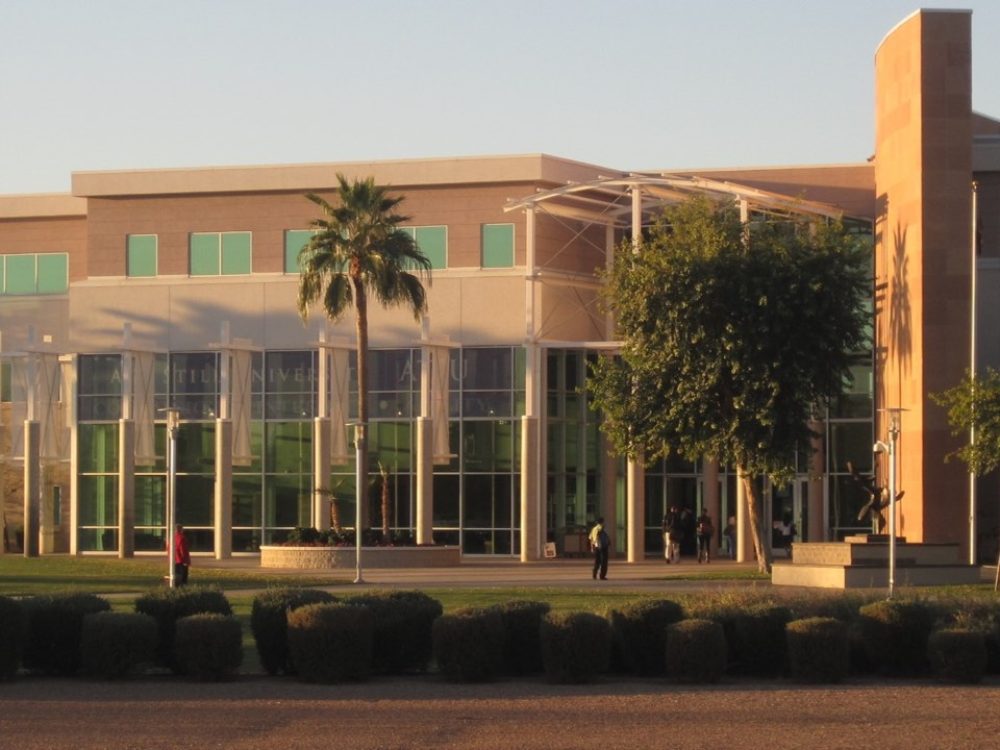
Tuition + fees $129,587
Based on the last published schedule (Class of 2028); rates for the next entering class have not been published.
Check my fit with this school
Check three basics
Enter any GPA or patient care hours you know. We’ll compare them with this school’s published numbers. This is a starting point, not an eligibility decision.
The quick check needs JavaScript.
A closer look
A 26-month PA program in Mesa requiring 500 patient-contact hours, with 1,000 hours recommended.
Mission & approach
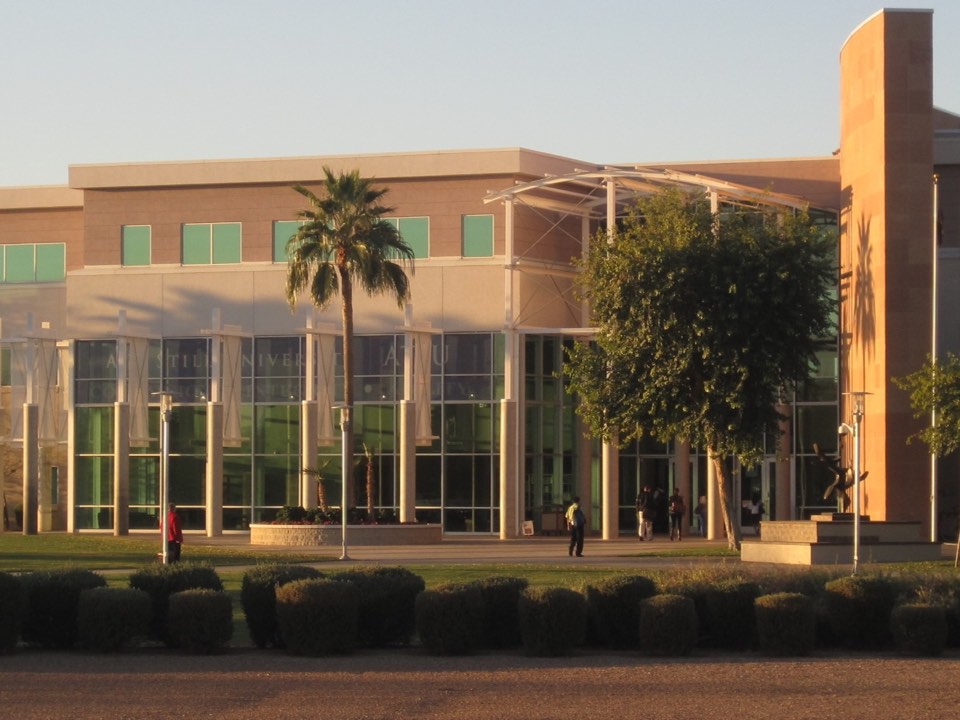
The A.T. Still University Department of Physician Assistant Studies provides a learning-centered education that develops exemplary physician assistants who deliver whole person healthcare with an emphasis on underserved populations. The program is deeply committed to fulfilling this mission.
Admissions insights
What this program looks for in applicants
Rolling admissions; 3.0 cumulative and science GPA minimums; 500 patient-contact hours required, 1,000 recommended. Science courses within five years are recommended, not required. Prerequisites must be completed before you start.
Summarized from the program’s admissions information. Confirm current selection criteria with the program.
Program admissions informationHow this program interviews
The interview day pairs a multiple mini interview (MMI) with a one-on-one file-review interview, in person or over Zoom. Decisions consider MMI scores, the one-on-one interview, academic performance on the CASPA application, and fit with the program's mission. Review begins in June on a rolling basis.
Source checked Jul 26, 2026. Interview formats and dates can change between cycles.
Program interview informationAdmissions & prerequisites
Admission requirements
Prerequisite coursework
semester credit hoursReview each course, its lab, and the program’s policies. Your links are planning records; the program decides equivalency.
Courses shown as alternatives in the table are not all required. Confirm the accepted route with the program.
- Anatomy and physiology route: Human Anatomy with lab + Human Physiology with lab OR Combined Human Anatomy & Physiology I and II with labs
- English route: English Composition, six-credit route OR English Composition, three-credit route + English elective
| Course | Credits | Lab | Min grade |
|---|---|---|---|
| Human Anatomy with lab1 course(s) Within 5 years of application is recommended. A separate anatomy/physiology route is available. | 4semester credit hours | Required | C |
| Human Physiology with lab1 course(s) Within 5 years of application is recommended. A separate anatomy/physiology route is available. | 4semester credit hours | Required | C |
| Combined Human Anatomy & Physiology I and II with labs2 course(s) Two semesters with labs; alternative to separate anatomy and physiology. | 8semester credit hours | Required | C |
Microbiology1 course(s)Course notes & alternativesLab optional; within 5 years recommended. | 3semester credit hours | Not required | C |
Biochemistry1 course(s)Course notes & alternativesLab optional; within 5 years recommended. | 3semester credit hours | Not required | C |
General Chemistry1 course(s)Course notes & alternativesLab optional; within 5 years recommended. | 4semester credit hours | Not required | C |
| Psychology1 course(s) | 3semester credit hours | Not specified | C |
| College Statistics1 course(s) | 3semester credit hours | Not specified | C |
| English Composition, six-credit route1 course(s) One or more courses totaling at least six semester credits; the program does not set a number of courses. | 6semester credit hours | Not specified | C |
| English Composition, three-credit route1 course(s) Pair with three credits of an English elective. | 3semester credit hours | Not specified | C |
| English elective1 course(s) Required only with the three-credit composition route. | 3semester credit hours | Not specified | C |
Medical Terminology1 course(s)Course notes & alternativesMust be transcripted college credit; certificate alone does not count. | 1semester credit hours | Not specified | C |
Policies that can change your plan
- Minimum grade
- C or higher in all prerequisites.
- Recency
- Taking anatomy, physiology, microbiology, biochemistry and general chemistry within the last five years is recommended, not required.
- Location
- Coursework must be from a regionally accredited institution recognized by the U.S. Department of Education; foreign course or transcript equivalency is not accepted.
- AP credit
- AP generally not accepted for prerequisites except English.
- Completion
- All prerequisites must be complete before the July start; one or two may be in progress when you apply.
- Medical terminology
- Transcripted college credit required; certificate alone does not count.
The five-year science recency is a recommendation, not a blanket expiration rule.
Dates & application steps
The program has a recurring September 1 submission cutoff; September 1, 2026 has passed. Confirm the next cycle’s date.
This 2026 deadline has passed.
The program lists October 1; confirm the next cycle's date.
The program says July; the exact date for the next cohort has not been published.
Know what the total includes
Published cost estimate
Based on the last published schedule (Class of 2028); rates for the next entering class have not been published.Prior-cohort tuition for reference only; the next entering class's rate has not been published.
Tuition only: $124,378. Add $3,236 in technology fees and $1,973 in equipment/lab fees for an institutional total of $129,587. Rates for the next cohort are not yet published; tuition and fees may change annually.
Curriculum & clinical training
Didactic phase in Mesa
Classroom and laboratory work build clinical knowledge, procedural skills and reasoning, with early supervised clinical learning.
Clinical phase
Placements are across Arizona and national community-health-center partners. Clinical experiences include core disciplines, an elective and selectives.
The residential ATSU-ASHS program in Mesa, Arizona is 26 months and includes a community-focused capstone.
The admitted class
Class of 2028
Published class statisticsCompare published cohorts
| Class | Published GPA | Published science-related GPA | Published experience hours |
|---|---|---|---|
| Class of 2028 | 3.61 | 3.53 | Not recorded |
Published class statistics describe the named cohort or population. They are not admission minimums or acceptance probabilities.
The program’s track record
Graduate outcomes
PANCE pass rates
See first-time program performance with clearly dated national context.
- First-time PANCE pass rate: 92%
- Five-year first-time PANCE pass rate: 91%
Accreditation history
ContinuedSources you can open
Links to the program’s own pages and the official directories we use.
- Arizona School of Health Sciences program page
- ARC-PA currently accredited programs — sponsoring-institution directory
- Arizona School of Health Sciences program page
- Arizona School of Health Sciences program page
- Arizona School of Health Sciences program page
- Arizona School of Health Sciences curriculum and clinical training
- Arizona School of Health Sciences program page
- Program contact page
About the U.S. News rank
The U.S. News PA rank uses the 2025 PA edition, matched to the listed program and campus. It reflects peer-assessed reputation, not admissions odds or a personal fit score. Programs without a separate entry are labeled “Unranked.”
How competitive are you for this program?
Match AI compares your full profile with this program and every other one, then sorts your list into Reach, Target and Safety.