
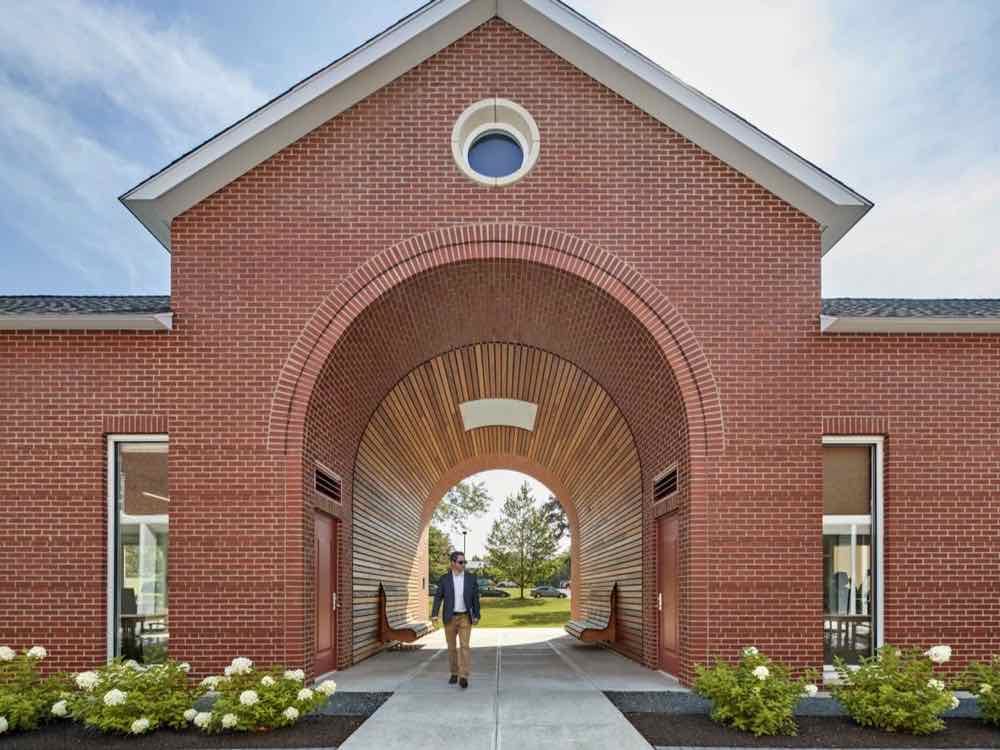
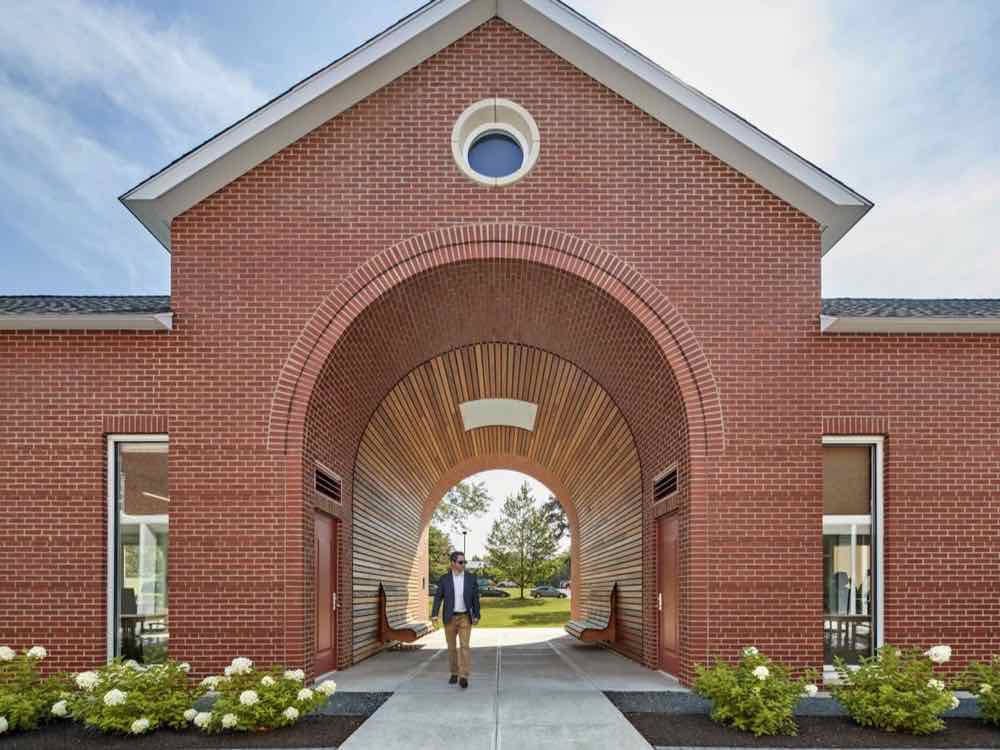
University of Saint Joseph Physician Assistant Program
West Hartford, Connecticut · Masters
Tuition + fees $140,389
Class of 2029 (cohort 11, Spring I through Spring III); full program
A closer look
A Connecticut PA program emphasizing ethical practice, clinical competence, and service-oriented care in a collaborative university setting.
Mission & approach
The mission of the University of Saint Joseph Physician Assistant Studies Program is to foster the development of engaged learners into well-qualified Physician Assistants. Intellectual rigor in a spiritually enriched diverse and inclusive environment will cultivate competent, ethical members of the health care team who will demonstrate the highest level of integrity and a commitment to life-long learning. Graduates will exemplify a sense of social responsibility through service to the community and their profession.
Check my fit with this school
Check three basics
Enter any GPA or patient care hours you know. We’ll compare them with this school’s published numbers. This is a starting point, not an eligibility decision.
The quick check needs JavaScript.
Admissions insights
What this program looks for in applicants
100-pt scoring: overall cGPA 10, prereq GPA 10, CASPA application review 30, interview 30, group activity 15, essay 5. No guaranteed interview for other USJ students or alumni; students in USJ's 3.5 + 2.5 Accelerated program get an interview and extra scoring points if they meet its progression rules and 1,000 direct patient care hours. Modular curriculum.
Summarized from the program’s admissions information. Confirm current selection criteria with the program.
Program admissions informationHow this program interviews
Admission is scored out of 100 points and the interview day carries half of it: interview 30, group activity 15 and essay 5. USJ degree-holders with at least 60 USJ credits receive interview preference.
Source checked Jul 11, 2026. Interview formats and dates can change between cycles.
Program interview informationAdmissions & prerequisites
Admission requirements
Prerequisite coursework
semester credit hoursReview each course, its lab, and the program’s policies. Your links are planning records; the program decides equivalency.
Courses shown as alternatives in the table are not all required. Confirm the accepted route with the program.
- Anatomy and physiology route: Human Anatomy & Physiology I and II with labs OR Human Anatomy with lab + Human Physiology with lab OR Mammalian Anatomy with lab + Human Physiology with lab
- Organic chemistry or biochemistry: Organic Chemistry with lab OR Biochemistry without lab
| Course | Credits | Lab | Min grade |
|---|---|---|---|
Biology with labs1 course(s)Course notes & alternativesEight credits total; the number of courses is not published. Qualifying subjects include general biology, genetics, immunology, histology, infectious disease, pathophysiology, and cell or molecular biology. Non-science-major biology is excluded. | 8semester credit hours | Required | C |
Chemistry with labs1 course(s)Course notes & alternativesEight semester credits total; the number of courses is not published. | 8semester credit hours | Required | C |
| Human Anatomy & Physiology I and II with labs2 course(s) Two-course combined sequence with labs. | 8semester credit hours | Required | C |
| Human Anatomy with lab1 course(s) Separate anatomy/physiology route. | 4semester credit hours | Required | C |
| Mammalian Anatomy with lab1 course(s) Accepted alternative to human anatomy. Comparative anatomy is not accepted. | 4semester credit hours | Required | C |
| Human Physiology with lab1 course(s) Separate anatomy/physiology route. | 4semester credit hours | Required | C |
| Organic Chemistry with lab1 course(s) Alternative to 3-credit Biochemistry without lab. | 4semester credit hours | Required | C |
| Biochemistry without lab1 course(s) Alternative to 4-credit Organic Chemistry with lab. | 3semester credit hours | Not required | C |
| Microbiology with lab1 course(s) | 4semester credit hours | Required | C |
Statistics1 course(s)Course notes & alternativesBiostatistics or psychology statistics accepted. | 3semester credit hours | Not specified | C |
Psychology1 course(s)Course notes & alternativesExamples include introductory, general, developmental, abnormal, or lifespan psychology. | 3semester credit hours | Not specified | C |
Policies that can change your plan
- Minimum grade
- C or higher for each prerequisite; cumulative prerequisite GPA 3.0 at application.
- Recency
- All prerequisites within seven years of enrollment, with case-by-case course waivers.
- AP credit
- Scores of 4 or 5 are accepted; confirm with the program how they apply to each course.
- Completion
- No more than two requirements may be outstanding when you apply; finish them by December 20, 2027 for the published 2027–28 cycle.
- Course location
- Prerequisites must be taken at an institutionally accredited U.S. college or university.
- International transcripts
- Foreign degree/transcripts accepted with course-by-course evaluation, but PA prerequisites still must satisfy the U.S. coursework rule.
Dates & application steps
The verified CASPA deadline for the 2027–2028 cycle (January 2028 cohort) is September 1, 2027, 11:59 p.m. Eastern. CASPA opens April 29, 2027.
This 2026 deadline has passed.
This date applies to the 2027–28 cycle.
The published 28-month cohort begins in January 2027.
Know what the total includes
Projected cost estimate
Class of 2029 (cohort 11, Spring I through Spring III); full programTuition only, from the school’s published rates for this cohort. Rates can change.
Tuition is the school's published Class of 2029 schedule: $1,363 per credit for 103 credits. The school adjusts tuition for each cohort, so later classes may pay more. No required institutional fees are published on the program cost page; course or lab fees may apply. Housing, transportation, textbooks and equipment, and health insurance are estimated separate costs and are excluded. Tuition plus required fees = $140,389.
Curriculum & clinical training
Modular didactic education
Students focus on one course at a time, integrating clinical sciences by organ system.
Clinical phase
Nine five-week supervised clinical practice experiences and preparation for entering clinical practice.
28-month graduate PA sequence; the clinical phase includes activities beyond the nine rotations.
The admitted class
Published class statistics describe the named cohort or population. They are not admission minimums or acceptance probabilities.
The program’s track record
Graduate outcomes
PANCE pass rates
See first-time program performance with clearly dated national context.
- First-time PANCE pass rate: 100%
- Five-year first-time PANCE pass rate: 100%
Accreditation history
ContinuedSources you can open
Links to the program’s own pages and the official directories we use.
- ARC-PA currently accredited programs — sponsoring-institution directory
- University of Saint Joseph program page
- University of Saint Joseph curriculum/program program page
- University of Saint Joseph program page
- USJ published 2026–27 PA rate
- USJ PA cohort expense links
About the U.S. News rank
The U.S. News PA rank uses the 2025 PA edition, matched to the listed program and campus. It reflects peer-assessed reputation, not admissions odds or a personal fit score. Programs without a separate entry are labeled “Unranked.”
How competitive are you for this program?
Match AI compares your full profile with this program and every other one, then sorts your list into Reach, Target and Safety.