
Miami Dade College Physician Assistant Program
Miami, Florida · BAS in Health Science, Physician Assistant Studies + NSU Master of Health Science
Fees not published
Undated combined MDC + NSU estimates; confirm billing details with the program
A closer look
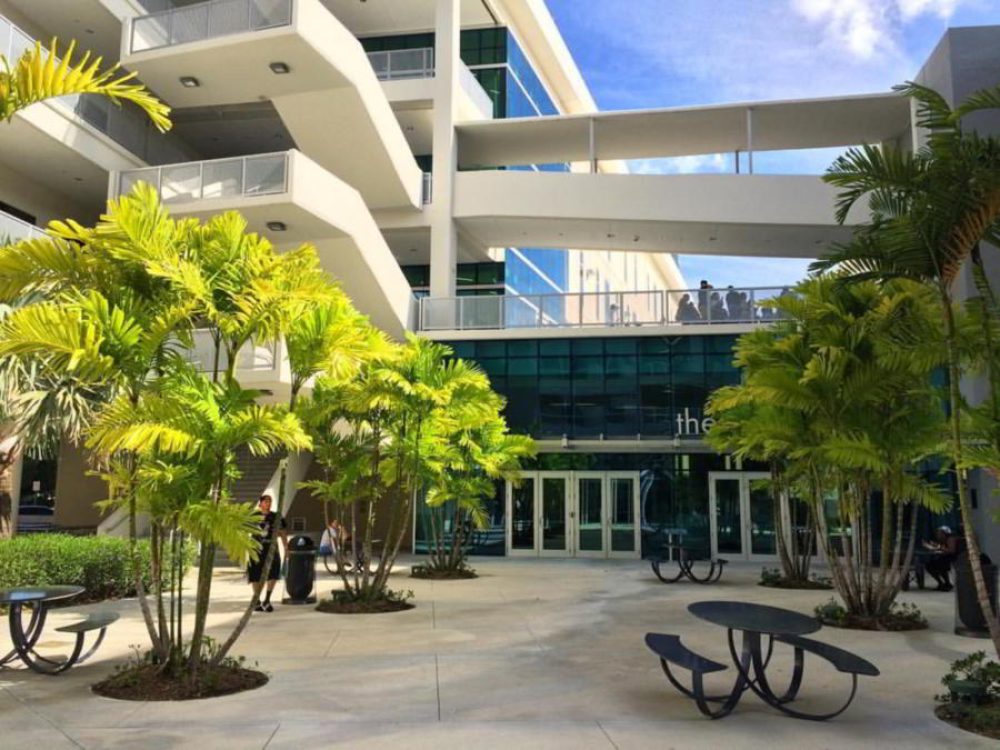
A 27-month PA program based at Miami Dade College’s Medical Campus in Miami, with concurrent enrollment in Nova Southeastern University’s online Master of Health Science track. Students complete the MDC professional curriculum and NSU degree requirements before simultaneous graduation.
Mission & approach
Educate culturally diverse primary-care PAs to serve medically underserved urban and rural communities in Florida, with academic excellence, professional standards and lifelong learning.
Check my fit with this school
Check three basics
Enter any GPA or patient care hours you know. We’ll compare them with this school’s published numbers. This is a starting point, not an eligibility decision.
The quick check needs JavaScript.
Admissions insights
What this program looks for in applicants
Applications are reviewed continuously, and offers are made in stages until the class fills. Selection considers mission fit, academic preparation, communication, teamwork, and community service. Preference goes to Miami-Dade County residents, Florida residents, military veterans, applicants with healthcare or shadowing experience, and PA-CAT scores of 525 or higher. The policies page calls a science GPA of 3.50 or higher competitive; the admissions minimum is a 3.0 natural-science GPA.
Summarized from the program’s admissions information. Confirm current selection criteria with the program.
Program admissions informationHow this program interviews
Respond to the invitation within 48 hours. The timeline lists essays and interviews from June to December 2026. The interview format (panel or MMI) and whether it is virtual or in person are not published — check with the program.
Source checked Sep 13, 2026. Interview formats and dates can change between cycles.
Program interview informationAdmissions & prerequisites
Admission requirements
Science GPA policy & alternatives
A 3.0 natural-science GPA, calculated by CASPA, is required. The program says "natural science" without defining it as an all-science GPA, so confirm which courses are included. A 3.50 science GPA appears in the program's guidance on competitive applicants, but it is not a higher minimum.
Prerequisite coursework
Credits; course and waiver alternatives belowReview each course, its lab, and the program’s policies. Your links are planning records; the program decides equivalency.
| Course | Credits | Lab | Min grade |
|---|---|---|---|
English Composition I and IICourse notes & alternativesENC 1101 and ENC 1102, 3 credits each. Both are required. | 6credits | Not specified | C |
Human Anatomy and Physiology ICourse notes & alternativesBSC2085 lecture 3 plus BSC2085L lab 1; first half of the combined sequence. | 4credits | Required | C |
Human Anatomy and Physiology IICourse notes & alternativesBSC2086 lecture 3 credits plus BSC2086L lab 1 credit; the paired sequence totals 8 credits, not two separate 8-credit requirements. | 4credits | Required | C |
General Chemistry and Qualitative Analysis I and IICourse notes & alternativesCHM 1045 and CHM 1046: each is a 3-credit lecture plus a 2-credit lab, 5 credits per course and 10 credits combined. | 10credits | Required | C |
MicrobiologyCourse notes & alternativesMCB2010 lecture 3 plus MCB2010L lab 2. | 5credits | Required | C |
College AlgebraCourse notes & alternativesMAC1105; guide directs students to the discipline chair for appropriate mathematics placement/equivalency. | 3credits | Not specified | C |
Statistical MethodsCourse notes & alternativesSTA2023; separate from College Algebra. | 3credits | Not specified | C |
Introduction to PsychologyCourse notes & alternativesPSY 2012 is the required course. The general degree plan offers broader social-science choices; confirm with the program before substituting. | 3credits | Not specified | C |
Humanities — first groupCourse notes & alternativesOne of ARH1000, HUM1020, LIT2000, MUL1010, PHI2010 or THE2000. PHI2010 is recommended, not uniquely required. | 3credits | Not specified | C |
Humanities — second groupCourse notes & alternativesTake one course from this list: ARC 2701, ARC 2702, ARH 1000, ARH 2050, ARH 2051, ARH 2740, DAN 2100, DAN 2130, IND 1100, IND 1130, MUH 2111, MUH 2112, MUL 2380, or PHI 2604. PHI 2604 is recommended. The Fall 2024 general degree plan lists a broader set of options. Confirm equivalency, and do not count one course toward both groups. | 3credits | Not specified | C |
Oral CommunicationCourse notes & alternativesOne of ENC2300, LIT2480, SPC1017 or SPC2608. SPC2608 is recommended, not uniquely required. | 3credits | Not specified | C |
Civic Literacy — course or approved exam routeCourse notes & alternativesTake AMH 2020 or POS 2041 (3 credits), plus FCLE. Admissions also accepts a CLEP score of 50 or higher on the POS 2041 exam. This route is specific to civic literacy and does not mean AP/CLEP is accepted for science prerequisites. Admissions says this can be completed by graduation and does not affect admission, but the FAQ and prerequisite guide give earlier timing — confirm your deadline. | Not publishedcredits | Not specified | C |
Introduction to Healthcare and Lab — or approved waiverCourse notes & alternativesHSC 0003 (2.5 lecture credits) plus HSC 0003L (0.5 lab credit). You may apply while enrolled; the FAQ allows completion with a C or better, or an approved exemption, by the end of the fall term of your application year. An eligible healthcare license plus a valid CPR card can support a waiver request. | 3credits | Required | C |
Foreign Language CompetencyCourse notes & alternativesThis requirement may be met through an approved competency or equivalence route. Second-level ASL, Chinese, French, German, Italian, Japanese, Portuguese, Russian, or Spanish courses (4 credits each) qualify. You may not need a new 4-credit course, so confirm whether your prior coursework counts. It is required before you start the program; the FAQ's timing (spring of your application year) is unclear, so confirm it. | Not publishedcredits | Not specified | C |
Policies that can change your plan
- Application timing
- Current cycle: April 30–October 1, 2026. Review is continuous until the class is filled, and only Verified applications are evaluated. An older, undated FAQ lists April 24 and November 1, which differ. Submit a complete application early; no documents are accepted after verification.
- Pending requirements
- Core prerequisites must be complete before you apply. HSC 0003/L may be in progress, with completion or an approved waiver by the end of the fall term of your application year. Foreign language must be met before you start; the FAQ's spring-of-application-year wording is unclear for this cycle, so confirm it.
- Civic-literacy timing
- Admissions says civic literacy is required before graduation and does not affect admission. The FAQ says it is required, with conditional completion by spring, and the prerequisite PDF says before you start. Confirm your obligation in writing. The CLEP score of 50 route applies only to civic literacy.
- Credit and course policies
- Natural-science lectures must be within 10 years of the application deadline per admissions; the FAQ gives a matriculation-based period instead. Foreign graduates must complete all prerequisite science at a regionally accredited U.S. institution. Whether online courses, online labs, or pass/fail grades are accepted is not published — check with the program. General degree-plan alternatives do not automatically replace the narrower PA prerequisite guide.
- Advanced standing
- No advanced placement into the MDC PA curriculum or MDC credit for experiential learning. The affiliated NSU track separately awards 5 prior-learning credits after documented MDC clinical work and graduation requirements; this is not an applicant waiver of the PA curriculum.
- Degree audit
- The BAS (Bachelor of Applied Science) degree plan is 130 credits, including general education and prerequisite coursework, not 130 new credits after admission. It also includes computer-competency requirements. Ask the program for a milestone review (a check of your completed requirements) to see what you have finished and which substitutions are approved.
- NSU application after acceptance
- Apply to NSU's MHSc by March 1 under the published annual instructions, select No Concentration, document your MDC acceptance and cumulative GPA of 3.0, and send official transcripts. Foreign transcripts need a course-by-course evaluation with GPA from ECE or WES (foreign transcript evaluation services). NSU orientation is March 2027 and classes begin April 2027; MDC orientation and classes are in May 2027.
- Supplemental application term
- The application instructions say the Class of 2029 should select Fall 2027 for the MDC application, while the same page's timeline starts MDC in May 2027. Confirm which term to select; it is not the same as the date classes begin.
- Interview
- Invited applicants complete a 30-minute written essay and an oral interview, and must respond to the invitation within 48 hours. The interview format (panel or MMI) and whether it is virtual or on campus are not published — check with the program.
- Clinical placements and travel
- Program assigns seven core rotations and one selective rotation. Students may submit preferences or prospective-site leads, but cannot arrange or negotiate sites directly. Primarily Miami-Dade with Broward and possible West Palm Beach placements; FAQ says up to 50 miles from Medical Campus and no out-of-state sites. Students provide their own transportation.
- Work and schedule
- Full-time. Didactic schedule typically weekdays 8 a.m.–8 p.m.; clinical schedules may include early starts, evenings, weekends and overnight shifts. Employment is strongly discouraged. No on-campus housing.
- After acceptance
- There is an $800 non-refundable seat deposit. It funds training, association memberships, and lab equipment, and it is not described as credited toward tuition. A background check, health assessment, and immunizations are required before you start.
- Progression
- Designed for 27 months; exceptional extensions up to 39 months. Academic/clinical competencies and both institutions’ requirements must be met. MDC policy includes dismissal for term GPA below 2.5 or failed NSU coursework. These progression rules are separate from admission GPA minimums.
- Additional outcome context
- Program goals include community service and South Florida workforce contribution. The Class 2025 employment survey reports 71% of 26 respondents working in South Florida at about six months, with 57.7% response rate. This describes respondents, not the whole graduating class.
Every prerequisite requires a C or better. Natural-science lecture courses must be within 10 years of the application deadline, though the FAQ refers to a 10-year window at matriculation, so confirm borderline coursework. Core prerequisites must be complete before you apply. HSC 0003/L has a separate in-progress and waiver route, and foreign-language and civic-literacy timing is described differently on different pages. Course alternatives come from the current prerequisite guide; an older general degree plan lists broader options, so ask the program for a milestone review (a check of your completed requirements) before substituting courses.
When courses must be complete: Core prerequisites must be complete before you apply. HSC 0003/L has an in-progress and waiver pathway. Confirm the civic-literacy and foreign-language timing with [email protected]. The dated October 1, 2026 Verified deadline applies to the 2026–2027 cycle.
Dates & application steps
Your CASPA application must be Verified by October 1, 2026, with required documents and the supplemental application due that day. An older, undated FAQ says November 1; go by the October date and confirm with the program. Verification can take up to 30 days, and no documents are accepted after verification.
The opening date has passed; applications remain open through October 1, 2026.
The dated timeline lists this as the last test day, while other text calls September 15 the latest recommended date. Scores are required at submission and by the deadline.
Tentative.
Program gives annual March 1 instructions; confirm the exact deadline in your acceptance materials.
Tentative.
Online affiliated MHSc starts before MDC PA classes.
Orientation is in early May; the exact first day of class is not given. The application form says to select Fall 2027 — confirm which term to choose.
Know what the total includes
Published cost estimate
Undated combined MDC + NSU estimates; confirm billing details with the programThe program publishes combined MDC + NSU tuition-and-fee estimates of $41,437.10 for Florida residents and $70,349 for nonresidents, with no cohort year given. Tuition-only amounts are not published, and the detailed fee table does not exactly match these totals. Ask both institutions for a written quote for your entering class.
See additional expenses & assumptions
All figures are USD estimates, not a quote for your entering cohort. Additional expenses total $43,652 for the with-parents scenario and $121,310 for independent/nonresident. The detailed tuition and fee rows add up slightly differently from the summary totals ($41,417.10 resident and $70,249.80 nonresident), and clinical-year tuition is listed per term, so treat these as estimates rather than prices; no term multiplier is assumed. The $800 deposit funds the listed items and is not described as a tuition credit. The $30 MDC application fee is waived for returning students, and the table includes a separate $50 NSU application estimate. MDC says its affiliated students receive 12% off NSU's prevailing tuition (excluding course materials, books and service fees); do not discount the combined table again. Get current written figures from MDC and NSU before budgeting.
Curriculum & clinical training
MDC didactic training
Basic/applied sciences, clinical medicine, pharmacology, physical diagnosis and procedural training.
Supervised clinical practice
Seven core disciplines plus one selective rotation; regional hospital, outpatient and community settings.
NSU Master of Health Science
Eight online courses plus 5 prior-learning credits, totaling 30 MHSc credits.
The MDC program is 27 months, and the BAS degree plan is 130 credits that include prerequisite and general-education work. The NSU sequence totals 25 taught credits plus 5 prior-learning credits, earned with at least 200 documented MDC clinical hours, a case study, and proof of MDC graduation requirements. These 200 hours count within the degree and are not an admissions experience minimum. The webpage says eight terms, while the NSU guide shows nine 12-week terms, with no course in Term 7 and eight taught courses; do not assume extra tuition from this difference. The FAQ describes three 8-week and five 4-week rotations and then mentions an additional elective, while the degree plan lists eight rotations total — confirm the final calendar before planning for an extra rotation. You must complete both institutions' requirements to graduate from both at the same time.
The admitted class
Program Class of 2027
Published class statisticsCompare published cohorts
| Class | Published GPA | Published science-related GPA | Published experience hours |
|---|---|---|---|
| Program Class of 2023 | Not recorded | 3.60 | Not recorded |
| Program Class of 2024 | Not recorded | 3.50 | Not recorded |
| Program Class of 2025 | Not recorded | 3.56 | Not recorded |
| Program Class of 2026 | Not recorded | 3.46 | Not recorded |
| Program Class of 2027 | Not recorded | 3.57 | Not recorded |
Average science GPAs for the Classes of 2023 through 2027: 3.60, 3.50, 3.56, 3.46, and 3.57. Average overall GPA and experience hours are not published — check with the program. Average PA-CAT composite scores for the same classes: 525, 527, 520, 528, and 522. The admissions and goals pages disagree on some class counts and county-residency figures. The ARC-PA maximum and stated annual seats are 55.
Published class statistics describe the named cohort or population. They are not admission minimums or acceptance probabilities.
The program’s track record
Graduate outcomes
PANCE pass rates
See first-time program performance with clearly dated national context.
- First-time PANCE pass rate: 100%
NCCPA report printed September 4, 2026: Class 2026 first-time 26/26=100%, a snapshot of those who had tested, not a final entire-cohort guarantee. Earlier first-time rates and counts: 2022 43/50=86%;2023 47/53=89%;2024 40/47=85%;2025 42/45=93%. The program does not publish a single five-year aggregate in this report. All-attempt pass rates and ultimate candidate success are different measures; do not substitute them for first-time results.
- Five-year first-time PANCE pass rate: Not published
Graduation & attrition
2025 graduating cohort
Class of 2025: 93.1% graduation and 6.9% attrition, as published. The program's table lists 58 entering students, more than the ARC-PA maximum of 55. Older rows list 2023 as 55 entering and 48 graduates (96.4% graduation) and 2024 as 52 entering and 45 graduates (87.3%); these figures do not match, so ask the program how "entering" students are counted.
Accreditation history
Probation- May 1998First accreditation
May 1998.
- March 2020Affiliated master’s degree acknowledged
ARC acknowledged adding a Master of Health Science to the existing credentials, effective May 2021.
- September 2025Placed on Accreditation-Probation
ARC cited 39 areas of noncompliance and five observations, covering institutional resources, admissions, curriculum, assessment and clinical education. Maximum 55; focused visit before October 2027 review.
- January 2026Outcome-report update acknowledged
Updated PANCE and graduation-rate reporting acknowledged; no further information requested for that report.
- July 2026Further faculty/admissions evidence requested
Further evidence on faculty resources and PA-CAT/admissions preferences due September 15, 2026. Other named standards and observations were addressed; probation remains current.
Accreditation-Probation since September 2025; first accredited May 1998; ARC-PA maximum class size 55; next review October 2027. A July 2026 review requested evidence on faculty resources and published PA-CAT/admission preference policies by September 15, 2026. Other reports required no further information, but probation continues. A modified self-study is due February 1, 2027, and a focused probation visit is planned before the October 2027 meeting.
Sources you can open
Links to the program’s own pages and the official directories we use.
- Miami Dade accreditation
- Miami Dade sequence
- Miami Dade degreeplan
- Miami Dade campus
- Miami Dade overview
- Miami Dade programAccreditation
- Miami Dade admissions
- Miami Dade attrition
- Miami Dade costs
- Miami Dade curriculum
- Miami Dade faq
- Miami Dade outcomes
- Miami Dade pance
- Miami Dade nsu
- Miami Dade prerequisites
- Miami Dade policies
About the U.S. News rank
The U.S. News PA rank uses the 2025 PA edition, matched to the listed program and campus. It reflects peer-assessed reputation, not admissions odds or a personal fit score. Programs without a separate entry are labeled “Unranked.”
How competitive are you for this program?
Match AI compares your full profile with this program and every other one, then sorts your list into Reach, Target and Safety.