
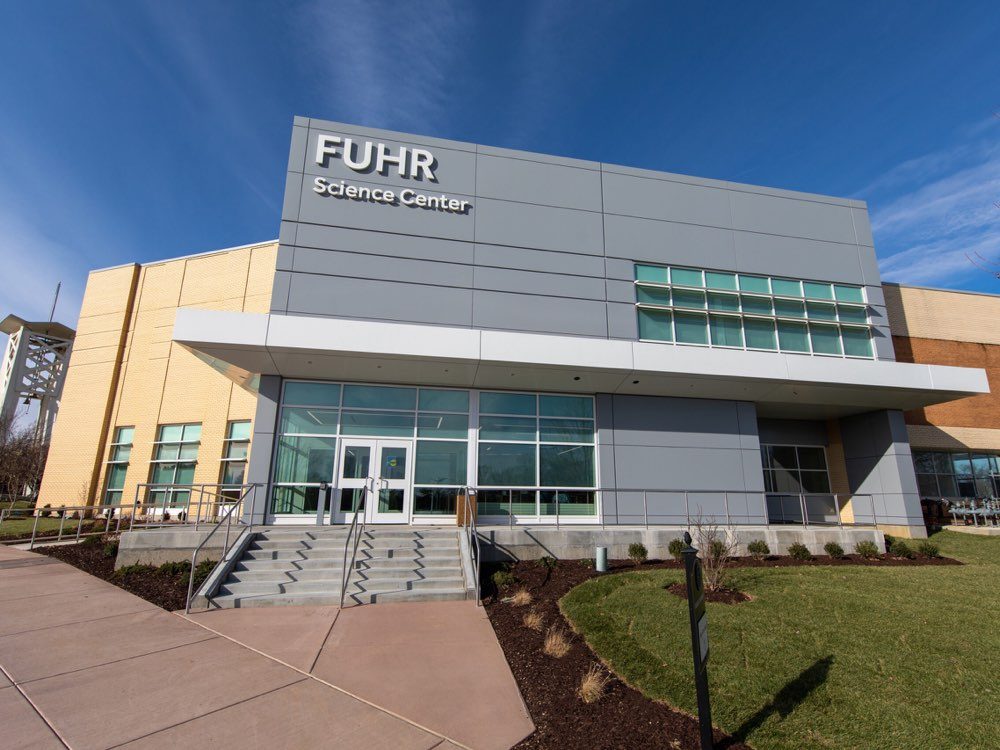
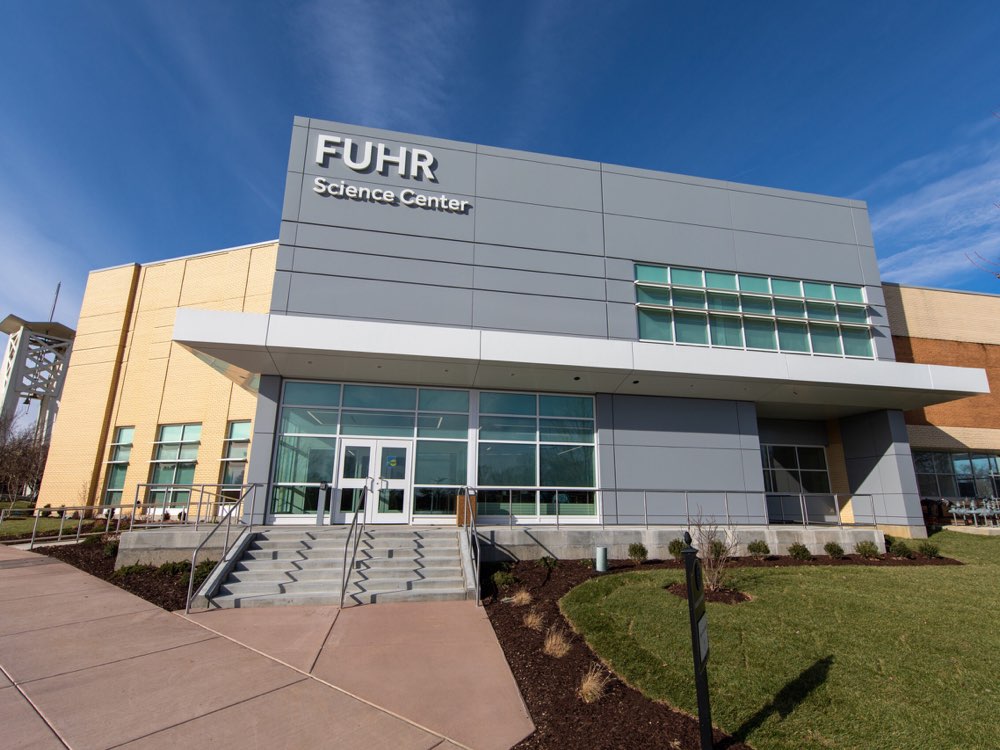
Logan University Physician Assistant Program
Chesterfield, Missouri · Master of Medical Science, Physician Assistant
Tuition + fees $121,300
2026–27 cohort (six trimesters); full program
A closer look
A full-time, 24-month, 119-credit PA master's program in Chesterfield, Missouri, preparing to enroll its first class in January 2027. Twelve months of on-campus classroom study are followed by twelve months of clinical education, including seven core rotations and two electives.
Mission & approach
Prepare clinically competent PAs who use evidence-based medicine, provide culturally sensitive patient-centered care and demonstrate leadership, service and teamwork.
Check my fit with this school
Check three basics
Enter any GPA or patient care hours you know. We’ll compare them with this school’s published numbers. This is a starting point, not an eligibility decision.
The quick check needs JavaScript.
Admissions insights
What this program looks for in applicants
Holistic review considers academic performance, quality and extent of direct care, understanding of the PA role, maturity, leadership, service, personal statement and recommendations. Higher GPAs and upper-level science grades of B or better receive preference. PA shadowing and volunteer hours are selection factors, but no fixed minimum is published for either. Special consideration goes to…
Summarized from the program’s admissions information. Confirm current selection criteria with the program.
Program admissions informationHow this program interviews
Interviews are required and in person. They include program information, several different interview stations, faculty interviews, a campus tour and financial-aid information. The program does not call these activities an MMI. Interviews are held throughout the admissions cycle, and offers are made on a rolling basis, so apply early. Qualified applicants beyond class capacity join a ranked alternate list.
Source checked Sep 13, 2026. Interview formats and dates can change between cycles.
Program interview informationAdmissions & prerequisites
Admission requirements
Prerequisite coursework
Required courses; credit minimums are not published, so check with the program.Review each course, its lab, and the program’s policies. Your links are planning records; the program decides equivalency.
| Course | Credits | Lab | Min grade |
|---|---|---|---|
General Chemistry ICourse notes & alternativesRequired course with a lab. Credit minimum not published; check with the program. | Not publishedCredit minimum not published; check with the program. | Required | C |
Organic Chemistry ICourse notes & alternativesRequired course with a lab. Biochemistry is recommended separately and is not an automatic substitute. | Not publishedCredit minimum not published; check with the program. | Required | C |
General Biology ICourse notes & alternativesRequired course with a lab. Credit minimum not published; check with the program. | Not publishedCredit minimum not published; check with the program. | Required | C |
Basic Human AnatomyCourse notes & alternativesA lower-level (100–200) course with a lab, taken together with Basic Human Physiology. Or complete a two-semester Human A&P sequence with labs to replace both courses. | Not publishedCredit minimum not published; check with the program. | Required | C |
Basic Human PhysiologyCourse notes & alternativesA lower-level (100–200) course. A lab is not specified for the separate physiology course. The alternative two-semester Human A&P series must include labs. | Not publishedCredit minimum not published; check with the program. | Not specified | C |
MicrobiologyCourse notes & alternativesRequired course with a lab. Credit minimum not published; check with the program. | Not publishedCredit minimum not published; check with the program. | Required | C |
PsychologyCourse notes & alternativesRequired subject. Course type, lab and credit minimum are not specified; check with the program. | Not publishedCredit minimum not published; check with the program. | Not specified | C |
Medical TerminologyCourse notes & alternativesRequired subject. Credit minimum is not specified; check with the program. | Not publishedCredit minimum not published; check with the program. | Not specified | C |
Policies that can change your plan
- Course completion
- No more than two prerequisites may be outstanding when you apply. All prerequisite coursework must be completed by September 1, before January matriculation. Official transcripts must be submitted to the program before January matriculation. A conditional acceptance is withdrawn if courses are not completed in time or a grade is below C.
- Course grades and age
- Eight prerequisite subjects are listed, but credit minimums are not published. Basic Human Anatomy with lab and basic Human Physiology can be replaced by a two-semester Human A&P series with labs; you do not need both routes. Every prerequisite needs a grade of C or better, with no C-minus or pass/fail, and must be completed within ten years of applying. Science courses from the past five years are preferred, not required.
- Recommended courses
- Upper-level human science courses with grades of B or higher, Statistics, Physics and Pharmacology/Pharmacotherapeutics are recommended but not required. Admissions reviews substitutions individually.
- Course policies the program has not published
- The program does not say whether it accepts AP/CLEP credit, online labs or community-college courses. Confirm specific courses with the program. Its no-advanced-placement policy is about standing in the PA program and does not by itself address AP exam credit.
- Direct-care examples
- Examples include CNA, MA, LPN/RN, chiropractor, PT/PTA, OT/OTA, EMT, military corpsman, paramedic, respiratory or speech therapist, surgical or radiology technician, phlebotomist, athletic trainer and medical scribe. The program decides whether your actual duties qualify. Hours earned as a student for course credit or certification are excluded, though supervised direct-care residencies or fellowships may be considered.
- Academic and clinical letters
- Three recommendations are required. One must speak to your academic potential and come from a professor, academic advisor, research mentor or collegiate coach. A letter from a supervising medical provider (PA, MD, DO or NP) from paid or volunteer clinical work is recommended but not required. Friends and immediate family cannot write letters, and the letter does not have to come from a PA.
- Foreign education
- Applications are limited to U.S. citizens and lawful permanent residents; guidance on international transcripts and English proficiency does not change this. The general rule is a bachelor's degree from a U.S.-accredited institution before September 1. Foreign medical graduates who are citizens or permanent residents can apply, and one full year of U.S. science coursework within the past two years is expected. Foreign transcripts generally need a course-by-course evaluation from a NACES member agency (National Association of Credential Evaluation Services) that identifies lab work. Exceptions are described for English-language Canadian education, but they do not extend eligibility beyond the citizenship and permanent-residence rule.
- English documentation
- English proficiency documentation is required. Logan accepts an English-taught bachelor's or higher degree, TOEFL, IELTS or Duolingo. For the TOEFL, exams taken before January 2026 need an iBT score of 79 with writing 18, listening 21, reading 21 and speaking 19; exams taken in or after January 2026 need an overall 4.5. IELTS 6.5 and Duolingo 110 are alternatives. The school does not give the exact day the TOEFL scale changed, so confirm your test date and score scale with admissions. Exceptions apply for English-taught degrees or degrees from countries whose primary national language is English.
- Clinical placement
- You do not have to find or arrange your own clinical sites or preceptors. The program vets placements and may consider your suggestions but does not guarantee them. Partners include Washington University in St. Louis, BJC and Mercy, as well as sites beyond Missouri. A specific site or elective is not guaranteed.
- Health and accommodation
- You must meet technical standards, with or without reasonable accommodation. Required health screening and immunizations must be completed at least four weeks before the first trimester and updated every year, and clinical sites can add requirements. Students pay their own health, insurance and travel costs.
- Progression and graduation
- To progress, you must pass every required course with at least 70%, meet program competencies and stay in satisfactory academic and professional standing. You must complete the summative assessments and all degree requirements within 36 months. A student in good standing may be granted deceleration once.
- Work, withdrawal and refunds
- The program advises against outside employment and does not use students as substitute faculty or staff. Withdrawing from a required course means withdrawing from the program, and readmission after withdrawal is not permitted. Seat deposits and pass-through vendor fees are nonrefundable; other refunds follow the withdrawal timeline. The seat-deposit amount is not published, so check with the program.
- Student support
- Faculty mentors meet with students at least once per trimester. Academic success coaching and free counseling are available.
- Outcomes data not yet available
- The first class is scheduled to start in January 2027, so there are no graduates, PANCE rates, attrition figures or admitted-class averages yet. The graduation and PANCE benchmarks shown for the Classes of 2028–2030 are goals, not measured results.
Eight prerequisite subjects are listed, but credit minimums are not published. Basic Human Anatomy with lab and basic Human Physiology can be replaced by a two-semester Human A&P series with labs; you do not need both routes. Every prerequisite needs a grade of C or better, with no C-minus or pass/fail, and must be completed within ten years of applying. Science courses from the past five years are preferred, not required.
When courses must be complete: No more than two prerequisites may be outstanding when you apply. All prerequisite coursework must be completed by September 1, before January matriculation. Official transcripts must be submitted to the program before January matriculation. A conditional acceptance is withdrawn if courses are not completed in time or a grade is below C.
Dates & application steps
Logan is recruiting the January 2028 class. Applications go through CASPA and open in April 2027. The deadline is July 1, 2027: all application materials, including three letters of recommendation and official college transcripts, must be received by then. The January 2027 class is full.
No more than two prerequisites may be outstanding when you apply. All prerequisite coursework must be completed by September 1, before January matriculation. Official transcripts must be submitted to the program before January matriculation. A conditional acceptance is withdrawn if courses are not completed in time or a grade is below C.
Official college transcripts must be received by the July 1, 2027 deadline with the rest of the application, and official transcripts must also be submitted to the program before January matriculation.
The January 2027 class is full. The next opportunity to join the program is January 2028.
Applications for the January 2028 cohort are submitted through CASPA when the application cycle opens in April 2027.
Interviews are required and in person. They include program information, several different interview stations, faculty interviews, a campus tour and financial-aid information. The program does not call these activities an MMI. Interviews are held throughout the admissions cycle, and offers are made on a rolling basis, so apply early. Qualified applicants beyond class capacity join a ranked alternate list.
Know what the total includes
Published cost estimate
2026–27 cohort (six trimesters); full programTuition only, from the school’s published rates for this cohort. Rates can change.
2026–27 cohort (six trimesters): full-program tuition is $115,000 ($20,000 first trimester + 5 x $19,000). Rates can change for later cohorts, so confirm with the program. Required fees for the same cohort total $6,300: program fees $1,000 x 6 trimesters ($6,000; memberships, background check, drug screen and course fees) + student activity fee $50 x 6 trimesters ($300). Tuition plus required fees = $121,300. Not included: the $1,230 medical equipment and white coat purchase, books, iPad or laptop, housing, transportation and clinical-year travel.
See additional expenses & assumptions
Required fees for the same cohort total $6,300: program fees $1,000 x 6 trimesters ($6,000; memberships, background check, drug screen and course fees) + student activity fee $50 x 6 trimesters ($300). Tuition plus required fees = $121,300. Not included: the $1,230 medical equipment and white coat purchase, books, iPad or laptop, housing, transportation and clinical-year travel.
Curriculum & clinical training
Didactic study
Three trimesters of 24, 23.5 and 23.5 credits cover clinical anatomy, assessment and documentation, diagnostics and procedures, pharmacology, clinical reasoning, pathophysiology and clinical medicine, plus professional studies and foundations of practice.
Clinical study
Three 16-credit trimesters each include three five-credit, five-week supervised rotations plus a one-credit graduate seminar. The seven core fields are family medicine, internal medicine, surgery, emergency medicine, pediatrics, women's health and behavioral health; two rotations are electives.
The two phases total 119 credits. Clinical-year seminars support an applied thesis, evidence appraisal and professional development, with on-campus intensive weeks after rotations and summative exams before graduation. The last trimester is 17 weeks, and rotation order varies. A Belize international elective is application-based, open only to students in satisfactory standing, and carries additional travel, insurance and related costs.
The admitted class
The first class is scheduled to start in January 2027, so there are no graduates, PANCE rates, attrition figures or admitted-class averages yet. The graduation and PANCE benchmarks shown for the Classes of 2028–2030 are goals, not measured results.
Published class statistics describe the named cohort or population. They are not admission minimums or acceptance probabilities.
The program’s track record
Graduate outcomes
PANCE pass rates
See first-time program performance with clearly dated national context.
- First-time PANCE pass rate: No graduates yet
The inaugural class is scheduled to enter in January 2027. No graduates, observed PANCE rates, attrition percentages or admitted-class averages are available. Outcomes tables contain blank future Class of 2028–2030 columns; their graduation/PANCE benchmarks and other targets are goals, not measured results.
First-time program results are not yet available; no graduates have been reported.
- Five-year first-time PANCE pass rate: No graduates yet
The inaugural class is scheduled to enter in January 2027. No graduates, observed PANCE rates, attrition percentages or admitted-class averages are available. Outcomes tables contain blank future Class of 2028–2030 columns; their graduation/PANCE benchmarks and other targets are goals, not measured results.
Five-year first-time results are not yet available.
Accreditation history
Provisional- July 2026Initial provisional accreditation
ARC-PA granted Provisional status with a maximum class size of 40. The date for the next monitoring review has not been set.
- October 1, 2026Accreditation reports due
The July accreditation decision asks for student-evaluation evidence and a response to the related observation by this date. It does not confirm that these reports have been accepted.
ARC-PA granted Accreditation-Provisional in July 2026, with a maximum entering class size of 40. The next monitoring review date has not been set. The accreditation history notes two areas of noncompliance and one observation. Student-evaluation reports and responses are due October 1, 2026. No additional report was due for the medical-director appointment-timing issue. Provisional accreditation is current accreditation but does not guarantee a later status.
Sources you can open
Links to the program’s own pages and the official directories we use.
- Logan University PA — recruitment estimate
- Logan University PA — schematic
- ARC-PA currently accredited programs — sponsoring-institution directory
- Logan University PA — accreditation
- Logan University PA — overview
- Logan University PA — admissions
- Logan University PA — outcomes
- Logan University PA — policies
- Logan University PA — curriculum
- Logan University PA — resources
- Logan University PA — expenses
- Logan University PA — faq
About the U.S. News rank
The U.S. News PA rank uses the 2025 PA edition, matched to the listed program and campus. It reflects peer-assessed reputation, not admissions odds or a personal fit score. Programs without a separate entry are labeled “Unranked.”
How competitive are you for this program?
Match AI compares your full profile with this program and every other one, then sorts your list into Reach, Target and Safety.