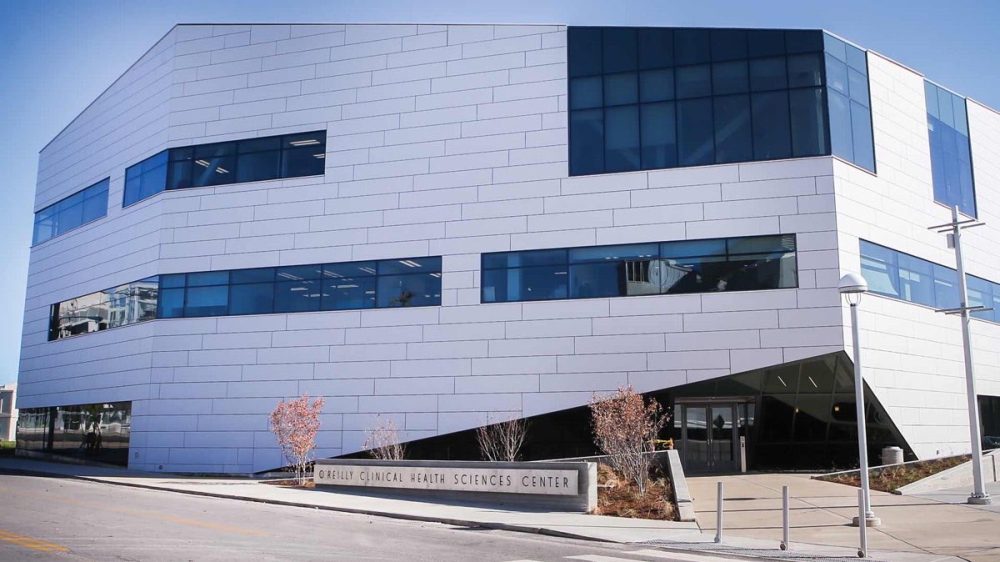
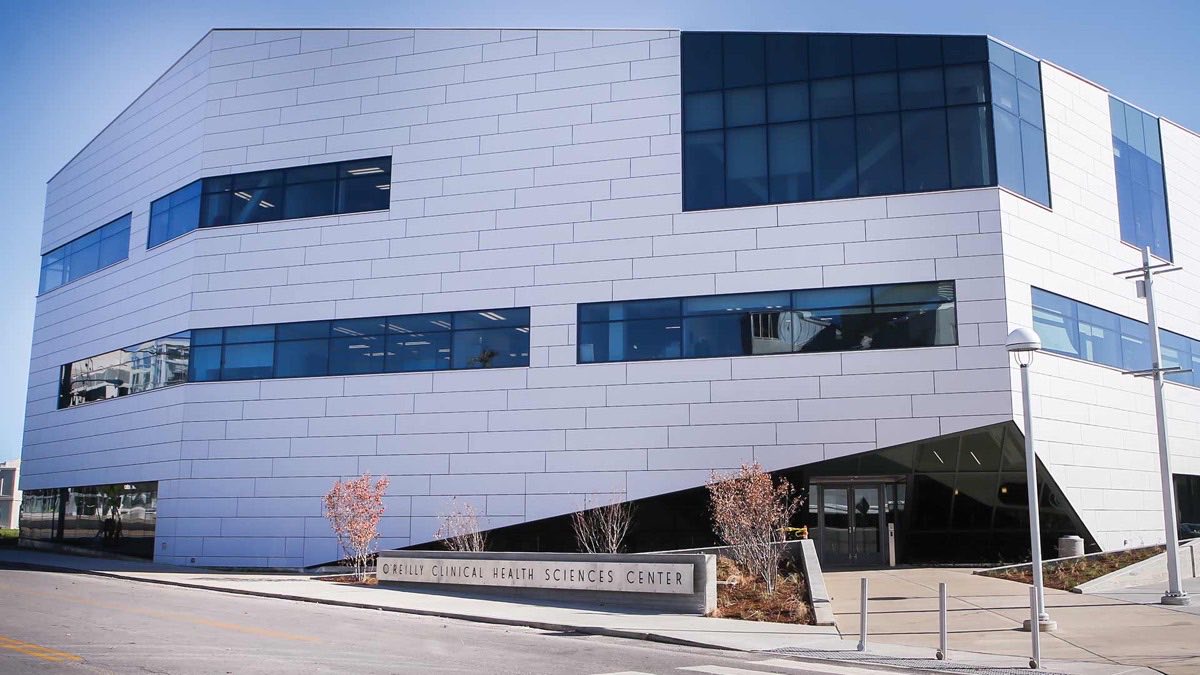
Missouri State University (formerly SWMS) Physician Assistant Program
Springfield, Missouri · Masters
Tuition + fees $61,232 / $95,336 nonresident
Published full-program tuition and required fees
A closer look
A 24-month Missouri PA program with January matriculation, up to 36 students, and 500 required paid direct patient-care hours.
Mission & approach
To prepare highly competent physician assistant graduates to practice primary care medicine in the context of team delivered care in a rapidly evolving health care arena. Using the resources of the McQueary College of Health and Human Services and affiliated clinical sites, the Program seeks to provide a comprehensive didactic and clinical educational experience for its students that incorporates the principles of scientific inquiry, self-directed study, critical analysis and problem-solving, all within the context of holistic care.
Check my fit with this school
Check three basics
Enter any GPA or patient care hours you know. We’ll compare them with this school’s published numbers. This is a starting point, not an eligibility decision.
The quick check needs JavaScript.
Admissions insights
What this program looks for in applicants
Weighted consideration: overall/science/last-60 GPA, PA-CAT/GRE/MCAT, quality and duration of health care experience, upper-division anatomy/physiology, service and leadership experience, rural upbringing, motivation to practice rural/underserved areas, Missouri State graduates, first-generation status, Missouri residence, and unique cultural experiences.
Summarized from the program’s admissions information. Confirm current selection criteria with the program.
How this program interviews
The highest-rated applicants are invited to on-campus interviews held in September, and candidates are notified of their status after the interview sessions; the specific format is not published.
Source checked Aug 1, 2026. Interview formats and dates can change between cycles.
Program interview informationAdmissions & prerequisites
Admission requirements
Prerequisite coursework
Semester creditsReview each course, its lab, and the program’s policies. Your links are planning records; the program decides equivalency.
Courses shown as alternatives in the table are not all required. Confirm the accepted route with the program.
- Organic chemistry or biochemistry: Organic Chemistry OR Biochemistry
- Additional social-science course (after general/intro psychology): Developmental Psychology OR Abnormal Psychology OR Sociology OR Healthcare Ethics OR Death and Dying
| Course | Credits | Lab | Min grade |
|---|---|---|---|
Anatomy and PhysiologyCourse notes & alternatives8 semester hours total across anatomy and physiology at pre-med/science-major level, with lab. Separate human anatomy and physiology courses are recommended, not required; course-by-course credit split is not specified. | 8Semester credits | Required | C |
MicrobiologyCourse notes & alternativesAt least 3 semester hours; lab preferred but not stated as mandatory. | 3Semester credits | Preferred | C |
Human or General GeneticsCourse notes & alternativesAt least 3 semester hours; lab explicitly not required. | 3Semester credits | Not required | C |
General Chemistry sequenceCourse notes & alternativesComplete the pre-med/science-major general chemistry sequence (2–3 semesters), with lab. The program requires at least 12 semester hours across all chemistry, including this sequence and the required organic chemistry or biochemistry course. Credits for the sequence alone are not published. | Not publishedSemester credits | Required | C |
| Organic Chemistry Required as an alternative to biochemistry; a survey course is acceptable. No separate credit or lab minimum is published. | Not publishedSemester credits | Not specified | C |
| Biochemistry Required as an alternative to organic chemistry; a survey course is acceptable. No separate credit or lab minimum is published. | Not publishedSemester credits | Not specified | C |
Introductory StatisticsCourse notes & alternativesOne introductory statistics course; 3 semester hours minimum. | 3Semester credits | Not specified | C |
General or Introductory PsychologyCourse notes & alternativesRequired as one course in the 6-semester-hour social-science category. Its individual credit value is not published. | Not publishedSemester credits | Not specified | C |
| Developmental Psychology One possible additional social-science course; individual credit value not stated. | Not publishedSemester credits | Not specified | C |
| Abnormal Psychology One possible additional social-science course; individual credit value not stated. | Not publishedSemester credits | Not specified | C |
| Sociology One possible additional social-science course; individual credit value not stated. | Not publishedSemester credits | Not specified | C |
| Healthcare Ethics One possible additional social-science course. Individual credit value is not stated — check with the program. | Not publishedSemester credits | Not specified | C |
| Death and Dying One possible additional social-science course. Individual credit value is not stated — check with the program. | Not publishedSemester credits | Not specified | C |
Policies that can change your plan
- Grade/GPA
- C or higher in each course; minimum overall CASPA GPA 3.0.
- Course age
- Five-year preference may apply, particularly to science coursework; no hard expiration stated.
- Recommended, not required
- Separate human A&P courses and a cadaver lab are recommended. Additional life science courses are weighted in admissions. Medical terminology is strongly recommended for some applicants.
All courses require a C or better; minimum CASPA GPA 3.0. AP/CLEP does not fulfill requirements unless you have completed comparable advanced coursework in that discipline. Science prerequisites completed within five years may be preferred, especially for strong science coursework; this is a preference, not a firm expiration. Medical terminology is strongly recommended for some applicants, not required. Individual credits for A&P, organic/biochemistry, and the two social-science courses are not published — confirm course equivalencies with the program.
Dates & application steps
The previous deadline (July 15, 2026) has passed. The next date has not been published; check with the program.
This is the expected start of the entering class.
Know what the total includes
Published cost estimate
Published full-program tuition and required feesPublished nonresident full-program tuition
Full-program tuition is $37,758 for residents and $71,862 for nonresidents. With required student and program fees, the billed totals are $61,232 and $95,336. Broader estimates of $63,458 and $97,562 also include optional and other costs.
Curriculum & clinical training
Didactic education
Forty-two credits build scientific inquiry, problem solving and clinical foundations in campus facilities.
Clinical education
Forty-five credits provide supervised practice; available settings include regional organizations, teaching hospitals, trauma centers and rural clinics.
The Springfield graduate program is 24 months and 87 credits, completed in the prescribed cohort sequence.
The admitted class
Cohort beginning January 2026
Published class statisticsThe date shows when the cohort began, not its graduation year.
Compare published cohorts
| Class | Published GPA | Published science-related GPA | Published experience hours |
|---|---|---|---|
| Cohort beginning January 2026 | 3.70 | 3.70 | Not recorded |
Published class statistics describe the named cohort or population. They are not admission minimums or acceptance probabilities.
The program’s track record
Graduate outcomes
PANCE pass rates
See first-time program performance with clearly dated national context.
- First-time PANCE pass rate: 97%
- Five-year first-time PANCE pass rate: 97%
Accreditation history
ContinuedSources you can open
Links to the program’s own pages and the official directories we use.
- ARC-PA currently accredited programs — sponsoring-institution directory
- Program program page
- Program program page
- Missouri State University (formerly SWMS) curriculum and clinical training
- Missouri State PA prerequisites
About the U.S. News rank
The U.S. News PA rank uses the 2025 PA edition, matched to the listed program and campus. It reflects peer-assessed reputation, not admissions odds or a personal fit score. Programs without a separate entry are labeled “Unranked.”
How competitive are you for this program?
Match AI compares your full profile with this program and every other one, then sorts your list into Reach, Target and Safety.