
Tuition + fees $124,653 / $191,025 nonresident
Based on the program's official full-program tuition and required-fee table, dated July 21, 2026.
A closer look
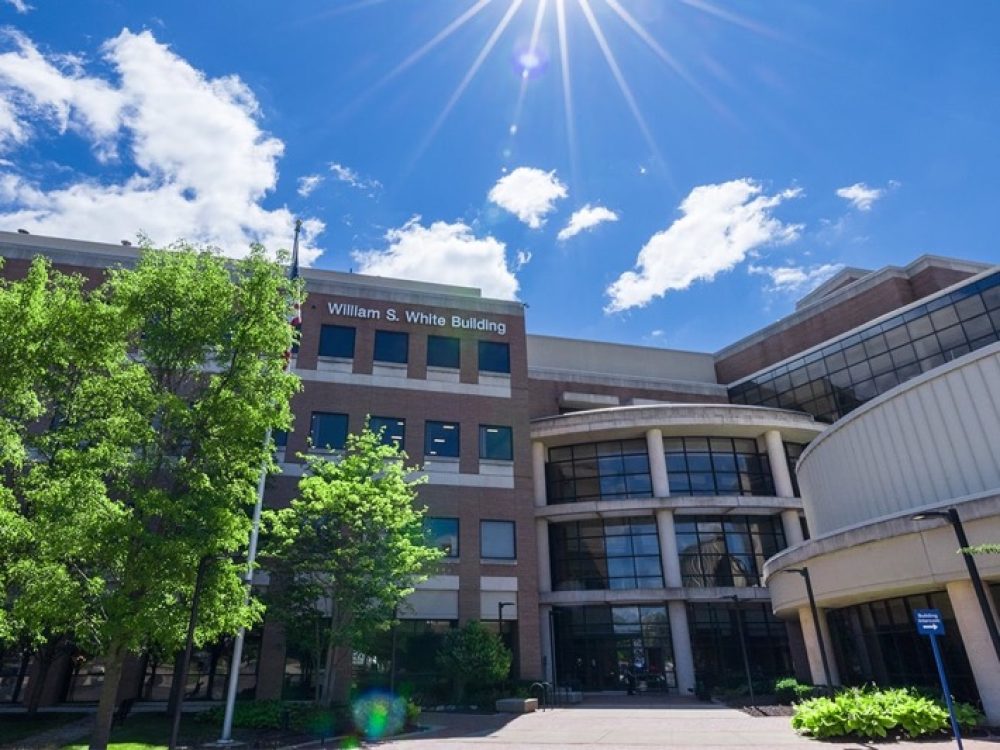
A 28-month program in Flint with up to 50 students. It requires 500 recent direct patient-care hours and Casper.
Mission & approach
The mission of the University of Michigan-Flint Physician Assistant (UM-Flint PA) Program is to prepare students to become exemplary physician assistant practitioners, leaders, and advocates for the profession and public health through best practices in teaching, learning, and service to our diverse local community and beyond.
Check my fit with this school
Check three basics
Enter any GPA or patient care hours you know. We’ll compare them with this school’s published numbers. This is a starting point, not an eligibility decision.
The quick check needs JavaScript.
Admissions insights
What this program looks for in applicants
Holistic: academic excellence, critical thinking, leadership, advocacy/altruism/service, professionalism, dedication to PA practice, clinical experience, unique qualities; on-campus interview required.
Summarized from the program’s admissions information. Confirm current selection criteria with the program.
Program admissions informationHow this program interviews
UM–Flint requires an on-campus interview as part of a holistic review weighing critical thinking, leadership, advocacy and professionalism.
Source checked Jul 11, 2026. Interview formats and dates can change between cycles.
Program interview informationAdmissions & prerequisites
Admission requirements
Prerequisite coursework
Credit-hour minimums are not published; prerequisites are counted by course.Review each course, its lab, and the program’s policies. Your links are planning records; the program decides equivalency.
Courses shown as alternatives in the table are not all required. Confirm the accepted route with the program.
- Second chemistry course: Organic Chemistry OR Biochemistry
| Course | Credits | Lab | Min grade |
|---|---|---|---|
Human AnatomyCourse notes & alternativesOne lecture course, no lab. A two-semester A&P I/II sequence can fulfill anatomy and lower-level physiology when paired with the required second physiology course. | Not publishedCredit-hour minimums are not published; prerequisites are counted by course. | Not required | C |
Human Physiology2 course(s)Course notes & alternativesTwo lecture courses, no labs. A&P I/II can fulfill anatomy and lower-level physiology; an upper-level (300/3000+) Human Physiology course can fulfill the second physiology course. Credits are not stated; check with the program to confirm the course route. | Not publishedCredit-hour minimums are not published; prerequisites are counted by course. | Not required | C |
General ChemistryCourse notes & alternativesOne lecture course; lab not required. Credits not published. | Not publishedCredit-hour minimums are not published; prerequisites are counted by course. | Not required | C |
| Organic Chemistry One lecture course; lab not required. Required with General Chemistry, with Biochemistry as an alternative to Organic Chemistry. Credits not published. | Not publishedCredit-hour minimums are not published; prerequisites are counted by course. | Not required | C |
| Biochemistry One lecture course; lab not required. Required with General Chemistry, as an alternative to Organic Chemistry. Credits not published. | Not publishedCredit-hour minimums are not published; prerequisites are counted by course. | Not required | C |
MicrobiologyCourse notes & alternativesOne lecture course with lab; may be combined or taken separately. Credits not published. | Not publishedCredit-hour minimums are not published; prerequisites are counted by course. | Required | C |
Developmental PsychologyCourse notes & alternativesOne lecture course covering the entire lifespan. Child, Adolescent, and Abnormal Psychology are not acceptable. Credits not published. | Not publishedCredit-hour minimums are not published; prerequisites are counted by course. | Not required | C |
Statistics or BiostatisticsCourse notes & alternativesOne lecture course. Credits not published. | Not publishedCredit-hour minimums are not published; prerequisites are counted by course. | Not required | C |
Medical TerminologyCourse notes & alternativesOne lecture course; certificates and online certification courses do not qualify. Credits not published. | Not publishedCredit-hour minimums are not published; prerequisites are counted by course. | Not required | C |
Policies that can change your plan
- Overall GPA
- Minimum CASPA-calculated undergraduate cumulative GPA 3.0.
- Prerequisite GPA
- Minimum combined prerequisite-course GPA 3.0.
- Course age
- Anatomy, Physiology, Chemistry, and Microbiology within seven years; waiver may apply.
- Required coursework level.
- Undergraduate-level U.S. regionally accredited courses; no graduate-level prerequisite credit.
Every prerequisite requires a C/2.0 or higher and a letter grade; Pass/No Pass and exam/AP credit are not accepted. Science prerequisites (Anatomy, Physiology, Chemistry, Microbiology) must be within seven years unless a cycle-specific waiver applies. The A&P I/II sequence fulfills Anatomy and lower-level Physiology only; a second physiology course is still required. Deadlines for the Winter 2027 cycle have passed, and next-cycle dates are not published.
When courses must be complete: All prerequisites complete before CASPA submission. Published Winter 2027 application deadline was August 1, 2026; verification deadline August 15, 2026.
Dates & application steps
The August 1, 2026 CASPA complete deadline has passed; the next exact cycle date is not yet published.
CASPA verification was due August 15, 2026; this cycle is closed.
This is the expected start of the entering class.
Know what the total includes
Published cost estimate
Based on the program's official full-program tuition and required-fee table, dated July 21, 2026.Published nonresident estimate. The program's figures don't add up exactly, so confirm with the program.
Resident tuition is $122,244 plus $2,409 in mandatory fees, for $124,653 total. For nonresidents, the program's table lists tuition of $66,067, $86,527 and $34,067 by year ($186,661 in all) plus $2,394 in fees, which adds up to $189,055; the table's printed three-year total is $191,025, and its yearly totals add up to $191,026. Plan for $191,025 and confirm the exact nonresident cost with the program. Living and other expenses are separate.
Curriculum & clinical training
Didactic education
Medical-science coursework and clinical-skills instruction prepare students for supervised practice.
Clinical education
The final three semesters provide supervised clinical rotations and completion activities.
The Flint MS route spans 28 months and 103 credits with on-campus and online learning plus clinical experiences.
The admitted class
Published class statistics describe the named cohort or population. They are not admission minimums or acceptance probabilities.
The program’s track record
Graduate outcomes
PANCE pass rates
See first-time program performance with clearly dated national context.
- First-time PANCE pass rate: 95%
No 5-year average yet - only FOUR graduating cohorts (2023-2026); 87% first-time across them (151/173)
- Five-year first-time PANCE pass rate: Not available yet
Five-year first-time results are not yet available.
Accreditation history
ContinuedSources you can open
Links to the program’s own pages and the official directories we use.
- Program program page
- ARC-PA currently accredited programs — sponsoring-institution directory
- University of Michigan – Flint website
- Program program page
- Program program page
- University of Michigan – Flint website
- University of Michigan – Flint curriculum and clinical training
- Program program page
About the U.S. News rank
The U.S. News PA rank uses the 2025 PA edition, matched to the listed program and campus. It reflects peer-assessed reputation, not admissions odds or a personal fit score. Programs without a separate entry are labeled “Unranked.”
How competitive are you for this program?
Match AI compares your full profile with this program and every other one, then sorts your list into Reach, Target and Safety.