
Tuition + fees $41,441 / $80,641 nonresident
Published full-program tuition
A closer look
A 28-month Tulsa PA program with a 26-student cohort and no required preadmission test or patient-care hour minimum.
Mission & approach
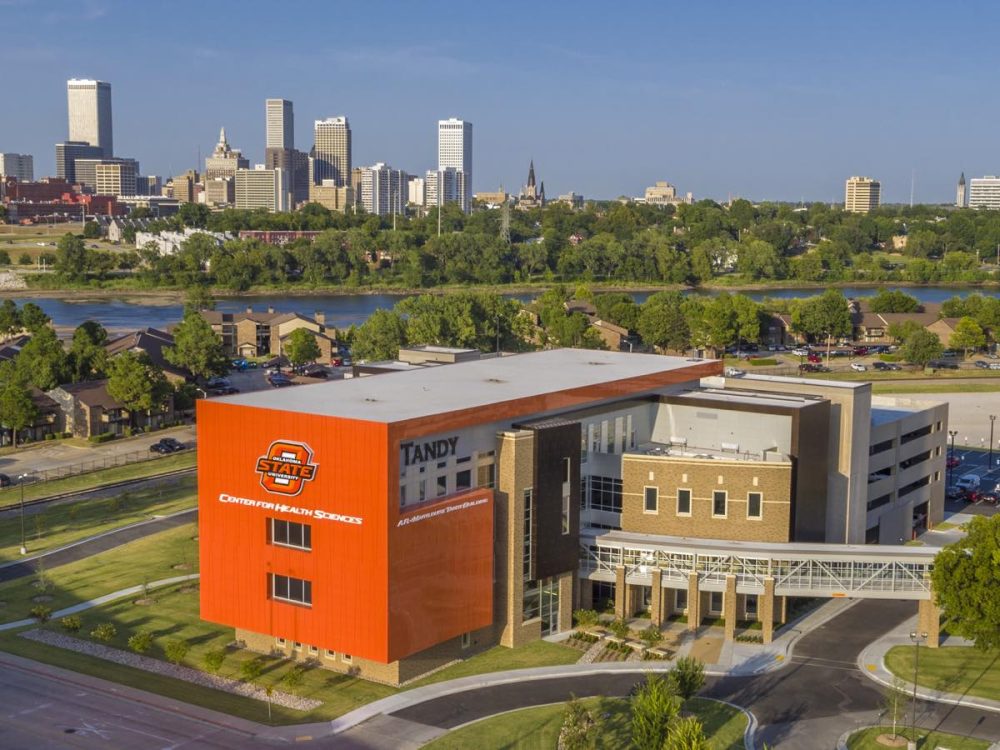
The Physician Assistant Program at the Center for Health Sciences recruits, educates, and mentors a diverse group of students to increase competent and compassionate health care emphasizing increased access in rural and underserved Oklahoma. The program places importance on fostering collegial relationships among students from various disciplines to provide professional, flexible, team-based health care.
Check my fit with this school
Check three basics
Enter any GPA or patient care hours you know. We’ll compare them with this school’s published numbers. This is a starting point, not an eligibility decision.
The quick check needs JavaScript.
Admissions insights
What this program looks for in applicants
Preference to Oklahoma residents; diversity preference (geographically underserved/raised rural, first-gen, military); academic excellence, community service, extracurriculars, HCE, shadowing, leadership, mission fit (rural/underserved practice intent).
Summarized from the program’s admissions information. Confirm current selection criteria with the program.
Program admissions informationAdmissions & prerequisites
Admission requirements
Prerequisite coursework
Semester creditsReview each course, its lab, and the program’s policies. Your links are planning records; the program decides equivalency.
| Course | Credits | Lab | Min grade |
|---|---|---|---|
Chemistry course 1Course notes & alternativesFirst of two chemistry courses; at least one of the pair needs a lab. | 3Semester credits | Not specified | B- |
Chemistry course 2Course notes & alternativesDistinct second chemistry course; at least one of the pair needs a lab. | 3Semester credits | Not specified | B- |
| College Algebra or higher | 3Semester credits | Not required | B- |
Human AnatomyCourse notes & alternativesSeparate Anatomy or combined A&P I and II totaling at least 8 credits. | 3Semester credits | Not specified | B- |
Human PhysiologyCourse notes & alternativesSeparate Physiology or combined A&P I and II totaling at least 8 credits. | 3Semester credits | Not specified | B- |
| Microbiology | 3Semester credits | Not specified | B- |
Psychology course 1Course notes & alternativesSociology does not substitute. | 3Semester credits | Not required | B- |
Psychology course 2Course notes & alternativesDistinct second psychology course. | 3Semester credits | Not required | B- |
Upper-division life science or chemistry 1Course notes & alternatives300-level or above; not social science. | 3Semester credits | Not specified | B- |
Upper-division life science or chemistry 2Course notes & alternativesDistinct second 300-level-or-above course. | 3Semester credits | Not specified | B- |
Policies that can change your plan
- Chemistry lab
- At least one of the two chemistry courses needs a lab.
- Distinct courses
- Psychology and upper-division science requirements each need two different courses.
Every prerequisite requires B− or better and completion by December 31 of application year. A two-term combined A&P sequence must total at least 8 credits. Medical Terminology, Immunology and Statistics are recommended, not required.
Dates & application steps
Application deadline is October 1; the program does not use rolling admission.
Know what the total includes
Published cost estimate
Published full-program tuitionPublished nonresident full-program tuition
Full-program tuition is $33,075 for residents and $72,275 for nonresidents. Mandatory fees add $8,365.84 for either group.
Curriculum & clinical training
Didactic education
Primarily in-person lectures, laboratories and active learning integrate medical science with interprofessional education.
Clinical education
Core rotations and medical electives develop supervised practice; telemedicine may occur with preceptors physically present.
The Tulsa program publishes 28 months and 124 credits. Current clinical course tables identify Classes of 2026, 2027 and 2028.
The admitted class
Published class statistics describe the named cohort or population. They are not admission minimums or acceptance probabilities.
The program’s track record
Graduate outcomes
PANCE pass rates
See first-time program performance with clearly dated national context.
- First-time PANCE pass rate: 91%
No 5-year average yet - only THREE graduating cohorts (2023-2025); 95% first-time across them (63/66)
- Five-year first-time PANCE pass rate: Not available yet
Five-year first-time results are not yet available.
Accreditation history
ContinuedSources you can open
Links to the program’s own pages and the official directories we use.
- Oklahoma State University program page
- Oklahoma State University curriculum and clinical training
- Oklahoma State University PA admissions requirements
- ARC-PA currently accredited programs — sponsoring-institution directory
About the U.S. News rank
The U.S. News PA rank uses the 2025 PA edition, matched to the listed program and campus. It reflects peer-assessed reputation, not admissions odds or a personal fit score. Programs without a separate entry are labeled “Unranked.”
How competitive are you for this program?
Match AI compares your full profile with this program and every other one, then sorts your list into Reach, Target and Safety.