Notre Dame of Maryland University Physician Assistant Program
Baltimore, Maryland · Master of Science in Physician Assistant Studies
Tuition + fees $87,747
2026–2027 published program estimate
A closer look
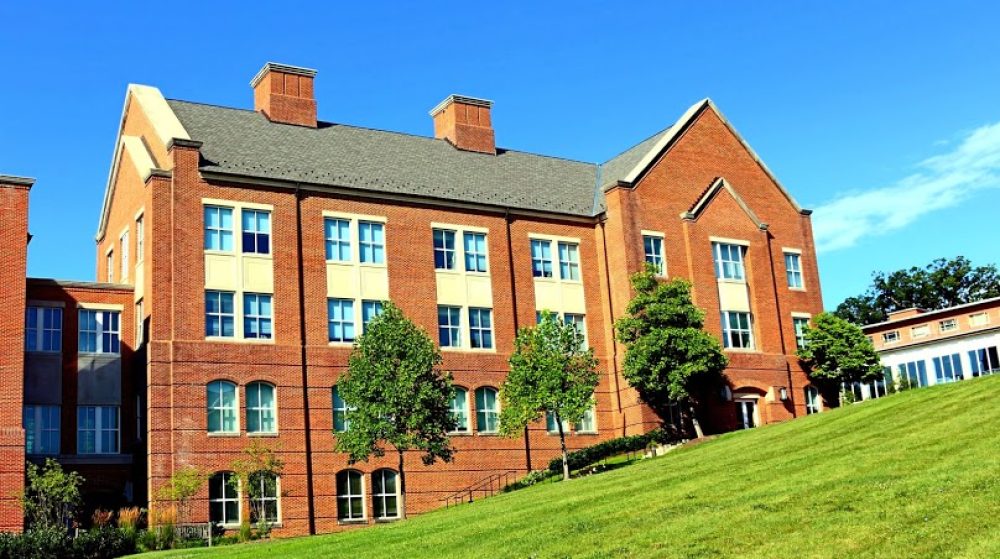
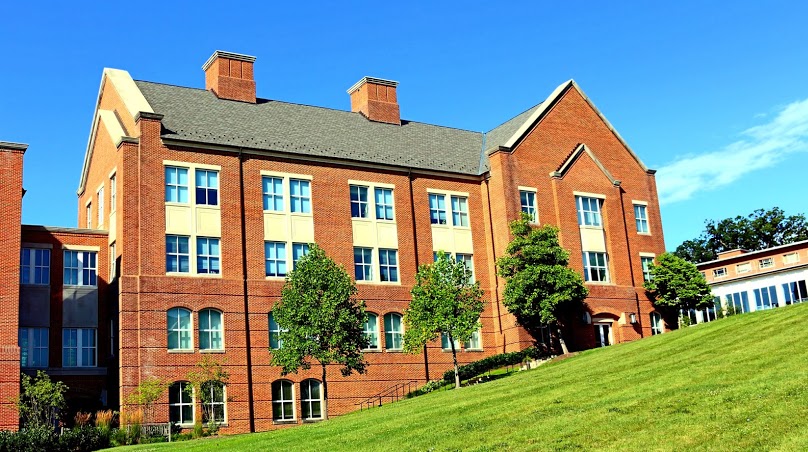
An in-person, 27-month, 111-credit MSPAS program on NDMU’s main Baltimore campus. The sequence combines 59 didactic credits with 52 clinical-year credits, including seven required clinical fields, one elective, capstone work and a summative evaluation.
Mission & approach
Attract compassionate and intellectually curious applicants, then mentor and educate them to become exceptional PAs who practice collaboratively with professional excellence and social responsibility while serving their communities.
Check my fit with this school
Check three basics
Enter any GPA or patient care hours you know. We’ll compare them with this school’s published numbers. This is a starting point, not an eligibility decision.
The quick check needs JavaScript.
Admissions insights
What this program looks for in applicants
A 3.0 overall GPA as calculated by CASPA is required. If yours is lower, you can submit a waiver form for the Admissions Committee to review. Preference also goes to completed degrees and prerequisites, higher prerequisite grades/GPA, courses within eight years, at least 500 direct-care hours, at least 24 PA-shadowing hours, three or more favorable recommendations and NDMU alumni (about a 5% academic-score advantage). Admission combines the pre-interview and interview assessments.
Summarized from the program’s admissions information. Confirm current selection criteria with the program.
Program admissions informationHow this program interviews
An interview is mandatory, in traditional and group formats. NDMU plans in-person interviews on campus but reserves the right to use a virtual format.
Source checked Sep 13, 2026. Interview formats and dates can change between cycles.
Program interview informationAdmissions & prerequisites
Admission requirements
Prerequisite coursework
Semester creditsReview each course, its lab, and the program’s policies. Your links are planning records; the program decides equivalency.
| Course | Credits | Lab | Min grade |
|---|---|---|---|
Anatomy & Physiology ICourse notes & alternativesFour credits with a face-to-face lab. Online labs are not accepted except possible case review for labs completed during calendar years 2020–2021. | 4semester credits | Required | B |
Anatomy & Physiology IICourse notes & alternativesFour credits with a face-to-face lab. This is the second course in the required A&P sequence. | 4semester credits | Required | B |
MicrobiologyCourse notes & alternativesThree credits with a face-to-face lab. The program does not say whether the lab is included in the three credits. | 3semester credits | Required | B |
Organic Chemistry or BiochemistryCourse notes & alternativesEither subject satisfies the one three-credit requirement; a lab is not required. | 3semester credits | Not required | B |
PsychologyCourse notes & alternativesThe program does not restrict the published psychology requirement to a named subfield. | 3semester credits | Not required | B |
StatisticsCourse notes & alternativesThree or four credits. | 3semester credits | Not required | B |
Medical TerminologyCourse notes & alternativesTwo or three credits; must carry a letter grade like every prerequisite. | 2semester credits | Not required | B |
Policies that can change your plan
- Grades, repeats and expiry
- Every prerequisite requires B or better; B-minus and pass/fail do not qualify. All prerequisite attempts count in the prerequisite GPA. Courses must be within eight years, subject to the stated post-verification waiver process.
- Labs and online study
- Required A&P I, A&P II and Microbiology labs must be face to face. Online lectures are accepted. Only online labs taken during 2020–2021 may receive individual consideration.
- AP, CLEP and community college
- The program has no specific rule on this. NDMU has a general prior-learning policy, but it does not say AP/CLEP credits satisfy PA prerequisites — confirm each course with the program.
- Experience documentation
- At least 500 hours of direct patient care experience are required, separate from shadowing. Paid and/or volunteer direct care is allowed, and hours must be logged and hand-signed by the supervising health professional before CASPA upload. The program evaluates actual duties and publishes a broad list of acceptable roles.
- Letters
- Three CASPA letters are required. Letters from people who know you well academically, clinically, or professionally all count, and a PA or other clinician letter is not required.
- Testing
- GRE, GMAT, and MCAT are not required or evaluated. The program does not mention PA-CAT or CASPer.
- Clinical placement
- Students are not required to provide or solicit clinical sites or preceptors; program faculty and staff secure them.
- Advanced standing
- No advanced placement or special credit is granted for prior degrees, medical education or experience.
- Outcomes
- Class of 2025: 21 first-time takers, 16 passed, a 76% first-time pass rate (91% nationally), per the March 12, 2026 NCCPA report. Only one graduating class is reported, so the "five-year" figure is just that class's 16 of 21. The program's table shows a maximum entering size of 35, an actual entering size of 25, 24 graduates, 4.00% attrition, and 96.00% graduation. Its next two columns are both labeled Class of 2026 (a labeling error), with entering sizes of 28 and 34 and no outcomes yet.
- Accreditation
- ARC-PA lists the program as Accreditation-Provisional, first accredited June 2023, with a maximum class size of 35 and next review in January 2028. At its January 2026 review, ARC-PA issued a Warning Letter citing ten areas of noncompliance: five report items were due June 9, 2026 and five are to be addressed in the final-provisional self-study. The outcome of the June report is not stated.
- Cost breakdown
- Full-program tuition is listed at $84,747, though 111 credits at $763 per credit comes to a little less, so confirm the exact amount with the program. Required PA fees add $3,000 ($1,500 in each of years 1 and 2), for $87,747 in total.
The seven required subject areas total 22–24 semester credits, depending on Statistics and Medical Terminology. Anatomy & Physiology I, II and Microbiology require face-to-face labs. Organic Chemistry or Biochemistry satisfies one requirement. Genetics (3–4 credits) is recommended only. The program does not publish whether AP/CLEP credit or community-college courses count for PA prerequisites, and the university's general prior-learning policy does not guarantee they do — check with the program.
When courses must be complete: The program prefers applicants who have finished their degree and all prerequisites before applying. No more than three prerequisites may be outstanding, to be finished by March 2027. Your bachelor's or graduate degree must be complete before you start.
Dates & application steps
The Fall 2027 cycle opens May 1, 2026 and is rolling until seats are filled. NDMU's graduate application page separately lists March 1 as the fall PA deadline, and the PA page contains some outdated Fall 2026 wording. Apply early and ask the program how it defines the CASPA deadline (submitted versus verified).
The Fall 2027 cycle opens May 1, 2026 and is rolling until seats are filled. NDMU's graduate application page separately lists March 1 as the fall PA deadline, and the PA page contains some outdated Fall 2026 wording. Apply early and ask the program how it defines the CASPA deadline (submitted versus verified).
August 2027 is listed (updated March 11, 2026). The program's page says Fall 2027 without an exact start date.
Know what the total includes
Published cost estimate
2026–2027 published program estimateFull-program tuition is listed at $84,747, though 111 credits at $763 per credit comes to a little less, so confirm the exact amount with the program. Required PA fees add $3,000 ($1,500 in each of years 1 and 2), for $87,747 in total.
See additional expenses & assumptions
The non-living allowances total $9,640, and living/personal/transportation costs total $63,500. With $84,747 tuition and $3,000 fees, the estimated total cost of attendance is $160,887. Costs are estimates, and health-insurance spending varies.
Curriculum & clinical training
Five catalog terms; four grouped panels on the main page
Anatomy, physiology/pathophysiology, three clinical-medicine courses, three patient-evaluation/clinical-reasoning courses, pharmacology, diagnostics, behavioral medicine, public health, evidence-based medicine, ethics/history and specialty preparation.
Eight rotations plus capstone and transition
Six-credit rotations in family medicine, internal medicine, surgery, emergency medicine, women’s health, pediatrics, behavioral health and one elective, plus capstone I/II, professional seminar/summative evaluation and transition to practice.
Both the catalog and the main page total 111 credits (59 didactic plus 52 clinical). They divide the courses across terms differently: the catalog lists five didactic terms (Fall, Winter, Spring, Summer, Fall II), while the main page groups them into four. In the clinical phase, the catalog puts Capstone I in summer with 18 spring and 13 summer credits, while the main page puts it in spring with 19 spring and 12 summer credits. The total stays the same.
The admitted class
Current matriculant demographics; cohort year not given
Published class statisticsData updated March 11, 2026. The counts are not tied to a specific graduating class.
Compare published cohorts
| Class | Published GPA | Published science-related GPA | Published experience hours |
|---|---|---|---|
| Current matriculant demographics; cohort year not given | Not recorded | Not recorded | Not recorded |
No average overall GPA, science GPA, GRE score, or experience hours is published for admitted students. Current matriculant counts are 21 female and 7 male; 4 Asian, 4 Black or African American, 15 White, and 3 Other. The cohort year is not stated.
Published class statistics describe the named cohort or population. They are not admission minimums or acceptance probabilities.
The program’s track record
Graduate outcomes
PANCE pass rates
See first-time program performance with clearly dated national context.
- First-time PANCE pass rate: 76%
The March 12, 2026 NCCPA report for Class of 2025 lists 21 first-time takers, 16 passes and a 76% first-time pass rate, versus 91% nationally; 76% ultimately passed as of the report date. Only one graduating class is reported, so “five-year” display is a one-cohort cumulative 16/21, not five years of outcomes.
- Five-year first-time PANCE pass rate: 76%
Graduation & attrition
2025 graduating cohort
Class of 2025: maximum entering size 35, actual entering size 25, 24 graduates, 4.00% attrition, and 96.00% graduation. The program's next two columns are both labeled Class of 2026 (a labeling error), with entering sizes of 28 and 34 and no outcomes yet.
Accreditation history
Provisional- June 2023Initial provisional accreditation
ARC-PA granted Provisional status with maximum class size 35 and a March 2026 monitoring evaluation.
- March 2024Initial reports accepted
ARC-PA accepted evidence on instructional resources, student health records, lifespan clinical experiences and student evaluation; no further information was requested.
- January 2026Provisional monitoring and Warning Letter
Provisional status continued. ARC-PA noted ten noncompliance areas, issued a Warning Letter and set January 2028 for the final provisional evaluation.
ARC-PA lists the program as Accreditation-Provisional, first accredited June 2023, with a maximum class size of 35 and next review in January 2028. At its January 2026 review, ARC-PA issued a Warning Letter citing ten areas of noncompliance: five report items were due June 9, 2026 and five are to be addressed in the final-provisional self-study. The outcome of the June report is not stated.
Sources you can open
Links to the program’s own pages and the official directories we use.
- NDMU catalog
- NDMU tuition
- NDMU deadline
- NDMU contact
- NDMU program
- NDMU pance
- NDMU paea
- NDMU arc
- ARC-PA currently accredited programs — sponsoring-institution directory
About the U.S. News rank
The U.S. News PA rank uses the 2025 PA edition, matched to the listed program and campus. It reflects peer-assessed reputation, not admissions odds or a personal fit score. Programs without a separate entry are labeled “Unranked.”
How competitive are you for this program?
Match AI compares your full profile with this program and every other one, then sorts your list into Reach, Target and Safety.