
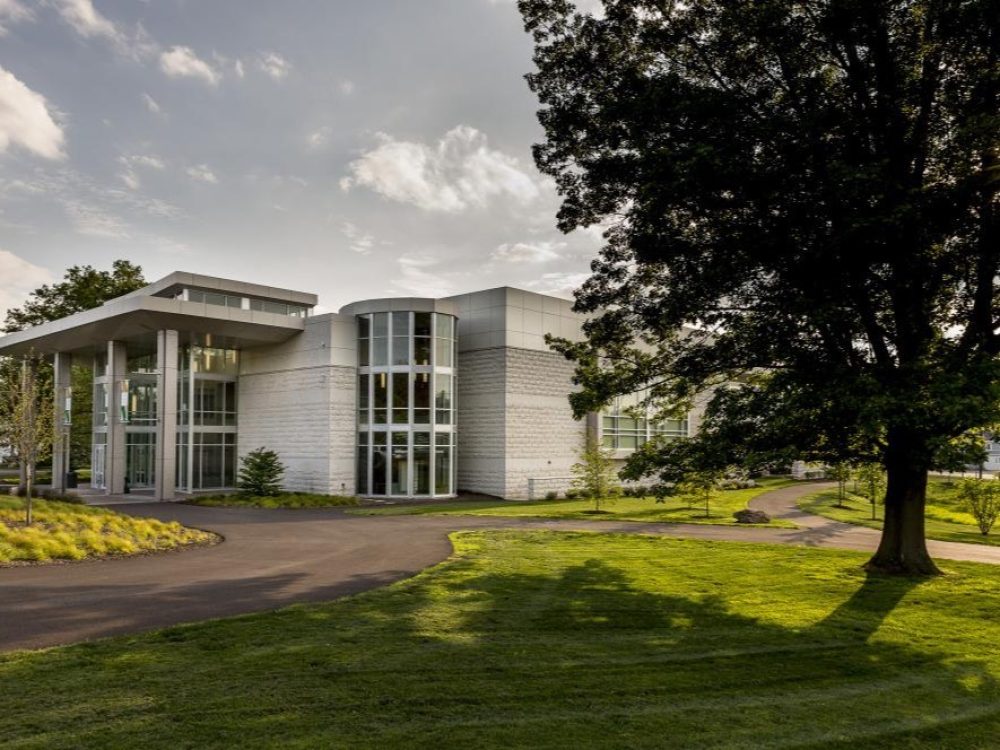
Delaware Valley University Physician Assistant Program
Doylestown, Pennsylvania · Masters
Tuition + fees $109,362
2026–2028 cohort; published tuition rows and unreconciled combined total
A closer look
Built on the pillars of scholarship, service and professionalism, with a hands-on clinical experience that stresses collaboration and innovation.
Mission & approach
The Delaware Valley University Physician Assistant Program is dedicated to the pillars of scholarship, service, and professionalism. The Program strives to train graduates who are highly competent and recognized as excellent clinicians and leaders in the complex health care environment. The Program is committed to producing graduates who provide compassionate, team-based, and evidence-based patient care, aware of and meeting the needs of society and their diverse communities
Check my fit with this school
Check three basics
Enter any GPA or patient care hours you know. We’ll compare them with this school’s published numbers. This is a starting point, not an eligibility decision.
The quick check needs JavaScript.
Admissions insights
What this program looks for in applicants
Holistic review: completed/verified CASPA application (no supplemental), bachelor's conferred prior to matriculation, 3 letters of recommendation (>=1 from a PA or physician), interview by invitation. Academic review across overall and science GPA; applicants with lower cumulative GPA can remain competitive via demonstrated upward trends and junior/senior, post-bacc, graduate, and prerequisite…
Summarized from the program’s admissions information. Confirm current selection criteria with the program.
Program admissions informationAdmissions & prerequisites
Admission requirements
Prerequisite coursework
Credits not publishedReview each course, its lab, and the program’s policies. Your links are planning records; the program decides equivalency.
Courses shown as alternatives in the table are not all required. Confirm the accepted route with the program.
- Human Anatomy and Physiology route: Human Anatomy (separate-course route) + Human Physiology (separate-course route) OR Human Anatomy & Physiology I and II
| Course | Credits | Lab | Min grade |
|---|---|---|---|
| Human Anatomy (separate-course route)1 course(s) One semester; paired with Human Physiology OR use the two-course combined human A&P route. | Not publishedCredits not published | Not specified | Not specified |
| Human Physiology (separate-course route)1 course(s) One semester; paired with Human Anatomy OR use the two-course combined human A&P route. | Not publishedCredits not published | Not specified | Not specified |
| Human Anatomy & Physiology I and II2 course(s) Two semesters; alternative to separate Human Anatomy and Human Physiology. Must be human-specific; comparative/mammalian A&P not accepted. | Not publishedCredits not published | Not specified | Not specified |
Microbiology1 course(s)Course notes & alternativesOne course; credits, lab, and minimum grade not published. | Not publishedCredits not published | Not specified | Not specified |
Additional upper-level Biology2 course(s)Course notes & alternativesTwo courses beyond introductory level; human-related biology/anatomy/physiology. Biochemistry and Genetics strongly recommended; Immunology, Cell Biology, Molecular Biology accepted. Mammalian and plant biology do not qualify. | Not publishedCredits not published | Not specified | Not specified |
Organic Chemistry1 course(s)Course notes & alternativesOne course is required; a lab is not required. Must be completed within 10 years of your CASPA application. | Not publishedCredits not published | Not required | Not specified |
Additional accepted Chemistry1 course(s)Course notes & alternativesSecond chemistry course. Accepted examples include Introduction to Chemistry, Physical Chemistry, Inorganic Chemistry, and others. The program reviews equivalency, so confirm with the program. | Not publishedCredits not published | Not specified | Not specified |
Psychology1 course(s)Course notes & alternativesOne course; credits, lab, grade, and recency details beyond the common 10-year limit are not stated. | Not publishedCredits not published | Not specified | Not specified |
Statistics1 course(s)Course notes & alternativesOne course; credit, lab, and grade not stated. | Not publishedCredits not published | Not specified | Not specified |
Policies that can change your plan
- Upper-level Biology
- Two courses are required; Biochemistry and Genetics are strongly recommended, Immunology/Cell Biology/Molecular Biology accepted. Mammalian and plant biology excluded.
- Chemistry
- Two courses, with Organic Chemistry required and lab not required; second course subject to program acceptance.
- Recency
- All prerequisites within 10 years before CASPA application submission.
- Credits not published
- Minimum credits and course-grade thresholds are not published. Check with the program.
The program does not publish minimum course credits, lab rules (except that an Organic Chemistry lab is not required), or per-course minimum grades. There is no minimum GPA and no minimum patient-care hours; your academic and experience profile is reviewed as a whole. Up to two courses may be outstanding at application if completed before October matriculation.
When courses must be complete: CASPA opens in late April each year. The application deadline is April 1 of the year you plan to start. Up to two outstanding prerequisites are due before October matriculation.
Dates & application steps
Confirm with the program what CASPA processing status is required.
Know what the total includes
Published cost estimate
2026–2028 cohort; published tuition rows and unreconciled combined totalSum of the published tuition rows. The printed combined total differs by $2. No residency-specific rate is published.
For the 2026–2028 cohort, the school's printed total for tuition plus fees is $109,362. The listed tuition rows total $85,860 and the fee rows total $23,500; together they come to $109,360, which is $2 less than the printed total. No residency-based rate or confirmed fee split is published.
Curriculum & clinical training
Didactic study
Medical sciences, patient evaluation, pharmacology, systems-based medicine, and longitudinal primary care experiences build the clinical foundation.
Didactic and clinical transition
Advanced specialty topics, decision-making, team practice, and clinical seminars prepare students for rotations.
Clinical education
Seven core rotations and three electives are listed, followed by a senior seminar; elective specialties depend on availability.
The course sequence on the program's page was published in May 2023. Clinical partnerships are concentrated in the Greater Delaware Valley. The exact total and phase lengths in months are not confirmed; check with the program.
The admitted class
Class 2027
Published class statisticsThese are Class of 2027 averages. Post-baccalaureate and graduate GPA are reported as separate categories. The 7,437-hour average combines health-care and patient-care hours, so it should not be read as patient-care hours alone.
Compare published cohorts
| Class | Published GPA | Published science-related GPA | Published experience hours |
|---|---|---|---|
| Class 2027 | 3.25Mean Overall/cumulative GPA | 3.09Mean Science GPA | 7,437Mean combined health-care and patient-care hours |
Published class statistics describe the named cohort or population. They are not admission minimums or acceptance probabilities.
The program’s track record
Graduate outcomes
PANCE pass rates
See first-time program performance with clearly dated national context.
- First-time PANCE pass rate: 94%
No 5-year average yet - only TWO graduating cohorts (2024-2025); 79% first-time across all two (27/34)
- Five-year first-time PANCE pass rate: Not available yet
Five-year first-time results are not yet available.
Accreditation history
ContinuedSources you can open
Links to the program’s own pages and the official directories we use.
- Delaware Valley University program overview
- Delaware Valley University program page
- Delaware Valley current cohort tuition and fee table
- Delaware Valley University curriculum
- Delaware Valley University program page
- Delaware Valley University program page
- ARC-PA currently accredited programs — sponsoring-institution directory
About the U.S. News rank
The U.S. News PA rank uses the 2025 PA edition, matched to the listed program and campus. It reflects peer-assessed reputation, not admissions odds or a personal fit score. Programs without a separate entry are labeled “Unranked.”
How competitive are you for this program?
Match AI compares your full profile with this program and every other one, then sorts your list into Reach, Target and Safety.