Address & Contact

Our Address

Rutgers University 675 Hoes Lane West Piscataway, NJ 08854-5635

GPS

40.52438583966913, -74.46997927223542

Telephone
← Find PA SchoolsProgram profile
PROGRAM PROFILE

Rutgers University Physician Assistant Program

Piscataway, New Jersey · Masters

Application deadline Aug 1, 2026Passed · The August 1, 2026 CASPA Green/verified deadline for August 2027 entry has passed; the next cycle date is not yet published.
Tuition Resident: Approximately $119,777 projected full-program tuitionNonresident: Approximately $174,611 projected full-program tuition · Projected across the official 114-credit, eight-term curriculum; Rutgers rates are set annually
Class size 50 studentsCurrent entering cohort estimate and ARC-PA maximum class size.
Program length 33 monthsFull program
GRE requirement Not requiredGRE is not required. Reported GRE scores may be considered in holistic review; the combined MS/MPH option has separate public-health rules.
Patient-care minimum Required · no numeric minimumCompleted direct patient-contact experience is required, but Rutgers publishes no numeric minimum. Direct hands-on exposure is preferred.
Overall GPA minimum 3.20 generally requiredOverall GPA 3.20 is generally required. A limited exception may be considered when the last 24 science credits are at least 3.20 with the required explanation.
Science GPA minimum 3.20 generally requiredScience GPA, including math in Rutgers’ phrasing, is generally 3.20, with the same limited last-24-science exception.
Recommendations 3 lettersThree recommendations are required with no fixed recommender category.
International applicants Accepted with conditionsInternational applicants are accepted subject to foreign-transcript evaluation, English-proficiency, degree, and program requirements. Accepted with conditions.
English proficiency / TOEFL Conditional TOEFLWhen required, Rutgers uses revised TOEFL total 5 with section minimums reading 4.5, listening 5, speaking 5.5, and writing 5; legacy threshold is total 100 with section minimums.
PANCE pass rate 100%First-time pass rate · Reporting year not recordedFive-year first-time: 97% · reporting period not recorded
U.S. News PA rank #3 (tie)2025 PA edition · Peer-assessed reputation
THE PROGRAM

A closer look

A 33-month Piscataway PA program with 50 students, rolling admissions, and required healthcare experience without a numeric hour minimum.

On campus33 months50 students
Mission & approach

Foster excellence in humanistic, patient-centered care through dynamic PA education, scholarship, and service in a supportive, collaborative environment; emphasizing teaching/mentorship, community service, diversity/equity/inclusion, integrity, and wellness.

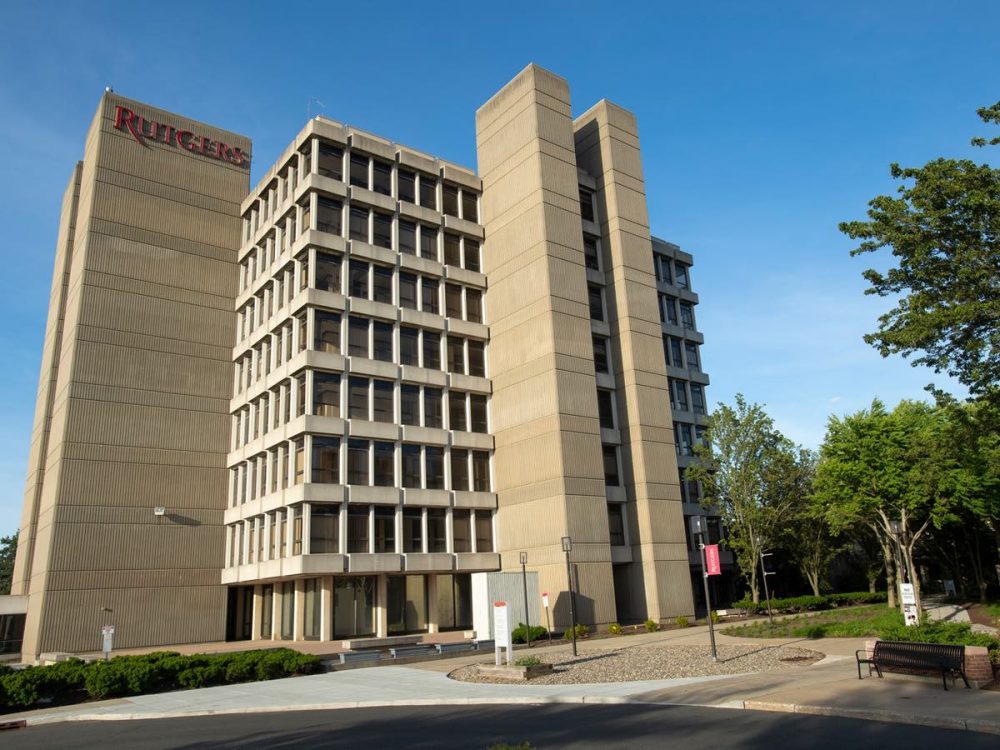
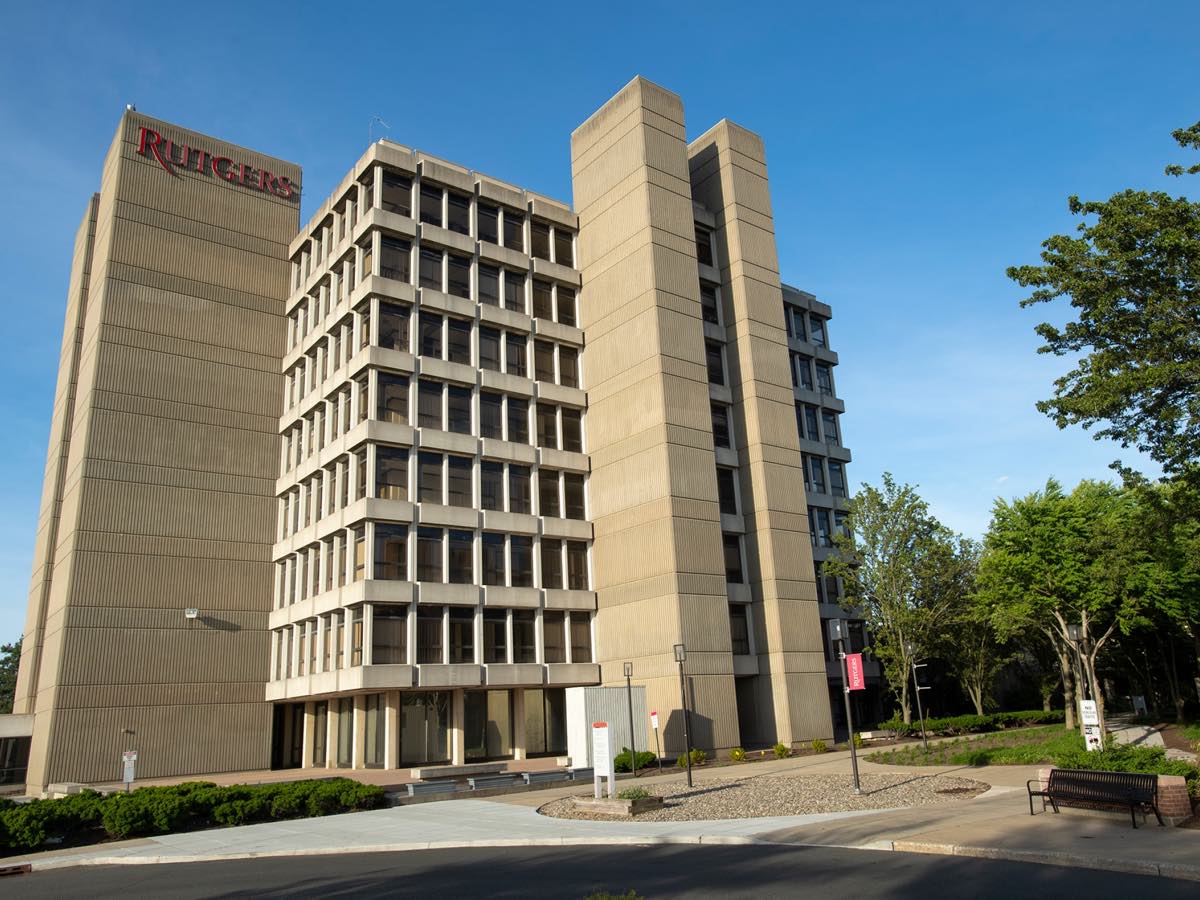
Rutgers Robert Wood Johnson Research Tower on the Busch campus, home of the Physician Assistant program
Robert Wood Johnson Research Tower on Rutgers’ Busch campus in Piscataway, where Physician Assistant classes are held.
PREMIUM · MATCH AI

Is Rutgers University a fit for you?

Unlock your personalized category, ranked school list, and reasons based on your profile. One Match AI purchase gives you the same results on PA School Finder and in your Toolkit.

SafetyTargetReachNot yet eligible
Unlock my school matches →
BEYOND THE NUMBERS

Admissions insights

What this program looks for in applicants

Holistic. Screening: ability to handle rigorous science load (esp. last 24 science credits), prior direct patient care experience, familiarity with PA profession (work/shadowing), commitment to community service. Interview assesses communication/interpersonal skills, maturity/motivation, understanding of PA role. Most competitive: high GPA, strong science background, quality PCE, community service (leadership preferred).

Summarized from the program’s admissions information. Confirm current selection criteria with the program.

Program admissions information

How this program interviews

On-campus

Rutgers interviews run from June through December and assess communication skills, maturity and motivation, and understanding of the PA role. Campus tours are provided to applicants during the on-campus interview session, and roughly 300 of over 1,600 applicants are interviewed each year for 50 seats.

Source checked Aug 1, 2026. Interview formats and dates can change between cycles.

Program interview information
YOUR STARTING POINT

Admissions & prerequisites

Admission requirements

GRENot requiredGRE is not required. Reported GRE scores may be considered in holistic review; the combined MS/MPH option has separate public-health rules.
Patient careRequired · no numeric minimumCompleted direct patient-contact experience is required, but Rutgers publishes no numeric minimum. Direct hands-on exposure is preferred.
Overall GPA3.20 generally requiredOverall GPA 3.20 is generally required. A limited exception may be considered when the last 24 science credits are at least 3.20 with the required explanation.
Science GPA3.20 generally requiredScience GPA, including math in Rutgers’ phrasing, is generally 3.20, with the same limited last-24-science exception.
Recommendations3 lettersThree recommendations are required with no fixed recommender category.
International applicantsAccepted with conditionsInternational applicants are accepted subject to foreign-transcript evaluation, English-proficiency, degree, and program requirements.
English proficiencyConditional TOEFLWhen required, Rutgers uses revised TOEFL total 5 with section minimums reading 4.5, listening 5, speaking 5.5, and writing 5; legacy threshold is total 100 with section minimums.

Prerequisite coursework

Semester credits

Review each course, its lab, and the program’s policies. Your links are planning records; the program decides equivalency.

Choose one complete option in each group

Courses shown as alternatives in the table are not all required. Confirm the accepted route with the program.

  • Anatomy and physiology route: Human Anatomy + Physiology OR Combined Anatomy & Physiology I and II
CourseCreditsLabMin gradeYour coursework
General Psychology1 course(s)
Course notes & alternatives

CLEP Introductory Psychology may be accepted with score 50 or higher; confirm transcript/CASPA presentation.

3Semester creditsNot requiredCSign in to plan
English Composition1 course(s)
Course notes & alternatives

CLEP College Composition may be accepted with score 50 or higher; guideline also allows writing-intensive alternatives.

3Semester creditsNot requiredCSign in to plan
Statistics1 course(s)
Course notes & alternatives

Applied Statistics or Biostatistics from Psychology, Biology, or Math departments preferred. CLEP credit may be accepted per linked guidelines; verify current policy.

3Semester creditsNot requiredCSign in to plan
Human Anatomy1 course(s)

Separate anatomy route; course credits shown as 3-4 by the current admissions page. Lab preference comes from linked guideline PDF whose heading says 2020-2021. Current-cycle lab policy needs confirmation; the linked lab guidance is labeled 2020–21.

3-4Semester creditsNot specifiedCSign in to plan
Physiology1 course(s)

Separate physiology route; course credits shown as 3-4 by the current admissions page. Lab preference comes from linked guideline PDF whose heading says 2020-2021. Current-cycle lab policy needs confirmation; the linked lab guidance is labeled 2020–21.

3-4Semester creditsNot specifiedCSign in to plan
Combined Anatomy & Physiology I and II2 course(s)

Alternative two-semester sequence. Linked official guidelines state 6-credit minimum, but document text is labeled 2020-2021 despite current 2026-2027 page linking it; verify the minimum with the program. Current-cycle lab policy needs confirmation; the linked lab guidance is labeled 2020–21.

Not publishedSemester creditsNot specifiedCSign in to plan
Microbiology1 course(s)
Course notes & alternatives

Current page lists 3-4 credits. Labs preferred, not required, according to linked guideline PDF with a stale cycle heading. Current-cycle lab policy needs confirmation; the linked lab guidance is labeled 2020–21.

3-4Semester creditsNot specifiedCSign in to plan
Biochemistry1 course(s)
Course notes & alternatives

Introductory-level biochemistry evaluated case by case; organic chemistry does not substitute. Lab preference comes from linked guideline PDF whose heading says 2020-2021. Current-cycle lab policy needs confirmation; the linked lab guidance is labeled 2020–21.

3Semester creditsNot specifiedCSign in to plan
Additional upper-level biology
Course notes & alternatives

Separate from Microbiology and Biochemistry; should focus on mammalian biology. Program links examples and approved/not-approved subjects. Linked labs guideline has a stale cycle heading. Current-cycle lab policy needs confirmation; the linked lab guidance is labeled 2020–21.

6-8Semester creditsNot specifiedCSign in to plan

Policies that can change your plan

Course age
No hard prerequisite age limit published. Rutgers recommends refreshing science coursework if no coursework was taken in the last 10 years; recommendation is not an expiration rule.
Prerequisite timing
For Fall 2027 entry, complete and verified CASPA application due Aug. 1, 2026. Required courses with C or better must be finished by the end of the spring semester before program start. Up to two outstanding science prerequisites may be competitive at application.
Course level
Additional upper-level biology should focus on mammalian biology. Current page links detailed approved/not-approved examples; admissions committee may request course descriptions.
Labs
Linked PDF says science labs are preferred, not required, but its internal heading names the 2020-2021 cycle. Treat this flag cautiously until current lab policy is confirmed.

The 2026–27 Rutgers admissions page lists these courses, but its linked lab guideline is labeled 2020–21. Confirm current lab requirements and combined A&P credit minimums before enrollment.

When courses must be complete: For Fall 2027 entry, complete and verified CASPA application due Aug. 1, 2026. Courses must be completed with C or better by end of the spring semester before program start; up to two outstanding science courses may be present at application for competitive applicants.

BUILD YOUR TIMELINE

Dates & application steps

Application deadlineAug 1, 2026 · Passed

The August 1, 2026 CASPA Green/verified deadline for August 2027 entry has passed; the next cycle date is not yet published.

2026–2027
Program startsAugust 2027

Expected entering-cohort start.

Ready to start an application plan?

Keep your essays, checklist, and personal targets together.

Plan application →
THE FINANCIAL PICTURE

Know what the total includes

Published cost estimate

Projected full-program tuition and required fees at 2026–27 rates
Resident tuitionApproximately $119,777 projected full-program tuition
Nonresident tuitionApproximately $174,611 projected full-program tuition

$164,616 program + $9,995 program · Projected across the official 114-credit, eight-term curriculum; Rutgers rates are set annually

Required program feesConfirm with program
Tuition + required feesExcludes living and other expenses
$119,777

Basis: $109,782 program + $9,995 program · current-rate projection · high confidence

Projected full-program tuition and identified required fees are $119,777 resident and $174,611 nonresident. Tuition is 114 credits at current 2026–27 Rutgers SHP rates; required fees total $9,995 across eight terms. Waivable health insurance, visa-only fees, living, transport, personal costs, and books/equipment without a current PA-specific estimate are excluded. PAEA’s lower values reflect older tuition-only rates.

Plan for the application, too.

Keep application fees separate from the cost of attending.

HOW YOU’LL LEARN

Curriculum & clinical training

01First 3 semesters

Medical science foundation

Basic and clinical sciences include anatomy, physiology, microbiology, genetics and pathology.

02Final 3 semesters

Clinical education

Required rotations span primary and inpatient care, surgery, pediatrics, women’s health, emergency and intensive care, psychiatry and subspecialties, with two electives.

33-month, 114-credit full-time program.

Rutgers University official curriculum/program source Current posted curriculum; cohort-specific year not stated unless qualified · Checked 2026-09-26
WHO STUDIES HERE

The admitted class

Recorded average GPANot recorded
Recorded science GPANot recorded

Cohort year and experience averages need verification.

Published class statistics describe the named cohort or population. They are not admission minimums or acceptance probabilities.

OUTCOMES & OVERSIGHT

The program’s track record

Graduate outcomes

PANCE pass rates

See first-time program performance with clearly dated national context.

  • First-time PANCE pass rate: 100%

Program reporting year not recorded; direct comparison unavailable.

  • Five-year first-time PANCE pass rate: 97%

Program reporting period not recorded; direct comparison unavailable.

Accreditation history

Continued
First accreditedMarch 1976
Next reviewJanuary 2027

A complete dated action history has not been added to this record.

ARC-PA currently accredited programs — sponsoring-institution directory Directory as retrieved 2026-09-26; scheduled review dates are provisional timing and may change · Checked 2026-09-26
CHECK THE EVIDENCE

Sources you can open

Follow the source for the policy or cohort you are reviewing. A check date is separate from the year a figure describes.

Rankings & information still to verify

The U.S. News PA rank uses the 2025 PA edition, matched to the listed program and campus. It reflects peer-assessed reputation, not admissions odds or a personal fit score. Programs without a separate entry are labeled “Unranked.”

Unpublished policies and unverified cohort statistics are left open for confirmation.

PA School Finder × PA Life Applicant ToolkitOne program record. One application plan.