
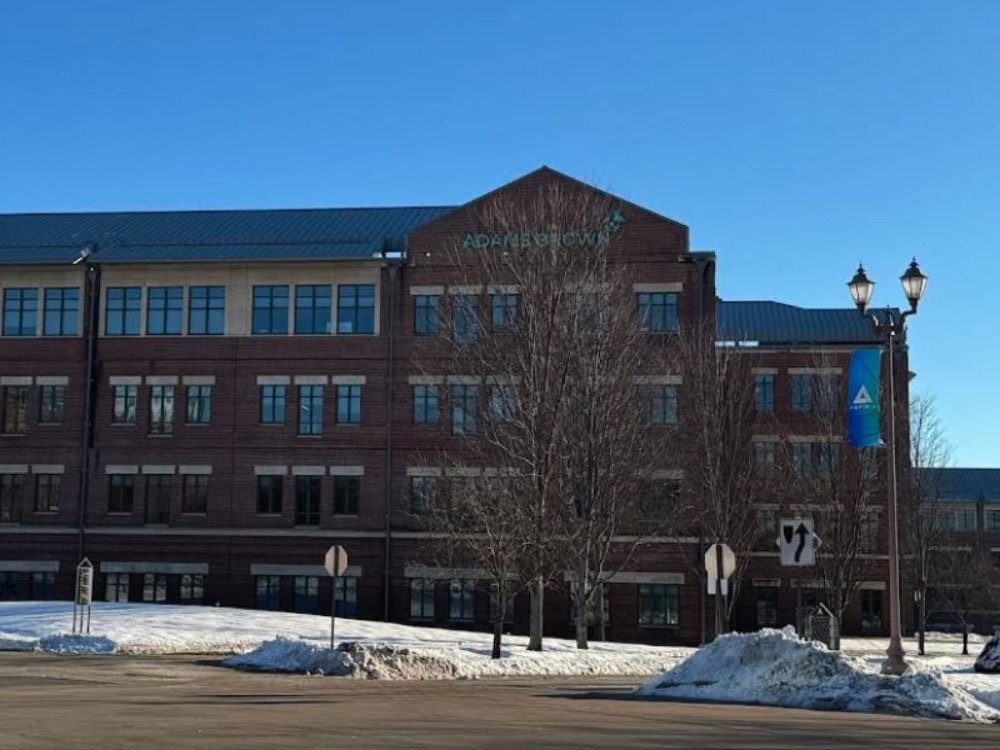
Ottawa University Physician Assistant Program
Overland Park, Kansas · Master of Science in Physician Assistant Studies
Tuition + fees $119,000
Projected billable tuition and comprehensive fee
Check my fit with this school
Check three basics
Enter any GPA or patient care hours you know. We’ll compare them with this school’s published numbers. This is a starting point, not an eligibility decision.
The quick check needs JavaScript.
A closer look
An in-person, 24-month, 96-credit MS-PAS program at Ottawa University’s Kansas City campus in Overland Park. The curriculum comprises 67 didactic credits and 29 clinical credits, including nine four-week rotations.
Mission & approach
Ottawa prepares PA graduates to serve medically underserved, health-profession-shortage and rural communities through evidence-based, patient-centered care, service and professional fulfillment.
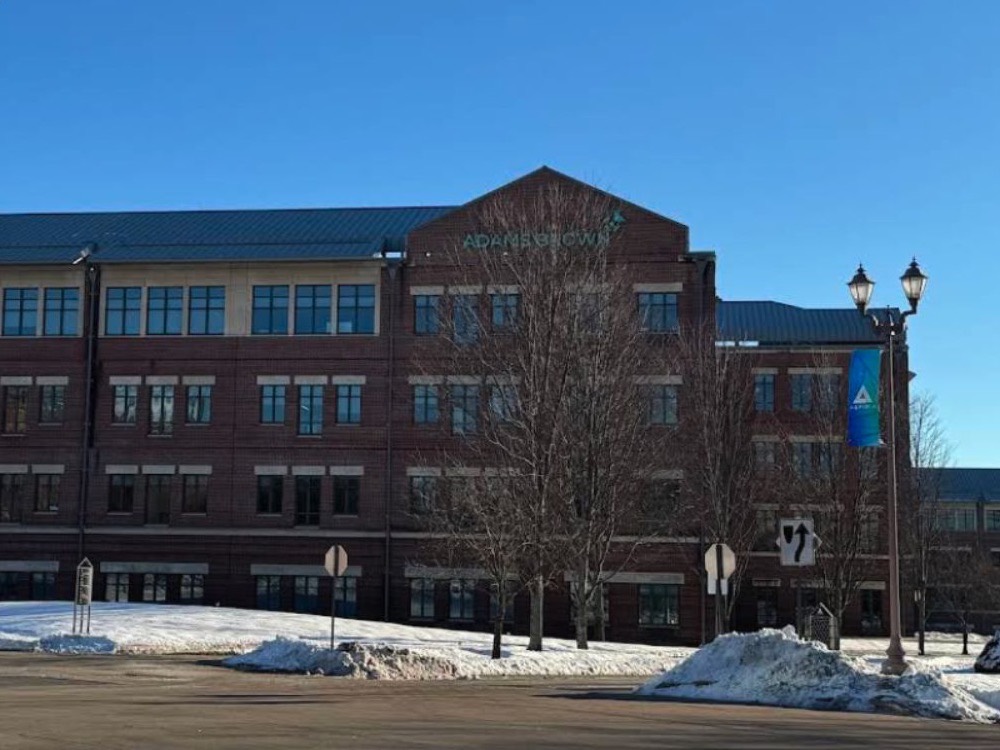
Admissions insights
What this program looks for in applicants
Ottawa uses controlled semi-rolling, holistic review of academic preparation, healthcare experience, personal attributes, professionalism, interview performance and mission alignment. Published preferences include veterans; Ottawa graduates and legacy; rural, HPSA or medically underserved ties; first-generation status; health-related master’s degrees; CNA/MA certification; selected state residency; and specified volunteer service. Preferences do not waive requirements.
Summarized from the program’s admissions information. Confirm current selection criteria with the program.
Program admissions informationHow this program interviews
Interviews for the 2026-27 cycle were by invitation only and conducted only by Zoom, with two interviewers including one PA. The program uses a panel interview and no onsite interview. Interviews ran from May through approximately October 15, 2026.
Source checked Sep 13, 2026. Interview formats and dates can change between cycles.
Program interview informationAdmissions & prerequisites
Admission requirements
Science GPA policy & alternatives
Ottawa has no minimum overall, science or prerequisite GPA. Prerequisite courses do require a grade of C or better.
Prerequisite coursework
SemestersReview each course, its lab, and the program’s policies. Your links are planning records; the program decides equivalency.
| Course | Credits | Lab | Min grade |
|---|---|---|---|
Human Anatomy I and IICourse notes & alternativesTwo semesters; A&P I and II are acceptable. The first anatomy course requires a lab. If you take a standalone Anatomy II, confirm lab equivalency with the program. | 2semesters | Required | C |
Human Physiology I and IICourse notes & alternativesTwo semesters; A&P I and II are acceptable. The first physiology course requires a lab. If you take a standalone Physiology II, confirm lab equivalency with the program. | 2semesters | Required | C |
MicrobiologyCourse notes & alternativesOne semester with lab. | 1semester | Required | C |
BiochemistryCourse notes & alternativesLab requirement not published. | 1semester | Not specified | C |
Human GeneticsCourse notes & alternativesLab requirement not published. | 1semester | Not specified | C |
Medical TerminologyCourse notes & alternativesOne semester or online certificate of completion. | 1semester or certificate | Not specified | C |
Speech, Communication, or Writing-intensive CapstoneCourse notes & alternativesOne of the listed communication pathways; no time limit. | 1semester | Not specified | C |
Statistics or BiostatisticsCourse notes & alternativesNo time limit. | 1semester | Not specified | C |
PsychologyCourse notes & alternativesOne semester, or at least one year in the field of psychology; no time limit. | 1semester or one year experience | Not specified | C |
Policies that can change your plan
- Course recency
- Required semester subjects: two anatomy courses, two physiology courses, microbiology, biochemistry, human genetics, medical terminology, speech/communication or a writing-intensive capstone, statistics/biostatistics, and psychology. Anatomy/physiology, microbiology, biochemistry, genetics and medical terminology must be within seven years — Ottawa specifies January 2019 through the 2026 cycle — while the last three subjects have no time limit. Minimum grade C; all courses must be finished by the September 1 deadline. Online courses from regionally accredited schools are accepted. AP, CLEP, experiential learning and providers listed by the American Council on Education (ACE) cannot satisfy prerequisites.
- Recommended sciences
- Cell biology, molecular biology, embryology, histology or immunology, endocrinology, neurology and pathophysiology are highly recommended and explicitly not admission prerequisites.
- Experience
- Ottawa requires 1,000 hours of direct patient-care experience, paid or volunteer. The program page gives examples of accepted roles and the CASPA tally order, but it does not say whether the 1,000 hours must be complete at application, at the September 1 deadline, or before matriculation, and it publishes no recency window.
- Letters
- Three letters are required. Permitted authors include physicians, PAs, APRNs, research mentors, professors, and volunteer coordinators or supervisors who directly interacted with the applicant within the last three years; family members and peers are excluded. Ottawa does not require that one letter specifically come from a PA.
- Tests
- No standardized test is required: GRE, PA-CAT and CASPer are not required for the 2026-27 cycle. English-proficiency testing is conditional: applicants covered by the policy may use TOEFL, IELTS or Duolingo at the published thresholds.
- Selection
- Ottawa uses controlled semi-rolling, holistic review of academic preparation, healthcare experience, personal attributes, professionalism, interview performance and mission alignment. Published preferences include veterans; Ottawa graduates and legacy; rural, HPSA or medically underserved ties; first-generation status; health-related master’s degrees; CNA/MA certification; selected state residency; and specified volunteer service. Preferences do not waive requirements.
- Costs
- Estimate for the current cohort (the cohort isn't labeled): $109,000 tuition plus a $10,000 comprehensive fee gives $119,000 in billable costs. The itemized non-tuition billable charges add up to $10,931, which is $931 more than the comprehensive fee, so confirm with Ottawa. Other (non-billable) costs total $70,480–$90,970, for total attendance of $189,480–$209,970. Costs are annual estimates and may change. The $750 deposit is credited toward tuition and fees, not added on top.
- Conflicting start dates
- Ottawa lists two different schedules for the same incoming class: one with orientation January 6–8 and first class January 11, and another with mandatory advising and a mock exam January 7-8, orientation January 11, and classes starting January 12, 2027. Confirm exact dates with admissions.
- Before matriculation
- PA Prep Academy, health insurance, drug screening, background check, physical examinations, TB/immunization documentation and other clearances are required; applicants bear associated costs.
- Clinical placements
- The program assigns clinical sites; students may not solicit or negotiate sites. Psychiatry may use telemedicine. Travel and housing can be required, and eligible learners may complete required rotations in Florida.
- Advanced standing
- No transfer credit or advanced placement into the PA curriculum; every learner completes all courses with the cohort.
- Part-time study
- No part-time status; curricular components must be completed in 24 consecutive months.
- Graduation and attrition
- Ottawa hasn't published attrition or graduation data yet. It plans to begin publishing after the first cohort graduates, no later than April 1, 2028. The first cohort's current enrollment is not an outcome.
Required semester subjects: two anatomy courses, two physiology courses, microbiology, biochemistry, human genetics, medical terminology, speech/communication or a writing-intensive capstone, statistics/biostatistics, and psychology. Anatomy/physiology, microbiology, biochemistry, genetics and medical terminology must be within seven years — Ottawa specifies January 2019 through the 2026 cycle — while the last three subjects have no time limit. Minimum grade C; all courses must be finished by the September 1 deadline. Online courses from regionally accredited schools are accepted. AP, CLEP, experiential learning and providers listed by the American Council on Education (ACE) cannot satisfy prerequisites. Cell biology, molecular biology, embryology, histology or immunology, endocrinology, neurology and pathophysiology are highly recommended but are not admission prerequisites.
When courses must be complete: All prerequisites must be complete by the September 1, 2026 CASPA deadline; that date has passed. Health insurance is due January 4, 2027, and other pre-enrollment clearances and PA Prep Academy have separate deadlines. Ottawa does not publish a completion date for the 1,000 PCE hours.
Dates & application steps
The September 1, 2026 deadline has passed; the next cycle's deadline is not yet published.
This date has passed and is not the next application deadline.
Know what the total includes
Published cost estimate
Projected billable tuition and comprehensive fee$109,000 program + $10,000 program · Estimate only; the university may amend charges.
Ottawa lists $109,000 tuition plus a $10,000 nonrefundable comprehensive fee, totaling $119,000. Other student costs and clinical travel are separate, and the school may change charges. The itemized billable charges on the page add up to $931 more than the $119,000 subtotal; confirm this with Ottawa.
Estimated cost of attendance
Each is a full published estimate including tuition and fees above. Do not add the two totals together.
See additional expenses & assumptions
Billable charges are $119,000 ($109,000 tuition plus a $10,000 comprehensive fee). Other estimated costs of $70,480–$90,970 bring total attendance to $189,480–$209,970. The separately listed non-tuition billable items total $10,931, which is $931 above the comprehensive fee; confirm with the program. The deposit is credited toward tuition.
Curriculum & clinical training
First 12 months
Primarily in-person organ-system instruction, clinical medicine, history and physical, procedures, pharmacology and professional practice.
Second 12 months
Nine four-week rotations: emergency, family, internal, pediatrics, psychiatry, surgery, women’s health and two electives, plus clinical seminars.
The program totals 96 credits (67 didactic and 29 clinical). It is delivered on campus; occasional online or hybrid expert sessions and possible telemedicine in psychiatry don't change that.
The admitted class
No admitted-class GPA averages or confirmed enrolled-class count are published.
Published class statistics describe the named cohort or population. They are not admission minimums or acceptance probabilities.
The program’s track record
Graduate outcomes
PANCE pass rates
See first-time program performance with clearly dated national context.
- First-time PANCE pass rate: No graduates yet
No PANCE outcome exists yet. Ottawa states that its first cohort began January 2026 and will graduate in December 2027; it will publish PANCE rates annually no later than April 1 after that graduation. First-time takers, first-time passes, first-time rate, five-year rate and national comparison are all unavailable, not 0%.
First-time program results are not yet available; no graduates have been reported.
- Five-year first-time PANCE pass rate: No graduates yet
Five-year first-time results are not yet available.
Accreditation history
Provisional- September 2025Initial Accreditation-Provisional
ARC-PA noted zero areas of noncompliance and approved a maximum class size of 48.
- TBDNext comprehensive evaluation
ARC-PA lists Provisional Monitoring and does not publish an exact next-review date.
ARC-PA granted Accreditation-Provisional in September 2025, noted zero areas of noncompliance, approved a maximum class size of 48, and lists the next comprehensive evaluation as TBD for provisional monitoring. Provisional status does not guarantee a later accreditation status.
Sources you can open
Links to the program’s own pages and the official directories we use.
- Ottawa University program website
- ARC-PA accreditation history
- ARC-PA currently accredited programs — sponsoring-institution directory
- Ottawa PA overview, mission and facilities
- Ottawa PA admission requirements and cycle
- Ottawa PA tuition and attendance estimates
- Ottawa PA curriculum
- Ottawa PA policies, attrition and PANCE reporting
About the U.S. News rank
The U.S. News PA rank uses the 2025 PA edition, matched to the listed program and campus. It reflects peer-assessed reputation, not admissions odds or a personal fit score. Programs without a separate entry are labeled “Unranked.”
How competitive are you for this program?
Match AI compares your full profile with this program and every other one, then sorts your list into Reach, Target and Safety.