Address & Contact

Our Address

4701 North Charles Street Baltimore, Maryland 21210

GPS

39.352381062355, -76.622363908865

Telephone
← Find PA SchoolsProgram profile
PROGRAM PROFILE

Notre Dame of Maryland University Physician Assistant Program

Baltimore, Maryland · Master of Science in Physician Assistant Studies

Application deadline Mar 1, 2027Unknown
Tuition Resident: $84,747 published full-program tuitionNonresident: $84,747 published full-program tuition · Confirm current entering cohort
Class size 35 studentsARC-PA permits a maximum entering class of 35. The published entering cohorts are 25 for Class of 2025, then 28 and 34 in two columns both labelled Class of 2026; those observed cohort sizes do not replace the approved maximum.
Program length 27 monthsFull program
GRE requirement Not requiredGRE, GMAT and MCAT are explicitly not required and are not evaluated. PA-CAT and CASPer are not named on the official admissions page, so their status remains program-specific unknown here.
Patient-care minimum 500 hours requiredAt least 500 hours of direct patient care experience are required, separate from shadowing. Paid and/or volunteer direct care is allowed, and hours must be logged and hand-signed by the supervising health professional before CASPA upload. The program evaluates actual duties and publishes a broad list of acceptable roles.
Overall GPA minimum 3.00CASPA overall and overall science GPAs must each be at least 3.0. Higher values score better. The program says waiver requests may be considered after CASPA verification for a GPA below 3.0, while also calling requirements non-negotiable; applicants relying on a waiver should obtain written guidance.
Science GPA minimum 3.00The published measure is CASPA overall science GPA; it includes completed prerequisites. No admitted-class average overall or science GPA is published.
Recommendations 3 minimumAt least three CASPA recommendations are required. The direct page describes academic, clinical, and professional familiarity as preference factors without making a named role mandatory. The program-supplied PAEA profile, updated March 11, 2026, lists PA and other health-care-provider reference types as required. Applicants should obtain a PA or other clinical reference and confirm the exact required mix.
International applicants AcceptedForeign education requires a WES course/degree evaluation.
English proficiency / TOEFL ConditionalWES and TOEFL conditional. Applicants without a U.S. bachelor’s or higher degree must submit TOEFL with at least 20 in each section.
PANCE pass rate 76%First-time pass rate · Reporting year not recordedFive-year first-time: 76% · reporting period not recorded
U.S. News PA rank Unranked2025 PA edition · Peer-assessed reputationNo published rank for this program in this edition.
THE PROGRAM

A closer look

An in-person, 27-month, 111-credit MSPAS program on NDMU’s main Baltimore campus. The sequence combines 59 didactic credits with 52 clinical-year credits, including seven required clinical fields, one elective, capstone work and a summative evaluation. The duration and August 2027 start come from the program-supplied PAEA profile updated March 11, 2026.

111-credit integrated didactic and clinical curriculumEight six-credit clinical rotations, including one electiveCapstone sequence and summative evaluationRolling Fall 2027 admission through CASPA
Mission & approach

Attract compassionate and intellectually curious applicants, then mentor and educate them to become exceptional PAs who practice collaboratively with professional excellence and social responsibility while serving their communities.

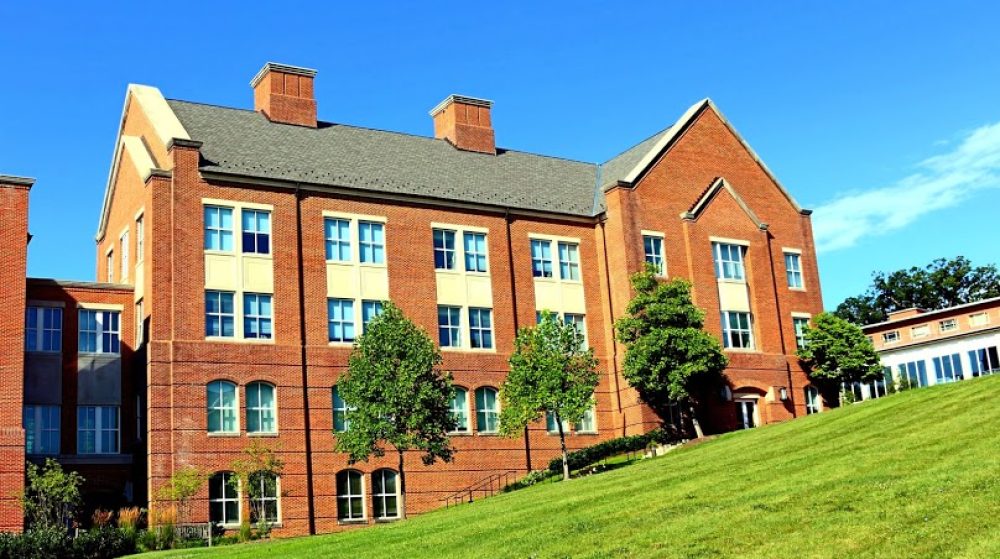
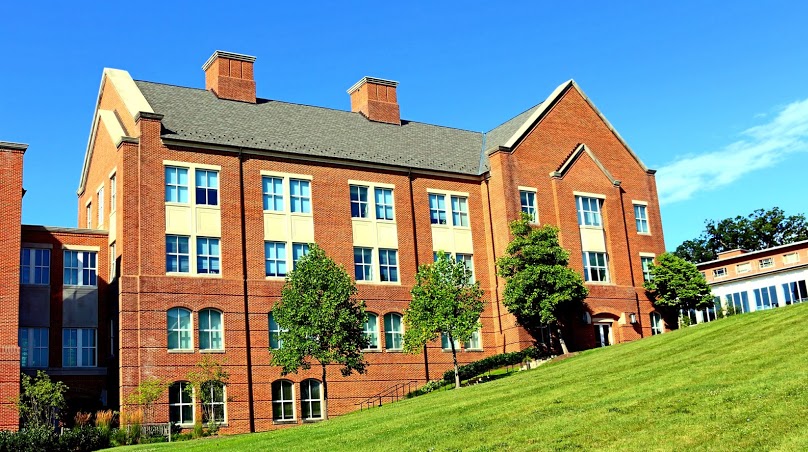
Knott Science and Innovation Center, home of the Notre Dame of Maryland University Physician Assistant program
Knott Science and Innovation Center, home of Notre Dame of Maryland University’s PA program.
PREMIUM · MATCH AI

Is Notre Dame of Maryland University a fit for you?

Unlock your personalized category, ranked school list, and reasons based on your profile. One Match AI purchase gives you the same results on PA School Finder and in your Toolkit.

SafetyTargetReachNot yet eligible
Unlock my school matches →
BEYOND THE NUMBERS

Admissions insights

What this program looks for in applicants

CASPA overall and overall science GPAs must each be at least 3.0. Higher values score better. The program says waiver requests may be considered after CASPA verification for a GPA below 3.0, while also calling requirements non-negotiable; applicants relying on a waiver should obtain written guidance. Preference also goes to completed degrees and prerequisites, higher prerequisite grades/GPA, courses within eight years, at least 500 direct-care hours, at least 24 PA-shadowing hours, three or more favorable recommendations and NDMU alumni (about a 5% academic-score advantage). Admission combines the pre-interview and interview assessments.

Summarized from the program’s admissions information. Confirm current selection criteria with the program.

Program admissions information

How this program interviews

Virtual or on campusTraditional and group

Interview is mandatory. PAEA lists traditional and group interview types. NDMU intends in-person interviews on campus but reserves the right to use a virtual format.

Source checked Sep 13, 2026. Interview formats and dates can change between cycles.

Program interview information
YOUR STARTING POINT

Admissions & prerequisites

Admission requirements

Overall GPA3.0 minimumCASPA overall and overall science GPAs must each be at least 3.0. Higher values score better. The program says waiver requests may be considered after CASPA verification for a GPA below 3.0, while also calling requirements non-negotiable; applicants relying on a waiver should obtain written guidance.
Science GPA3.0 minimumThe published measure is CASPA overall science GPA; it includes completed prerequisites. No admitted-class average overall or science GPA is published.
Direct patient care500 hours requiredAt least 500 hours of direct patient care experience are required, separate from shadowing. Paid and/or volunteer direct care is allowed, and hours must be logged and hand-signed by the supervising health professional before CASPA upload. The program evaluates actual duties and publishes a broad list of acceptable roles.
Shadowing24 PA hours requiredShadowing is observational and explicitly separate from direct care. The current main program page repeatedly states 24 hours; an older catalog representation previously stated 40 hours, while the current catalog admissions page now says Content Pending. Confirm if relying on the threshold.
GRENot requiredGRE, GMAT and MCAT are explicitly not required and are not evaluated. PA-CAT and CASPer are not named on the official admissions page, so their status remains program-specific unknown here.
Recommendations3 minimumAt least three CASPA recommendations are required. The direct page describes academic, clinical, and professional familiarity as preference factors without making a named role mandatory. The program-supplied PAEA profile, updated March 11, 2026, lists PA and other health-care-provider reference types as required. Applicants should obtain a PA or other clinical reference and confirm the exact required mix.
PrerequisitesB or betterB-minus and pass/fail are not accepted. All attempts, including repeats, enter the prerequisite GPA.
ApplicationCASPA; rollingThe Fall 2027 cycle opens May 1, 2026 and is rolling until seats are filled. NDMU’s graduate application page separately publishes March 1 as the fall PA deadline. The PA page calls May 1, 2026 a Wednesday although it falls on a Friday, and retains a stale Fall 2026 sentence. Apply early and confirm the CASPA deadline definition; this packet does not infer received versus verified status.
Supplemental materialsPossible after interview selectionThe program may request additional documents and/or a supplemental application before assigning an interview; it does not publish a universal supplemental application or fee.
International educationWES and TOEFL conditionalForeign education requires a WES course/degree evaluation. Applicants without a U.S. bachelor’s or higher degree must submit TOEFL with at least 20 in each section.
InterviewRequired; in person intendedThe program intends campus interviews but reserves the right to use a virtual format.

Prerequisite coursework

Semester credits

Review each course, its lab, and the program’s policies. Your links are planning records; the program decides equivalency.

CourseCreditsLabMin gradeYour coursework
Anatomy & Physiology I
Course notes & alternatives

Four credits with a face-to-face lab. Online labs are not accepted except possible case review for labs completed during calendar years 2020–2021.

4semester creditsRequiredBSign in to plan
Anatomy & Physiology II
Course notes & alternatives

Four credits with a face-to-face lab. This is the second course in the required A&P sequence.

4semester creditsRequiredBSign in to plan
Microbiology
Course notes & alternatives

Three credits with a face-to-face lab. The page does not clarify whether the lab is included within the three-credit total.

3semester creditsRequiredBSign in to plan
Organic Chemistry or Biochemistry
Course notes & alternatives

Either subject satisfies the one three-credit requirement; a lab is not required.

3semester creditsNot requiredBSign in to plan
Psychology
Course notes & alternatives

The program does not restrict the published psychology requirement to a named subfield.

3semester creditsNot requiredBSign in to plan
Statistics
Course notes & alternatives

Three or four credits.

3semester creditsNot requiredBSign in to plan
Medical Terminology
Course notes & alternatives

Two or three credits; must carry a letter grade like every prerequisite.

2semester creditsNot requiredBSign in to plan

Policies that can change your plan

Grades, repeats and expiry
Every prerequisite requires B or better; B-minus and pass/fail do not qualify. All prerequisite attempts count in the prerequisite GPA. Courses must be within eight years, subject to the stated post-verification waiver process.
Labs and online study
Required A&P I, A&P II and Microbiology labs must be face to face. Online lectures are accepted. Only online labs taken during 2020–2021 may receive individual consideration.
AP, CLEP and community college
No program-specific rule was found. NDMU has a general prior-learning policy, but it does not establish that AP/CLEP credits satisfy PA prerequisites. Confirm each course.
Experience documentation
At least 500 hours of direct patient care experience are required, separate from shadowing. Paid and/or volunteer direct care is allowed, and hours must be logged and hand-signed by the supervising health professional before CASPA upload. The program evaluates actual duties and publishes a broad list of acceptable roles.
Letters
At least three CASPA recommendations are required. The direct page describes academic, clinical, and professional familiarity as preference factors without making a named role mandatory. The program-supplied PAEA profile, updated March 11, 2026, lists PA and other health-care-provider reference types as required. Applicants should obtain a PA or other clinical reference and confirm the exact required mix.
Testing
GRE, GMAT and MCAT are not required or evaluated. Official program materials reviewed do not name PA-CAT or CASPer.
Clinical placement
Students are not required to provide or solicit clinical sites or preceptors; program faculty and staff secure them.
Advanced standing
No advanced placement or special credit is granted for prior degrees, medical education or experience.
Outcomes
The March 12, 2026 NCCPA report for Class of 2025 lists 21 first-time takers, 16 passes and a 76% first-time pass rate, versus 91% nationally; 76% ultimately passed as of the report date. Only one graduating class is reported, so “five-year” display is a one-cohort cumulative 16/21, not five years of outcomes. The live program table reports Class of 2025 maximum entering size 35, entering size 25, 24 graduates, 4.00% attrition and 96.00% graduation. Its next two columns are both labelled Class of 2026, an unresolved page-label error; their entering sizes are 28 and 34 and outcomes are N/A.
Accreditation
ARC-PA lists Accreditation-Provisional, first accredited June 2023, maximum class size 35 and next review January 2028. At the January 2026 provisional-monitoring review, ARC-PA issued a Warning Letter and noted ten areas of noncompliance, with five report items due June 9, 2026 and five to be addressed in the final-provisional self-study. The history does not state the later disposition of the June report.
Cost representation
For 2026–2027 the program page publishes $763 per credit, 111 credits, $84,747 tuition and $3,000 in PA student fees ($1,500 in each of years 1 and 2). The stated per-credit multiplication is inconsistent: $763 × 111 = $84,693, $54 below the printed tuition. It prints tuition plus fees as $87,749, although the printed tuition plus fees total $87,747, a separate $2 inconsistency. The university tuition page separately lists $36,320 per year and $1,500 per year in PA fees; those annual amounts are retained as source context and are not used to replace the program page’s direct full-program amounts.

Seven required subject rows total 22–24 semester credits depending on Statistics and Medical Terminology. Anatomy & Physiology I, II and Microbiology require face-to-face labs. Organic Chemistry or Biochemistry is one alternative requirement. Genetics (3–4 credits) is recommended only. AP/CLEP applicability to PA prerequisites and community-college restrictions are not published program-specifically; the university’s general prior-learning policy does not prove PA-prerequisite acceptance.

When courses must be complete: The direct program page favors applicants who have completed the degree and all prerequisites before application. The program-supplied PAEA profile permits no more than three outstanding prerequisites and lists March 2027 as their completion timeframe. The bachelor’s or graduate degree must be complete for matriculation.

BUILD YOUR TIMELINE

Dates & application steps

Fall 2027 CASPA cycle opensMay 1, 2026 · Passed

The Fall 2027 cycle opens May 1, 2026 and is rolling until seats are filled. NDMU’s graduate application page separately publishes March 1 as the fall PA deadline. The PA page calls May 1, 2026 a Wednesday although it falls on a Friday, and retains a stale Fall 2026 sentence. Apply early and confirm the CASPA deadline definition; this packet does not infer received versus verified status.

Published date
Published fall application deadlineMar 1, 2027

The Fall 2027 cycle opens May 1, 2026 and is rolling until seats are filled. NDMU’s graduate application page separately publishes March 1 as the fall PA deadline. The PA page calls May 1, 2026 a Wednesday although it falls on a Friday, and retains a stale Fall 2026 sentence. Apply early and confirm the CASPA deadline definition; this packet does not infer received versus verified status.

Published date
PAEA-listed cohort startAugust 2027

PAEA updated March 11, 2026 lists August 2027; the direct page advertises Fall 2027 without an exact start date.

Ready to start an application plan?

Keep your essays, checklist, and personal targets together.

Plan application →
THE FINANCIAL PICTURE

Know what the total includes

Published cost estimate

2026–2027 published program estimate
Resident tuition$84,747 published full-program tuition
Nonresident tuition$84,747 published full-program tuition

Confirm current entering cohort

Required program fees$3,000
Additional expenses$9,640
Living & transportation$63,500
Estimated cost of attendanceIncludes resident tuition, required fees, additional expenses and living costs
$160,887

For 2026–2027 the program page publishes $763 per credit, 111 credits, $84,747 tuition and $3,000 in PA student fees ($1,500 in each of years 1 and 2). The stated per-credit multiplication is inconsistent: $763 × 111 = $84,693, $54 below the printed tuition. It prints tuition plus fees as $87,749, although the printed tuition plus fees total $87,747, a separate $2 inconsistency. The university tuition page separately lists $36,320 per year and $1,500 per year in PA fees; those annual amounts are retained as source context and are not used to replace the program page’s direct full-program amounts.

See additional expenses & assumptions
Tuition per credit$763
Program credits$111
Published full-program tuition$84,747
PA student fees$3,000
Published tuition-plus-fees total$87,749
Normalized tuition-plus-fees arithmetic$87,747
Laptop or tablet$1,500
Medical equipment$1,000
Logo scrubs$60
Health insurance$6,000
Drug screens$100
Background check$85
Textbooks$500
Graduation fee$395
Housing and food$50,000
Transportation$6,000
Personal/cell/internet$7,500
Published total attendance cost$160,889
Normalized itemized attendance arithmetic$160,887

The detailed non-living allowances sum to $9,640, and living/personal/transportation sum to $63,500. The normalized detail total uses the printed $84,747 tuition plus $3,000 fees and all printed expense rows: $160,887. The school instead prints $87,749 tuition plus fees and $160,889 total attendance cost. Costs are estimates and health-insurance spending varies.

Plan for the application, too.

Keep application fees separate from the cost of attending.

HOW YOU’LL LEARN

Curriculum & clinical training

01Didactic phase — 59 credits

Five catalog terms; four grouped panels on the main page

Anatomy, physiology/pathophysiology, three clinical-medicine courses, three patient-evaluation/clinical-reasoning courses, pharmacology, diagnostics, behavioral medicine, public health, evidence-based medicine, ethics/history and specialty preparation.

02Clinical phase — 52 credits

Eight rotations plus capstone and transition

Six-credit rotations in family medicine, internal medicine, surgery, emergency medicine, women’s health, pediatrics, behavioral health and one elective, plus capstone I/II, professional seminar/summative evaluation and transition to practice.

Both sources total 59 didactic plus 52 clinical credits = 111. The catalog separates the didactic phase into five terms (Fall, Winter, Spring, Summer, Fall II), while the main page groups it into four panels and reallocates several didactic courses across terms. In the clinical phase, the catalog places Capstone I in summer and gives 18 spring plus 13 summer credits; the main page groups Capstone I in spring and prints 19 spring plus 12 summer. These allocation conflicts do not change the total.

NDMU catalog Current 111-credit catalog curriculum · Checked 2026-09-13
WHO STUDIES HERE

The admitted class

Current PAEA matriculant demographics; cohort year not specified

Published class statistics
Overall GPANot recorded
Science GPANot recorded
Patient-care hoursNot recorded

PAEA updated March 11, 2026; counts are not assigned to a graduating class.

Compare published cohorts
ClassPublished GPAPublished science-related GPAPublished experience hours
Current PAEA matriculant demographics; cohort year not specifiedNot recordedNot recordedNot recorded

No admitted-class overall GPA, science GPA, GRE average, or experience-hour average is published. PAEA publishes current matriculant counts—21 female, 7 male; 4 Asian, 4 Black or African American, 15 White, and 3 Other—but does not label the cohort year.

Published class statistics describe the named cohort or population. They are not admission minimums or acceptance probabilities.

OUTCOMES & OVERSIGHT

The program’s track record

Graduate outcomes

PANCE pass rates

See first-time program performance with clearly dated national context.

  • First-time PANCE pass rate: 76%

The March 12, 2026 NCCPA report for Class of 2025 lists 21 first-time takers, 16 passes and a 76% first-time pass rate, versus 91% nationally; 76% ultimately passed as of the report date. Only one graduating class is reported, so “five-year” display is a one-cohort cumulative 16/21, not five years of outcomes.

Program reporting year not recorded; direct comparison unavailable.

  • Five-year first-time PANCE pass rate: 76%

Program reporting period not recorded; direct comparison unavailable.

Graduation & attrition

2025 graduating cohort

Published attrition4%
Entering students25
Graduates24

The live program table reports Class of 2025 maximum entering size 35, entering size 25, 24 graduates, 4.00% attrition and 96.00% graduation. Its next two columns are both labelled Class of 2026, an unresolved page-label error; their entering sizes are 28 and 34 and outcomes are N/A.

Accreditation history

Provisional
First accreditedJune 23, 2023
Next reviewJanuary 2028
  1. June 2023Initial provisional accreditation

    ARC-PA granted Provisional status with maximum class size 35 and a March 2026 monitoring evaluation.

  2. March 2024Initial reports accepted

    ARC-PA accepted evidence on instructional resources, student health records, lifespan clinical experiences and student evaluation; no further information was requested.

  3. January 2026Provisional monitoring and Warning Letter

    Provisional status continued. ARC-PA noted ten noncompliance areas, issued a Warning Letter and set January 2028 for the final provisional evaluation.

ARC-PA lists Accreditation-Provisional, first accredited June 2023, maximum class size 35 and next review January 2028. At the January 2026 provisional-monitoring review, ARC-PA issued a Warning Letter and noted ten areas of noncompliance, with five report items due June 9, 2026 and five to be addressed in the final-provisional self-study. The history does not state the later disposition of the June report.

ARC-PA currently accredited programs — sponsoring-institution directory Directory as retrieved 2026-09-26; scheduled review dates are provisional timing and may change · Checked 2026-09-26
NDMU pance NCCPA report printed March 12, 2026 · Checked 2026-09-13
CHECK THE EVIDENCE

Sources you can open

Follow the source for the policy or cohort you are reviewing. A check date is separate from the year a figure describes.

Rankings & information still to verify

The U.S. News PA rank uses the 2025 PA edition, matched to the listed program and campus. It reflects peer-assessed reputation, not admissions odds or a personal fit score. Programs without a separate entry are labeled “Unranked.”

Unpublished policies and unverified cohort statistics are left open for confirmation.

PA School Finder × PA Life Applicant ToolkitOne program record. One application plan.