Address & Contact

Our Address

625 7th Ave NE, Hickory, NC 28601, United States

GPS

35.73879732303865, -81.32697788426152

Telephone
← Find PA SchoolsProgram profile
PROGRAM PROFILE

Lenoir-Rhyne University Physician Assistant Program

Hickory, North Carolina · Masters

Application deadline Sep 1, 2026Passed · Verified
Tuition Resident: Approximately $90,000 projected full-program tuitionNonresident: Approximately $90,000 projected full-program tuition · Current-rate projection for January 2027; later-cohort tuition may rise. Fees are separate.
Class size 36 studentsARC-PA maximum class size and PAEA estimated January 2027 entering class: 36.
Program length 24 monthsFull program
GRE requirement Not requiredGRE and MCAT are not required. PA-CAT is recommended with preference points, but required if the oldest prerequisite will be more than ten years old before matriculation. CASPer is not published.
Patient-care minimum 500 hoursDirect hands-on care is required. In-person preferred; virtual care is case-by-case. Up to 50 PA/NP/MD/DO shadowing hours may count.
Overall GPA minimum 3.00 cumulative OR 3.00 last-60Eligibility is satisfied by a 3.00 cumulative GPA OR a 3.00 GPA on the last 60 credit hours; no single cumulative-only scalar represents the rule. See Requirements.
Science GPA minimum No published minimumNo GPA cutoff stated in the published policy.
Recommendations 3 letters requiredThree letters required. The current PA admissions page recommends at least two from clinicians or clinical supervisors; one academic letter is acceptable and personal letters are not. PAEA labels a PA reference required; confirm whether a PA writer is mandatory.
International applicants ConditionalThe PA admissions page says international applicants may be asked for TOEFL if English is a second language; general graduate F-1 policy may impose additional proof. Accepted with conditions.
English proficiency / TOEFL ConditionalTOEFL. The PA admissions page says international applicants may be asked for TOEFL if English is a second language; general graduate F-1 policy may impose additional proof.
PANCE pass rate No graduates yetFirst-time pass rateFive-year first-time: No graduates yet
U.S. News PA rank Unranked2025 PA edition · Peer-assessed reputationNo published rank for this program in this edition.
THE PROGRAM

A closer look

Lenoir-Rhyne University Physician Assistant program in Hickory, North Carolina.

24 months36-student class capOn Campus
Mission & approach

The Master of Science in Physician Assistant Studies (PA Studies) is an innovative program designed to create the next generation of highly competent and empathetic medical providers renowned for their diverse, equitable and inclusive patient-centered care in collaborative healthcare settings regionally and nationally.

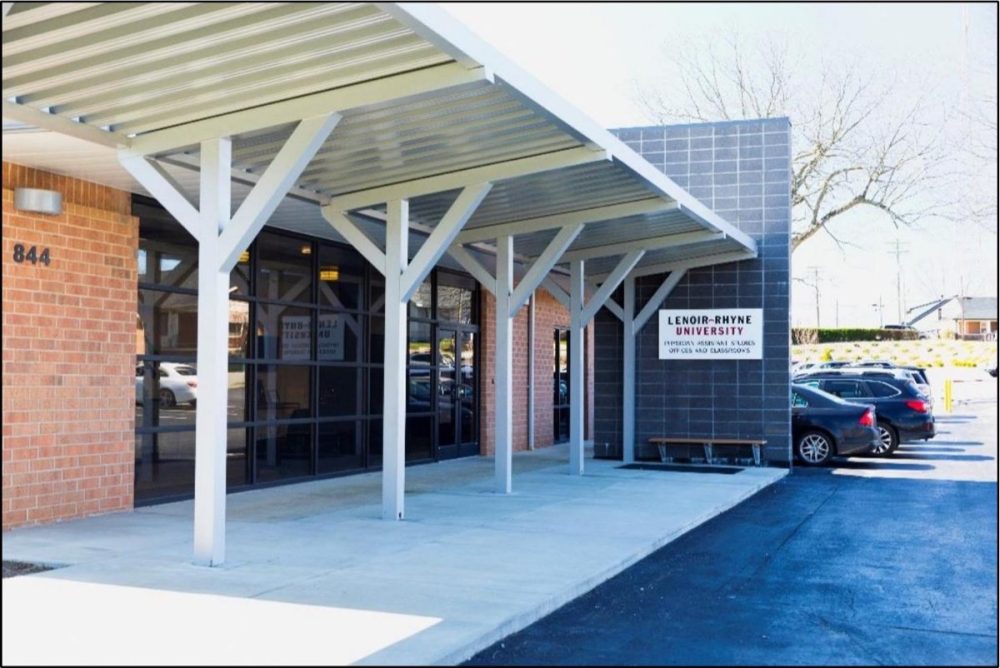
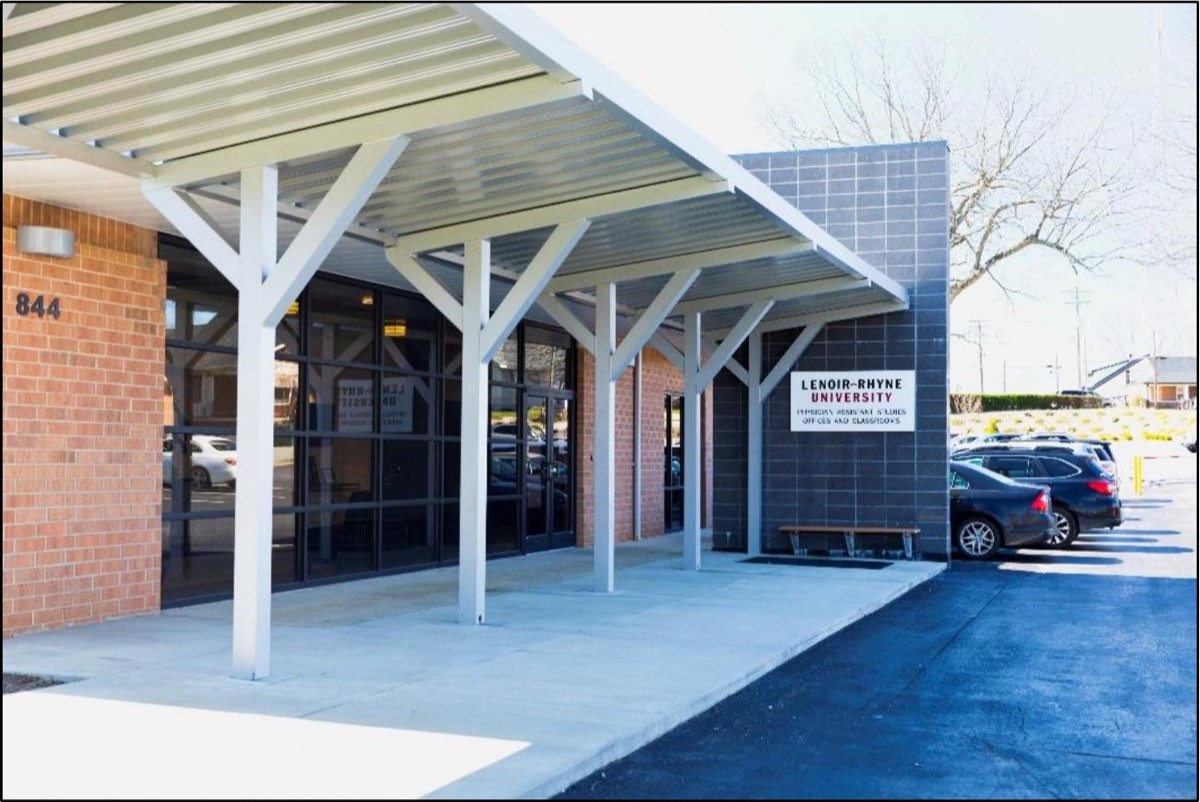
Wayne B. Powell Health Sciences Center at Lenoir-Rhyne University, home of Physician Assistant Studies
Wayne B. Powell Health Sciences Center at Lenoir-Rhyne University, home of Physician Assistant StudiesPhoto credited in the publication to Dr. Dan Kiser.
PREMIUM · MATCH AI

Is Lenoir-Rhyne University a fit for you?

Unlock your personalized category, ranked school list, and reasons based on your profile. One Match AI purchase gives you the same results on PA School Finder and in your Toolkit.

SafetyTargetReachNot yet eligible
Unlock my school matches →
BEYOND THE NUMBERS

Admissions insights

What this program looks for in applicants

CASPA holistic. Benchmark: >=75% of class have overall/last-60 GPA >=3.2 & >=1,000 DPC hrs. Preference points: current LR students; prior graduate degree; >500 DPC hrs (more for >=1,000); >=20 PA shadow hrs; voluntary PA-CAT. No GRE/MCAT.

Summarized from the program’s admissions information. Confirm current selection criteria with the program.

Program admissions information

How this program interviews

Individual + Group

The interview process combines individual and group interviews with a written interview essay, and interview rating scores are tabulated with GPA, patient care hours and shadowing hours to rank candidates. Not all qualified applicants are selected to interview.

Source checked Aug 1, 2026. Interview formats and dates can change between cycles.

Program interview information
YOUR STARTING POINT

Admissions & prerequisites

Admission requirements

GRENot requiredGRE and MCAT are not required. PA-CAT is recommended with preference points, but required if the oldest prerequisite will be more than ten years old before matriculation. CASPer is not published.
Patient-care experience500 hours required · 1,000 recommendedDirect hands-on care is required. In-person preferred; virtual care is case-by-case. Up to 50 PA/NP/MD/DO shadowing hours may count.
Overall GPA3.00 cumulative OR 3.00 last-60Eligibility may use either a 3.00 cumulative GPA or a 3.00 GPA over the last 60 college credits.
Science GPANo published minimumScience GPA is a selection factor, with no published minimum.
Recommendations3 letters requiredThree letters required. The current PA admissions page recommends at least two from clinicians or clinical supervisors; one academic letter is acceptable and personal letters are not. PAEA labels a PA reference required; confirm whether a PA writer is mandatory.
International eligibilityAccepted with conditionsBachelor’s degree and every prerequisite must be completed at a regionally accredited U.S. institution.
English proficiencyConditional TOEFLThe PA admissions page says international applicants may be asked for TOEFL if English is a second language; general graduate F-1 policy may impose additional proof.
Overall GPA exception pathway

Eligibility is satisfied by a 3.00 cumulative GPA OR a 3.00 GPA on the last 60 credit hours; no single cumulative-only scalar represents the rule.

Prerequisite coursework

semester credits; 3 semester = 4 quarter, combined A&P 6 semester = 8 quarter

Review each course, its lab, and the program’s policies. Your links are planning records; the program decides equivalency.

CourseCreditsLabMin gradeYour coursework
Biology for science majors3semester credits; 3 semester = 4 quarter, combined A&P 6 semester = 8 quarterRequiredCSign in to plan
Upper-level Biology
Course notes & alternatives

Genetics highly recommended; Cell Biology, Molecular Biology, Embryology, Histology, Virology, Immunology, and other upper-level Biology options are described.

3semester credits; 3 semester = 4 quarter, combined A&P 6 semester = 8 quarterNot specifiedCSign in to plan
Microbiology
Course notes & alternatives

The official Microbiology row does not explicitly require a lab.

3semester credits; 3 semester = 4 quarter, combined A&P 6 semester = 8 quarterNot specifiedCSign in to plan
Human Anatomy
Course notes & alternatives

Six semester credits total or eight quarter credits. Required labs must be in person.

3semester credits; 3 semester = 4 quarter, combined A&P 6 semester = 8 quarterRequiredCSign in to plan
Human Physiology
Course notes & alternatives

Six semester credits total or eight quarter credits. Required labs must be in person.

3semester credits; 3 semester = 4 quarter, combined A&P 6 semester = 8 quarterPreferredCSign in to plan
Two-semester combined Human Anatomy and Physiology sequence2 course(s)
Course notes & alternatives

Six semester credits total or eight quarter credits. Required labs must be in person.

6semester credits; 3 semester = 4 quarter, combined A&P 6 semester = 8 quarterRequiredCSign in to plan
General Chemistry I3semester credits; 3 semester = 4 quarter, combined A&P 6 semester = 8 quarterRequiredCSign in to plan →This requirement needs an individual course review; completion has not been confirmed.
General Chemistry II or higher
Course notes & alternatives

Must be distinct from General Chemistry I; courses/labs cannot count for two requirements.

3semester credits; 3 semester = 4 quarter, combined A&P 6 semester = 8 quarterRequiredCSign in to plan →This requirement needs an individual course review; completion has not been confirmed.
Biochemistry
Course notes & alternatives

Additional to both General Chemistry courses.

3semester credits; 3 semester = 4 quarter, combined A&P 6 semester = 8 quarterNot specifiedCSign in to plan
Organic Chemistry
Course notes & alternatives

Additional to both General Chemistry courses.

3semester credits; 3 semester = 4 quarter, combined A&P 6 semester = 8 quarterNot specifiedCSign in to plan
General, Abnormal, or Developmental Psychology from Psychology Department
Course notes & alternatives

AP General Psychology accepted when the institution awarded at least three semester or four quarter credits.

3semester credits; 3 semester = 4 quarter, combined A&P 6 semester = 8 quarterNot specifiedCSign in to plan
Statistics or Biostatistics
Course notes & alternatives

AP Statistics accepted when the institution awarded at least three semester or four quarter credits.

3semester credits; 3 semester = 4 quarter, combined A&P 6 semester = 8 quarterNot specifiedCSign in to plan
Medical Terminology semester course
Course notes & alternatives

No credit-hour minimum is published; continuing-education documentation goes to LR Graduate Admissions if absent from a transcript.

Not publishedsemester credits; 3 semester = 4 quarter, combined A&P 6 semester = 8 quarterNot specifiedCSign in to plan
U.S. Medical Terminology continuing-education course with completion documentation
Course notes & alternatives

No credit-hour minimum is published; continuing-education documentation goes to LR Graduate Admissions if absent from a transcript.

Not publishedsemester credits; 3 semester = 4 quarter, combined A&P 6 semester = 8 quarterNot specifiedNot specifiedSign in to plan →This requirement needs an individual course review; completion has not been confirmed.

Policies that can change your plan

International eligibility
International applicants are eligible only after completing both the bachelor's degree and all prerequisites at a U.S. regionally accredited institution. General F-1 policy requires translated course-by-course evaluated transcripts and financial documentation. Permanent-residency, DACA, and PA-specific visa restrictions are not separately published.
English proficiency
The PA section says international applicants may be asked for TOEFL if English is a second language; general F-1 policy requires proof when the native language is not English. General minima are TOEFL 550 paper, 213 computer, or 79 internet, or IELTS 6.5. Depending on program, the general page also publishes GMAT 450, MAT 390, or GRE verbal 147, quantitative 147 and analytical writing 3.5 as English-proof alternatives. This GRE route conflicts with the PA-specific statement that GRE is not required; PA applicability requires confirmation. Qualifying English coursework or an AA/AS or higher degree may substitute; iTEP 3.9, language-program completion, or appeal/Zoom review may be available. Score age, section minima, a post-January-2026 TOEFL threshold, and Duolingo are not published.
Admission tests
GRE and MCAT are not required. PA-CAT is recommended and awards preference points, but becomes required if the oldest prerequisite will be more than ten years old before matriculation. CASPer is not published.

All prerequisites require C or better. Required labs must be in person; 2020–21 COVID-related online labs receive case-by-case review. Up to two prerequisites may be pending at CASPA application; finish by September 1 and submit final transcripts by October 1 before January matriculation. No blanket ten-year course expiry is published; PA-CAT becomes required when the oldest prerequisite exceeds ten years before matriculation. Course and lab double-counting is disallowed.

When courses must be complete: Full-time program.

BUILD YOUR TIMELINE

Dates & application steps

CASPA Green-Verified deadlineSep 1, 2026 · Passed

PAEA program-supplied directory; January 2027 entry. Prerequisites also due September 1, with final transcripts October 1.

Published date
Prerequisite completionSep 1, 2026 · Passed

Current PA admissions page; January 2027 entry.

Published date
Final prerequisite transcriptsOct 1, 2026

Current PA admissions page; January 2027 entry.

Published date
Program startsJanuary 2027

January 2027 start month in program-supplied PAEA listing.

Ready to start an application plan?

Keep your essays, checklist, and personal targets together.

Plan application →
THE FINANCIAL PICTURE

Know what the total includes

Projected cost estimate

Projected full-program tuition at published 2026–27 rates; January 2026 fees separately documented
Resident tuitionApproximately $90,000 projected full-program tuition
Nonresident tuitionApproximately $90,000 projected full-program tuition

$15,000 semester × 6 documented semesters · Current-rate projection for January 2027; later-cohort tuition may rise. Fees are separate.

Required program fees$9,259
Projected tuition + required feesCurrent-rate estimate; living and other expenses excluded
$99,259

Basis: $15,000 semester × 6 documented semesters · current-rate projection · medium confidence

$90,000 is projected full-program tuition at the published 2026–27 rate of $15,000 per semester for six semesters. The January 2026 PA cost sheet also lists $90,000 tuition and states later cohort tuition is expected to rise. January 2027 tuition is not published as a fixed total; fees are separate. The January 2026 PA cost sheet lists $9,259.45 in program fees paid to the university, for $99,259.45 tuition plus university program fees. These are prior-cohort figures; the applicability of a separate graduate general fee is unresolved.

See additional expenses & assumptions

Six semesters at the published 2026–27 $15,000 PA rate. No separate nonresident rate. January 2027 program fee total is not yet published.

Plan for the application, too.

Keep application fees separate from the cost of attending.

HOW YOU’LL LEARN

Curriculum & clinical training

01Didactic year

Medical foundations and clinical skills

Anatomy, pathophysiology, pharmacology, clinical medicine, assessment, procedures, and evidence-based practice use laboratory and simulation learning.

02Clinical year

Supervised clinical practice

Primary care, combined women’s health and pediatrics, internal medicine, psychiatry, emergency medicine, surgery, and two electives are supported by clinical seminars.

The Hickory program requires 105 credits over 24 months: 55 didactic and 50 clinical credits. Interprofessional learning includes the LR Clinic and simulation partnerships.

Lenoir-Rhyne University official curriculum Current published campus/route curriculum checked September 26, 2026 · Checked 2026-09-26
WHO STUDIES HERE

The admitted class

Recorded average GPANot recorded
Recorded science GPANot recorded

Cohort year and experience averages need verification.

Class averages describe an admitted cohort. They are not minimums or acceptance probabilities.

OUTCOMES & OVERSIGHT

The program’s track record

Graduate outcomes

PANCE pass rates

See first-time program performance with clearly dated national context.

  • First-time PANCE pass rate: No graduates yet

First-time program results are not yet available; no graduates have been reported.

  • Five-year first-time PANCE pass rate: No graduates yet

Five-year first-time results are not yet available.

Accreditation history

Provisional
First accreditedJune 28, 2025
Next reviewTo be determined

    TBD (Provisional Monitoring)

    ARC-PA currently accredited programs — sponsoring-institution directory Directory as retrieved 2026-09-26; scheduled review dates are provisional timing and may change · Checked 2026-09-26
    CHECK THE EVIDENCE

    Sources you can open

    Follow the source for the policy or cohort you are reviewing. A check date is separate from the year a figure describes.

    Rankings & information still to verify

    The U.S. News PA rank uses the 2025 PA edition, matched to the listed program and campus. It reflects peer-assessed reputation, not admissions odds or a personal fit score. Programs without a separate entry are labeled “Unranked.”

    Unpublished policies and unverified cohort statistics are left open for confirmation.

    PA School Finder × PA Life Applicant ToolkitOne program record. One application plan.