
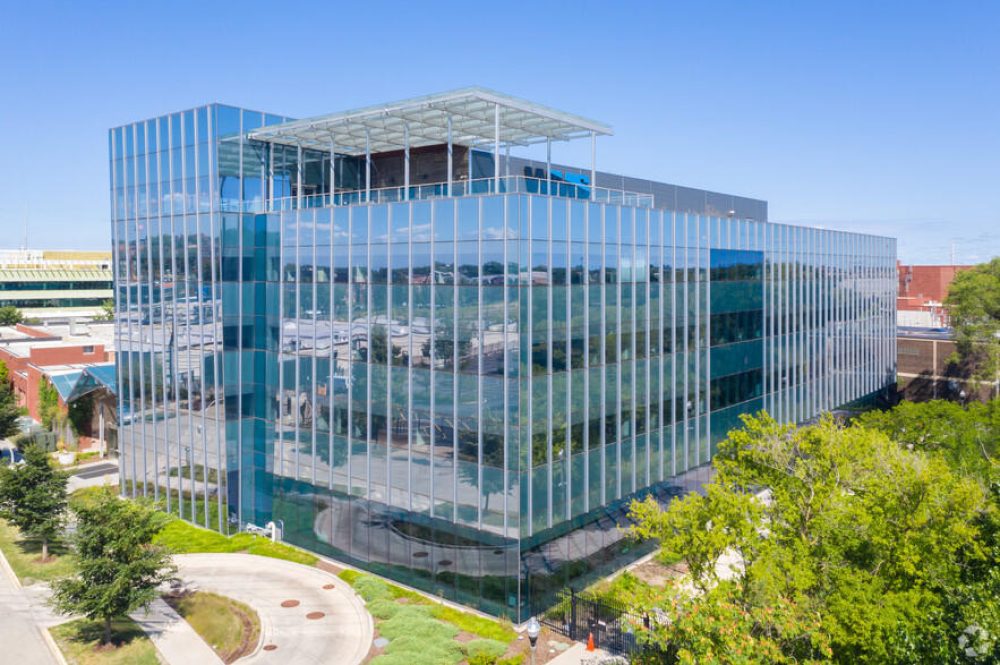
Chamberlain University Physician Assistant Program
Chicago, Illinois · Master of Physician Assistant Studies
Tuition + fees $108,000
Effective May 2026 itemized rates
A closer look
A campus-based, 24-month Chicago MPAS totaling 109 credits across six consecutive semesters. The organ-system didactic phase is followed by ten four-week clinical clerkships, including an underserved-population clerkship and two electives.
Mission & approach
To educate and empower competent, compassionate, and culturally sensitive physician assistant professionals who advance the health of people, families, communities and nations.
Check my fit with this school
Check three basics
Enter any GPA or patient care hours you know. We’ll compare them with this school’s published numbers. This is a starting point, not an eligibility decision.
The quick check needs JavaScript.
Admissions insights
What this program looks for in applicants
A 3.00 bachelor’s cumulative GPA and a 3.00 CASPA-calculated prerequisite-science GPA are the published minimums. Chamberlain may review a 2.75–2.99 bachelor’s GPA case by case, without guaranteeing acceptance. The current PAEA program profile reports matriculant averages of 3.58 overall and 3.47 science but does not label the cohort year. Healthcare experience is recommended, not required.…
Summarized from the program’s admissions information. Confirm current selection criteria with the program.
Program admissions informationHow this program interviews
Chamberlain confirms an on-campus interview by invitation, in panel and group formats.
Source checked Sep 13, 2026. Interview formats and dates can change between cycles.
Program interview informationAdmissions & prerequisites
Admission requirements
Prerequisite coursework
Semester creditsReview each course, its lab, and the program’s policies. Your links are planning records; the program decides equivalency.
| Course | Credits | Lab | Min grade |
|---|---|---|---|
BiologyCourse notes & alternativesChoose one listed biology course; each published alternative requires a lab. | 3semester credits | Required | C |
Anatomy and PhysiologyCourse notes & alternativesEight total credits. The separate route requires Anatomy lab; Physiology lab is optional. | 8semester credits | Required | C |
MicrobiologyCourse notes & alternativesMicrobiology with lab. | 3semester credits | Required | C |
Biochemistry or Organic Chemistry ICourse notes & alternativesOne chemistry option: Biochemistry with a preferred lab or Organic Chemistry I with a required lab. | 3semester credits | Not specified | C |
Statistics or BiostatisticsCourse notes & alternativesEither Statistics or Biostatistics. | 3semester credits | Not required | C |
General or Developmental PsychologyCourse notes & alternativesEither General Psychology or Developmental Psychology. | 3semester credits | Not required | C |
Policies that can change your plan
- Minimum grades and how long courses stay valid.
- C or better; courses within 10 years. A 3.00 prerequisite-science GPA is required at CASPA verification.
- AP, CLEP, and advanced standing.
- No advanced placement is granted within the MPAS, including based on proficiency testing. Whether AP/CLEP credit on a transcript counts toward admission prerequisites is not published.
- Experience
- Healthcare experience is recommended, not required. Chamberlain gives preference for at least 300 hours of clinical healthcare experience and defines that preference as direct patient care with hands-on contact in a medical setting; examples include CNA, EMT, medical assistant, military medic, paramedic, RN, and respiratory therapist. No required-hour minimum is published.
- Shadowing
- PA shadowing is recommended, not required. At least 16 hours shadowing a PA receives preference; shadowing a physician or nurse practitioner does not satisfy that preference.
- Letters
- Three recommendations are required, including one from a licensed healthcare provider, preferably a PA, and one from an employer, preferably a healthcare-experience supervisor. A PA author is preferred, not mandatory.
- Testing
- The GRE is required within 10 years. PA-CAT and CASPer requirements are not published. TOEFL is not listed as a program-specific requirement, and no score threshold is published; Chamberlain's general English-proficiency policy accepts several ways to show proficiency, so ask admissions what applies to you.
- Clinical sites
- Ten assigned four-week clerkships may require significant travel and temporary housing; students are responsible for housing unless a site provides it.
- Outcomes
- Class of 2025: 40 first-time takers, 37 passed (93% first-time versus 91% national; 98% ultimate so far). Class of 2024: 33 first-time takers, 24 passed (73% first-time versus 92% national; 100% ultimate). Across these two classes, 61 of 73 first-time takers passed (about 84%); only two classes are reported, so this is not a five-year history. Attrition: the Class of 2025 entered 42 and graduated 41 (2% attrition, 97.6% graduation); the Class of 2024 entered 34 and graduated 33 (3% attrition, 97% graduation). The Class of 2026 is still in progress, and its printed 0% is not a final result.
- Accreditation
- Accreditation-Provisional, first accredited March 2022, maximum class size 50, next review January 2027. In January 2026 ARC-PA asked the program to correct how it aggregates and monitors clinical-assessment and procedural-performance skills (standard B4.01b), due January 20, 2026; no later outcome is published. ARC-PA also accepted the program's analysis of the 2024-cohort PANCE results in September 2025.
- Costs
- Effective May 2026, tuition is $8,500 per session across 12 sessions ($102,000). Student services ($200 per session) and course resources ($300 per session) add $6,000, for $108,000 including recurring required fees. Other listed items: background/drug/fingerprint screening $320, books/materials $720 ($60 per session), a one-time equipment kit $1,250, and a $5,959 insurance plan. All together that is $116,249 including insurance. No insurance-waiver policy is stated. Another listing shows tuition of $110,290, which does not match Chamberlain's itemized rates.
Six requirement groups total 23–24 semester credits, depending on the Chemistry route. All must be within 10 years and carry a C or better. Biology and Microbiology require labs. Anatomy/Physiology totals eight credits, with lab rules that depend on the route. Chamberlain does not offer advanced placement in the MPAS, including through proficiency testing, but it is unclear whether AP/CLEP credit on a transcript can satisfy prerequisites before admission. Up to six prerequisites may remain outstanding until August 1, 2027.
When courses must be complete: Up to six prerequisites may be outstanding, due August 1, 2027, for the September 2027 start. Chamberlain requires a bachelor's degree and evaluates the prerequisite-science GPA at CASPA verification. Confirm with the program whether the allowance applies to every listed course.
Dates & application steps
The September 2027 start and April 1, 2027 CASPA submission deadline were last updated March 19, 2026. Applications are reviewed on a rolling basis. Up to six prerequisites may be outstanding, due August 1, 2027. The prerequisite-science GPA is evaluated at CASPA verification.
Up to six outstanding prerequisites are allowed.
Classes start in September 2027.
Know what the total includes
Published cost estimate
Effective May 2026 itemized ratesEffective May 2026, tuition is $8,500 per session across 12 sessions ($102,000). Student services ($200 per session) and course resources ($300 per session) add $6,000, for $108,000 including recurring required fees. Other listed items: background/drug/fingerprint screening $320, books/materials $720 ($60 per session), a one-time equipment kit $1,250, and a $5,959 insurance plan. All together that is $116,249 including insurance. No insurance-waiver policy is stated. Another listing shows tuition of $110,290, which does not match Chamberlain's itemized rates.
See additional expenses & assumptions
The 24-month curriculum has 12 sessions: tuition $8,500 each ($102,000), student services $200 each ($2,400), course resources $300 each ($3,600), and books/materials $60 each ($720). Adding screening ($320), the equipment kit ($1,250) and the insurance plan ($5,959) brings the total to $116,249. Housing, food, transportation, clinical travel, immunizations, and other living costs are not included.
Curriculum & clinical training
First three semesters
Twenty-two courses delivered as integrated organ-system modules with evidence-based medicine, interviewing/documentation, behavioral medicine, emergency medicine, surgical skills, pediatrics and obstetrics/gynecology.
Final three semesters
Ten three-credit, four-week clerkships plus professional-practice seminars, transitions to clinical practice and capstone. Core fields include family, internal, emergency, surgery, pediatrics, obstetrics/gynecology, behavioral health and underserved populations, plus two electives.
Didactic credits (68) plus clinical credits (41) equal 109. Each of the six semesters contains two sessions.
The admitted class
Current matriculant profile; cohort year not specified.
Published class statisticsProfile last updated March 19, 2026. These averages are not tied to a named graduating class.
Compare published cohorts
| Class | Published GPA | Published science-related GPA | Published experience hours |
|---|---|---|---|
| Current matriculant profile; cohort year not specified. | 3.58 | 3.47 | Not recorded |
Matriculant averages are 3.58 overall GPA and 3.47 science GPA, plus GRE 152 verbal, 154 quantitative, and 4.0 writing. The cohort year is not specified.
Published class statistics describe the named cohort or population. They are not admission minimums or acceptance probabilities.
The program’s track record
Graduate outcomes
PANCE pass rates
See first-time program performance with clearly dated national context.
- First-time PANCE pass rate: 93%
The NCCPA report printed April 17, 2026 shows Class of 2025: 40 first-time takers, 37 passes, 93% first-time, 91% national, and 98% ultimate as of the report date. Class of 2024: 33 first-time takers, 24 passes, 73%, 92% national, 100% ultimate. Across the only two reported cohorts, 61 of 73 first-time takers passed (83.56%, rounded 84%); this is not a five-year history.
- Five-year first-time PANCE pass rate: Not published
Graduation & attrition
2025 graduating cohort
Class of 2025 entered 42 and graduated 41 (2% attrition, 97.6% graduation). Class of 2024 entered 34 and graduated 33 (3% attrition, 97% graduation). The Class of 2026 is still in progress, and its printed 0% is not a final result.
Accreditation history
Provisional- March 2022Initial provisional accreditation
ARC-PA granted Provisional status with maximum class size 50.
- September 2024Provisional monitoring
Provisional status continued; ARC-PA noted three areas of noncompliance.
- September 2025PANCE analysis accepted
ARC-PA accepted the program’s analysis after its 2024-cohort PANCE pass-rate percentage was 85% or less.
- January 2026ARC-PA requested additional information on clinical and procedural skills assessment.
ARC-PA asked the program to correct how it aggregates and monitors deficiencies in clinical assessment and procedural performance. The history lists a January 20, 2026 due date but no later outcome.
Accreditation-Provisional, first accredited March 2022, maximum class size 50, next review January 2027. In January 2026 ARC-PA asked the program to correct how it aggregates and monitors clinical-assessment and procedural-performance skills (standard B4.01b), due January 20, 2026; no later outcome is published. ARC-PA also accepted the program's analysis of the 2024-cohort PANCE results in September 2025.
Sources you can open
Links to the program’s own pages and the official directories we use.
- Chamberlain Chicago paea
- ARC-PA currently accredited programs — sponsoring-institution directory
- Chamberlain Chicago arc
- Chamberlain Chicago chicago
- Chamberlain Chicago tuition
- Chamberlain MPAS published fee policy
- Chamberlain Chicago attrition
- Chamberlain Chicago goals
- Chamberlain Chicago pance
- Application Instructions for Nursing and Health Professions Programs
About the U.S. News rank
The U.S. News PA rank uses the 2025 PA edition, matched to the listed program and campus. It reflects peer-assessed reputation, not admissions odds or a personal fit score. Programs without a separate entry are labeled “Unranked.”
How competitive are you for this program?
Match AI compares your full profile with this program and every other one, then sorts your list into Reach, Target and Safety.