
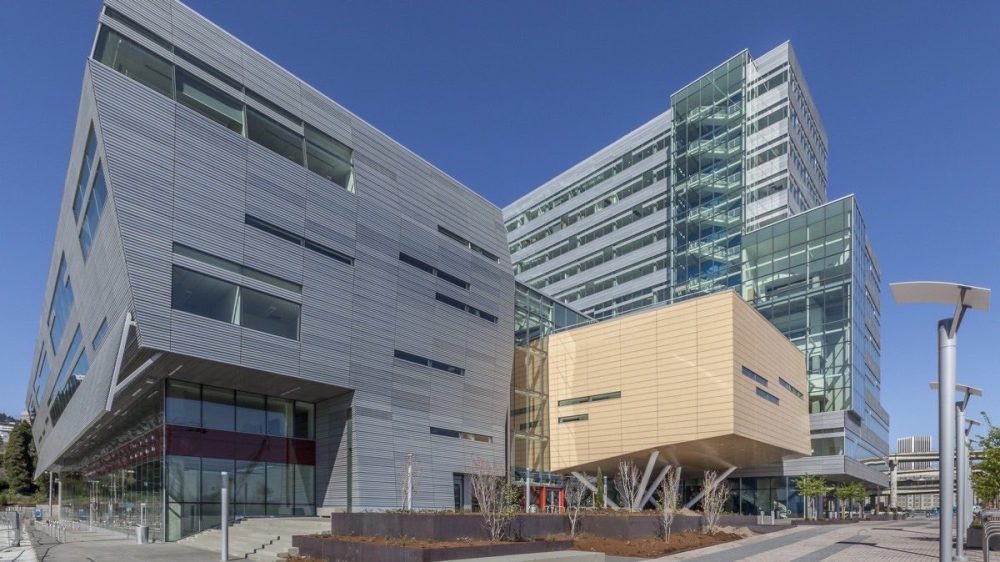
Oregon Health & Science University Physician Assistant Program
Portland, Oregon · Masters
Tuition + fees $108,702
2026–2027 academic year; nine terms
A closer look
A 26-month Oregon PA program with a 60-student cohort and a 2,000-hour combined healthcare-experience requirement.
Mission & approach
Serve as a model of excellence in PA education, preparing graduates to deliver patient-centered, evidence-based, culturally appropriate care to diverse urban and rural underserved communities in Oregon and nationwide, and to promote lifelong learning, leadership, and service.
Check my fit with this school
Check three basics
Enter any GPA or patient care hours you know. We’ll compare them with this school’s published numbers. This is a starting point, not an eligibility decision.
The quick check needs JavaScript.
Admissions insights
What this program looks for in applicants
Holistic; preference for applicants meeting mission criteria - commitment to service/underserved (min 400 volunteer hours), leadership (min 500 hours), veterans/active military, lived-experience/cultural perspective; diversity/adversity criteria including rural background (town <=40,000 pop), economic adversity, HBCU/tribal college, first-generation, English as non-primary language.
Summarized from the program’s admissions information. Confirm current selection criteria with the program.
Program admissions information2026 PAEA Virtual Admissions Fair
The program emphasized its position within a teaching hospital, giving students day-to-day access to facilities, faculty and practicing clinicians as part of the learning environment. Admissions staff highlighted a strong institutional focus on equity and inclusion, including first-generation students and applicants from diverse backgrounds. On student support, the program described a structured approach to remediation in which a designated faculty member works directly with and coaches students who need it, rather than leaving them to recover on their own.
Shared at the fair on Jul 11, 2026; paraphrased program-level notes. This is a past event, not an upcoming session. Confirm current guidance with the program.
About these fair notes
PAEA Virtual PA Admissions Fair (CareerEco), July 11 2026 - program-level, paraphrased; qualitative only
How this program interviews
One of the most fully published interview days in the directory, and it has three parts: a multiple mini interview of 10-minute stations (2 minutes to read the scenario, 8 to respond), a 15-minute one-on-one with faculty or leadership, and a 25-minute group activity with five candidates. It is offered both virtually and on campus. The program names what it evaluates: communication, empathy, teamwork, ethical responsibility, cultural awareness, resilience and professional preparation. Your schedule arrives about a week before your interview date.
Source checked Jul 26, 2026. Interview formats and dates can change between cycles.
Program interview informationAdmissions & prerequisites
Admission requirements
Prerequisite coursework
Semester creditsReview each course, its lab, and the program’s policies. Your links are planning records; the program decides equivalency.
| Course | Credits | Lab | Min grade |
|---|---|---|---|
Biology, Chemistry and Physics totalCourse notes & alternativesAt least 30 semester or 40 quarter credits in biology, chemistry, and physics (BCP); the other listed science prerequisites may count toward this total. | 30Semester credits | Not specified | C |
Biology coursework2 course(s)Course notes & alternativesTwo distinct courses, minimum 3 credits each; labs recommended but not required. Anatomy/physiology and microbiology do not count as these two courses. | 6Semester credits | Not required | C |
Chemistry coursework2 course(s)Course notes & alternativesTwo distinct chemistry courses, minimum 3 credits each; labs recommended but not required. | 6Semester credits | Not required | C |
Microbiology with labCourse notes & alternativesOne course, minimum 3 credits; international applicants must complete at a U.S. or Canadian institution. | 3Semester credits | Required | C |
General or developmental PsychologyCourse notes & alternativesOne course; abnormal psychology accepted but not preferred. | 3Semester credits | Not required | C |
Statistics or BiostatisticsCourse notes & alternativesOne course; calculus or algebra is not a substitute. | 3Semester credits | Not required | C |
Human Anatomy and Physiology with lab, first termCourse notes & alternativesTwo-semester combined A&P route or separate Anatomy and Physiology courses, each with lab. | Not publishedSemester credits | Required | C |
Human Anatomy and Physiology with lab, second termCourse notes & alternativesSecond term; quarter systems require three combined A&P terms. | Not publishedSemester credits | Required | C |
Policies that can change your plan
- Combined BCP (biology, chemistry, physics) total
- The 30-credit biology, chemistry and physics (BCP) total overlaps the individual science requirements. It is not an extra course on top of them.
- International coursework
- Microbiology and A&P must be completed at a U.S. or Canadian institution for international applicants.
Minimum grade of C in all prerequisites, completed before you start. Online courses and labs are accepted. Some AP/IB credit is accepted when the transcript identifies the specific course. The biology, chemistry, and physics (BCP) credit total is a combined requirement, not an extra standalone course.
Dates & application steps
The prior-cycle deadline of 2026-08-01 has passed; the next deadline is not published.
This is the expected start of the entering class.
Know what the total includes
Published cost estimate
2026–2027 academic year; nine terms$11,475 term × 9 documented semesters · Nonresident full-program tuition only; estimate at current rates for the 2026–2027 academic year (nine terms). Future rates may change.
Resident and nonresident tuition are the same. The $108,702 total adds up the program's individual cost components rather than being a single published figure. Insurance is waivable and not included.
Curriculum & clinical training
Didactic education
Classroom, laboratory, simulation and ultrasound instruction prepare students for supervised practice.
Clinical education
Supervised clinical training includes Oregon settings and rural and underserved communities.
The Portland program spans 26 months. Clinical education includes travel beyond the main campus.
The admitted class
Class of 2025
Published class statisticsThe additional GPA shown for this class is the biology, chemistry, and physics (BCP) GPA (3.48), not a general science GPA.
Compare published cohorts
| Class | Published GPA | Published science-related GPA | Published experience hours |
|---|---|---|---|
| Class of 2025 | 3.48 | Not recorded | Not recorded |
Published class statistics describe the named cohort or population. They are not admission minimums or acceptance probabilities.
The program’s track record
Graduate outcomes
PANCE pass rates
See first-time program performance with clearly dated national context.
- First-time PANCE pass rate: 97%
- Five-year first-time PANCE pass rate: 91%
Accreditation history
ContinuedSources you can open
Links to the program’s own pages and the official directories we use.
- ARC-PA currently accredited programs — sponsoring-institution directory
- Oregon Health & Science University curriculum and clinical training
- Program program page
- Oregon Health & Science University PA admissions requirements
- Program program page
- Program program page
- Oregon Health & Science University published class statistics
About the U.S. News rank
The U.S. News PA rank uses the 2025 PA edition, matched to the listed program and campus. It reflects peer-assessed reputation, not admissions odds or a personal fit score. Programs without a separate entry are labeled “Unranked.”
How competitive are you for this program?
Match AI compares your full profile with this program and every other one, then sorts your list into Reach, Target and Safety.