
Sam Houston State University Physician Assistant Program
Conroe, Texas · Master of Physician Assistant Studies (MPAS)
Tuition + fees $49,401 / $93,057 nonresident
Published Year 1–3 program charges
Check my fit with this school
Check three basics
Enter any GPA or patient care hours you know. We’ll compare them with this school’s published numbers. This is a starting point, not an eligibility decision.
The quick check needs JavaScript.
A closer look
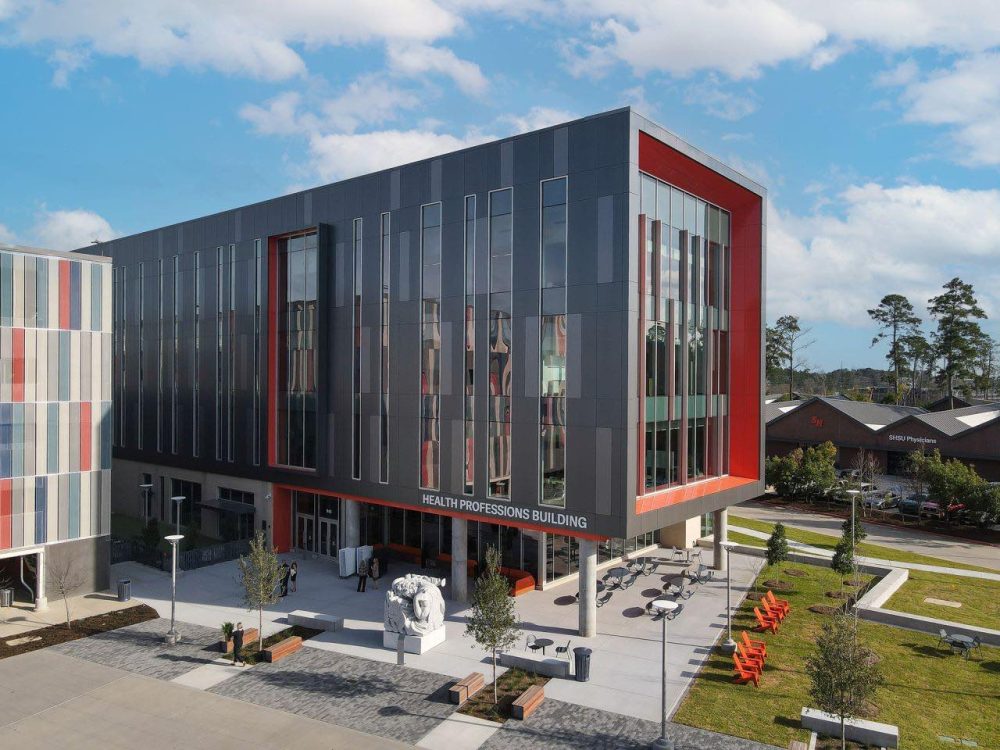
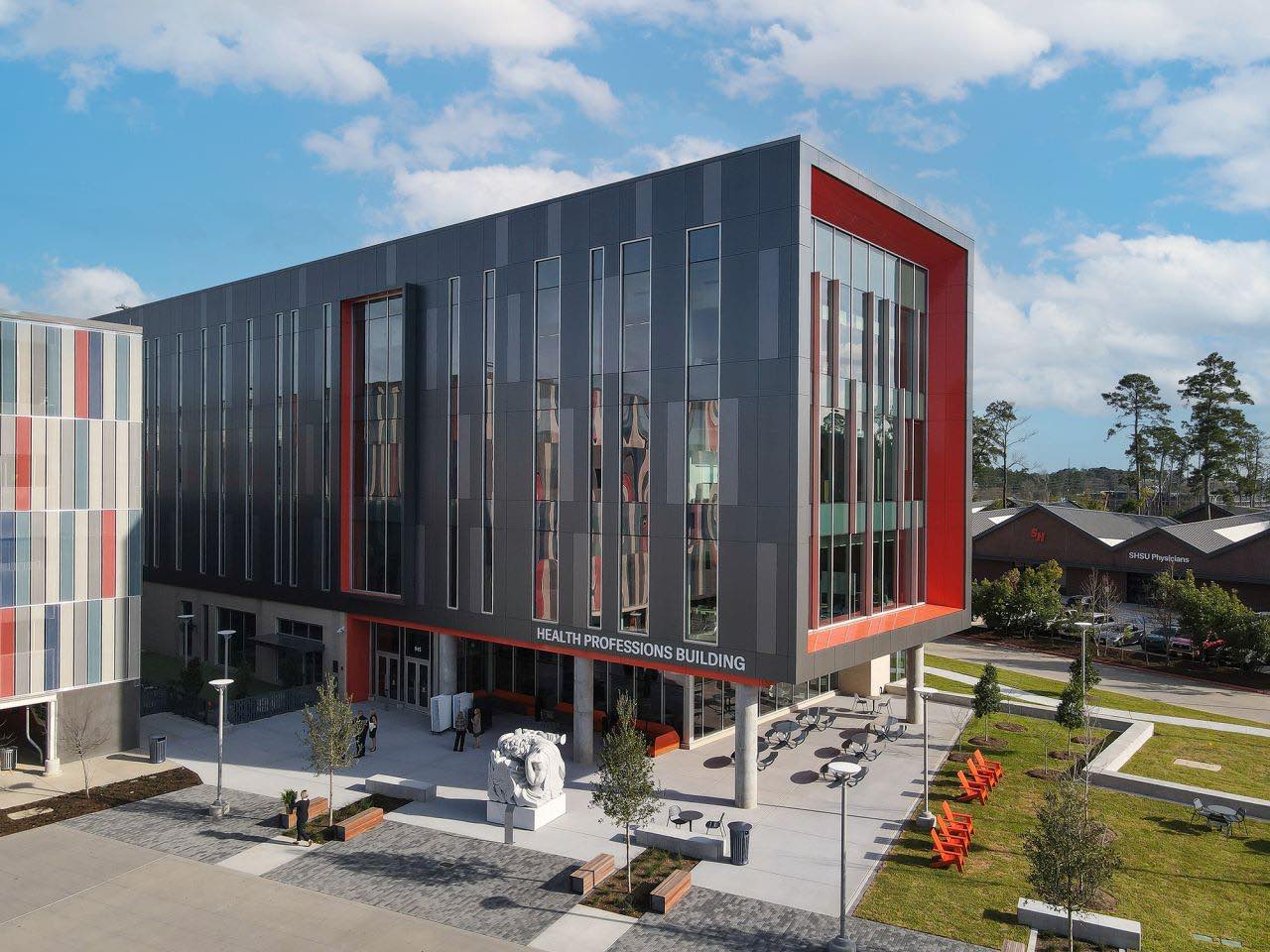
A 102-credit, 28-month, full-time PA program in Conroe's Health Professions Building. Sixteen months of classroom study lead into 12 months of clinical training. It emphasizes community engagement and care across East Texas.
Mission & approach
Develops PAs through a collaborative, student-centered curriculum emphasizing lifelong learning, community engagement and competent care for rural and urban communities across Texas and beyond.
Admissions insights
What this program looks for in applicants
Three-stage review combines quantitative screening, faculty evaluation of narrative material and Admissions Chair review before interviews; final selection combines application and interview scores. Considerations include GPA and course rigor, advanced degrees, healthcare credentials and experience, leadership/service, community engagement, communication, motivation, resilience, disadvantaged background or East Texas ties, military service and first-generation status.
Summarized from the program’s admissions information. Confirm current selection criteria with the program.
Program admissions informationHow this program interviews
In-person Multiple Mini Interview (MMI) plus a traditional individual interview at the Health Professions Building. It assesses maturity, empathy, motivation, communication, critical thinking, knowledge of the PA role, and fit with the program's mission. Interview dates published for March–May 2026 have passed; current dates are not confirmed.
Source checked Sep 13, 2026. Interview formats and dates can change between cycles.
Program interview informationAdmissions & prerequisites
Admission requirements
Overall GPA exception pathway
The program page lists a cumulative GPA of at least 3.0. The 2026–27 MPAS catalog also allows an overall graduate GPA of at least 3.0 as an alternative. Confirm with the program which route applies this cycle.
Science GPA policy & alternatives
The program page lists a cumulative science GPA of at least 3.0. The 2026–27 catalog also allows a graduate science GPA of at least 3.0, so there is no single science cutoff. Ask admissions how graduate courses are calculated.
Prerequisite coursework
Semester credit hours (SCH)Review each course, its lab, and the program’s policies. Your links are planning records; the program decides equivalency.
| Course | Credits | Lab | Min grade |
|---|---|---|---|
General Biology I and IICourse notes & alternativesThree semester credit hours each. Advanced biology may substitute with program approval. A lab is not stated as required. | 6Semester credit hours | Not specified | Minimum grade of 2.0 on a 4.0 scale |
General Chemistry I and IICourse notes & alternativesThree semester credit hours each. A lab is not stated as required. | 6Semester credit hours | Not specified | Minimum grade of 2.0 on a 4.0 scale |
Organic Chemistry OR BiochemistryCourse notes & alternativesTake one 3-credit course, not both. A lab is not stated as required. | 3Semester credit hours | Not specified | Minimum grade of 2.0 on a 4.0 scale |
Anatomy & Physiology I and IICourse notes & alternativesFour semester credit hours each. Human anatomy and physiology is preferred. A two-semester human A&P sequence with labs totaling 8 semester credit hours fulfills both. This is one paired requirement, not 8 credits each. A lab is not stated as required for every accepted sequence. | 8Semester credit hours | Not specified | Minimum grade of 2.0 on a 4.0 scale |
MicrobiologyCourse notes & alternativesScience-major course. Lab not specified. | 3Semester credit hours | Not specified | Minimum grade of 2.0 on a 4.0 scale |
GeneticsCourse notes & alternativesScience-major course. Lab not specified. | 3Semester credit hours | Not specified | Minimum grade of 2.0 on a 4.0 scale |
StatisticsCourse notes & alternativesThree semester credit hours. | 3Semester credit hours | Not specified | Minimum grade of 2.0 on a 4.0 scale |
Introductory/Normal OR Abnormal PsychologyCourse notes & alternativesOne 3-credit course. Examination credit is accepted for psychology. | 3Semester credit hours | Not specified | Minimum grade of 2.0 on a 4.0 scale |
Policies that can change your plan
- Completion timing
- Finish all prerequisite courses before August 1 of the year you start.
- Course age
- At least 15 semester credit hours must be within the last 10 years; older coursework is not automatically disallowed.
- Accepted coursework formats.
- AP, IB and CLEP credit and concurrent-enrollment courses are accepted when documented on an official transcript, as are online and community-college courses from regionally accredited schools.
- Pass/credit grades.
- Pass grades from 2020–21 are accepted for non-science courses only. Pass or credit grades are not accepted for science courses.
- Advanced standing
- No substitutions for professional program coursework, and no transfer from another PA program; former PA students must apply competitively. This does not affect accepted prerequisite examination credit.
- Deferral
- Admission deferrals are not granted; you may reapply without priority. The deadline to attest to your offer is given in your admission letter.
- Clinical placements
- The program coordinates sites and preceptors. Most or all rotations are in Texas, and at least one distant or rural rotation is expected. Students pay for housing and travel. There are no international rotations. An elective out-of-state placement needs program approval.
- Full-time study
- Intensive full-time curriculum; employment strongly discouraged. Expect at least 40 on-campus hours weekly plus independent study.
- Health and participation requirements.
- Technical standards, health clearance, immunization documentation, health insurance, background checks and drug screens apply; check current program/site policies.
- Contact and campus information.
- Program email: [email protected]; department phone: 936-202-5108. The program is in the Health Professions Building in Conroe, at 945 City Central Avenue, not at the Huntsville university mailing address.
- Information sessions
- The program page lists September 11 at 1 p.m., with no year or time zone. Email [email protected] to ask about the next session.
Science prerequisites must be for science majors. At least 15 semester credit hours must be within the last 10 years. AP, IB and CLEP credit and concurrent-enrollment courses are accepted when documented on an official transcript, as are online and community-college courses from regionally accredited schools. Pass grades from 2020–21 are accepted for non-science courses only; Pass or credit grades are not accepted for science courses.
When courses must be complete: You need a bachelor's degree before you start the program, and all prerequisite courses must be finished before August 1.
Dates & application steps
The September 1, 2026 deadline has passed. The next date is not yet published.
The September 1, 2026 deadline was for verified CASPA applications and has passed.
Know what the total includes
Published cost estimate
Published Year 1–3 program charges$43,680 program + $35,693 program + $13,684 program · The university's cost tables call this charge the "Program Fee."
SHSU publishes one all-in three-year Program Fee of $49,401 for residents and $93,057 for nonresidents; it does not split tuition from fees. Books, living and other costs are extra.
See additional expenses & assumptions
Yearly attendance budgets (resident/nonresident): Year 1 $58,489/$79,033; Year 2 $50,821/$68,513; Year 3 $18,870.67/$25,290.67. The three-year totals ($128,180.67 resident, $172,836.67 nonresident) are sums of these yearly figures, not separately published quotes. The Program Fee is not broken into tuition and fees. Year 2 nonresident books are $1,500 versus $500 for residents; other expense rows are the same for both. A $1,000–$1,500 medical kit is discussed on the program page but is not added again because the budget already includes diagnostic equipment. Laptop, housing/travel, insurance and PANCE-related expenses also apply, and the deposit amount and treatment are unconfirmed. Charges may change without notice.
Curriculum & clinical training
Didactic
64 SCH cover clinical medicine, biomedical foundations, anatomy, clinical skills, pharmacology, research and community health.
Clinical
38 SCH include seven core rotations, one elective, capstone and PANCE preparation.
102 semester credit hours over 28 months. Core rotations (four weeks each) are family medicine, internal medicine, emergency medicine, surgery, women's health, pediatrics and mental/behavioral health. The program page and the 2026–27 catalog agree on 102 credits but place ECG/capstone credits in different terms (page: Year 1 summer 15 / Year 2 fall 16, clinical summer 10 / final fall 15; catalog: 14 / 17 and 9 / 16), so confirm the term schedule with the program. Graduation requires a cumulative GPA of 3.0 or higher, no F grades, no more than 14 hours of C grades, continuous enrollment, a capstone, an end-of-curriculum exam and a final standardized-patient OSCE.
The admitted class
Class averages and attrition results are not published. The program plans to admit 40 students.
Published class statistics describe the named cohort or population. They are not admission minimums or acceptance probabilities.
The program’s track record
Graduate outcomes
PANCE pass rates
See first-time program performance with clearly dated national context.
- First-time PANCE pass rate: No graduates yet
No graduates yet; no observed PANCE/class-average/attrition results established.
First-time program results are not yet available; no graduates have been reported.
- Five-year first-time PANCE pass rate: No graduates yet
Five-year first-time results are not yet available.
Accreditation history
Provisional- April 2026Accreditation-Provisional
13 areas of noncompliance noted; a report is due January 11, 2027 for 11, and the two retired standards need no report. Next review to be determined; maximum class size 40. Check with the program for any later resolution.
ARC-PA granted Provisional accreditation in April 2026 (initial accreditation dated April 25, 2026), with a maximum class size of 40. The next comprehensive Provisional Monitoring review date is to be determined. ARC-PA listed 13 areas of noncompliance: a report is due January 11, 2027 for 11 of them, and none is required for two standards that no longer apply in the sixth edition. The department catalog's pending-accreditation wording is out of date.
Sources you can open
Links to the program’s own pages and the official directories we use.
- Sam Houston State contact
- Sam Houston State curriculum
- ARC-PA currently accredited programs — sponsoring-institution directory
- Sam Houston State accreditation
- Sam Houston State campus
- Sam Houston State admissions
- Sam Houston State costs
- Sam Houston State news
About the U.S. News rank
The U.S. News PA rank uses the 2025 PA edition, matched to the listed program and campus. It reflects peer-assessed reputation, not admissions odds or a personal fit score. Programs without a separate entry are labeled “Unranked.”
How competitive are you for this program?
Match AI compares your full profile with this program and every other one, then sorts your list into Reach, Target and Safety.