
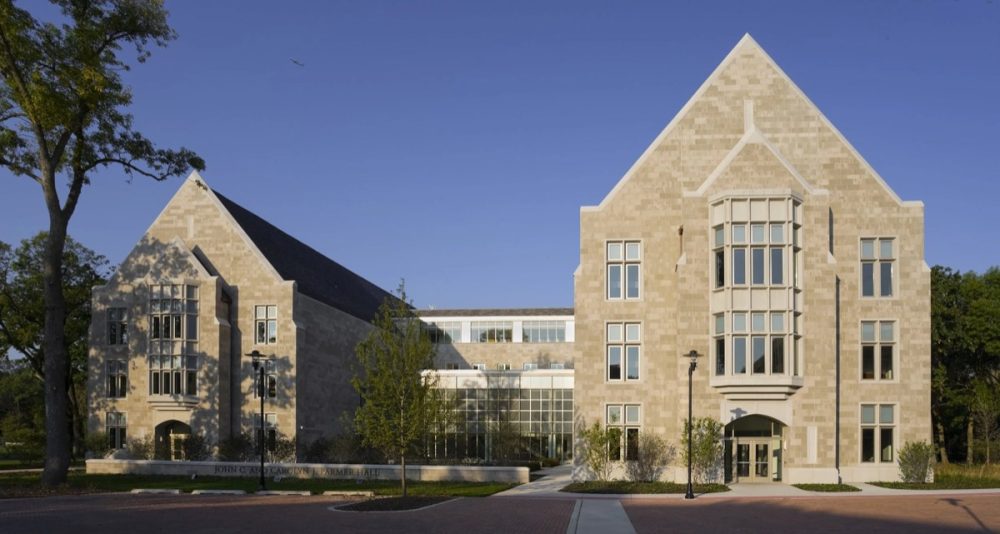
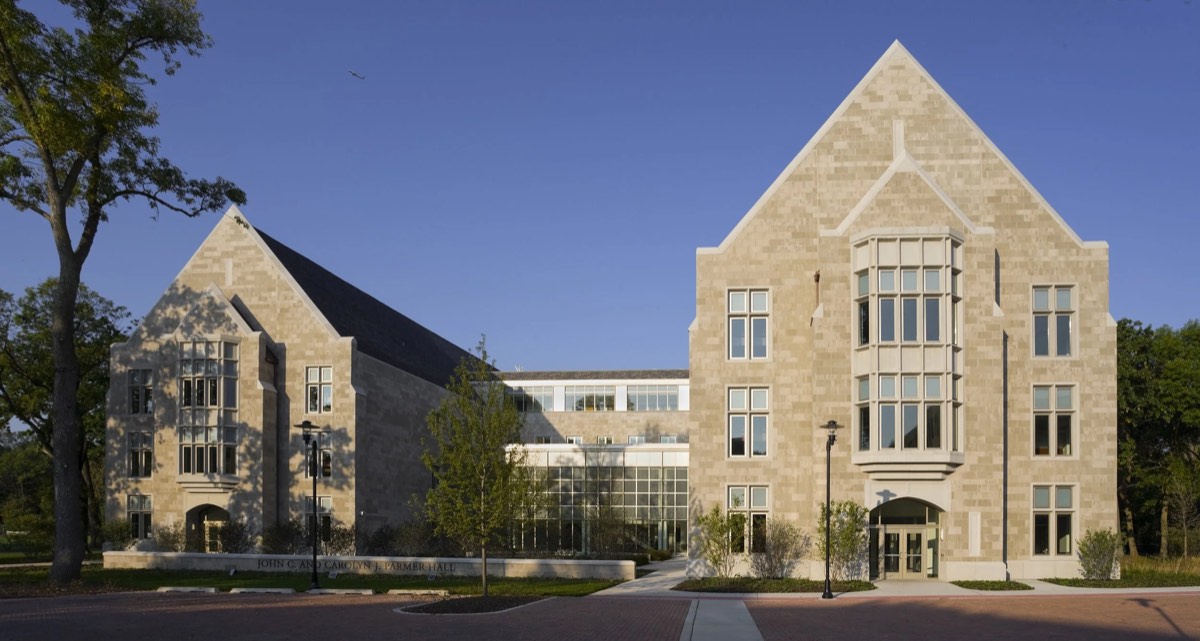
Dominican University (IL) Physician Assistant Program
River Forest, Illinois · Master of Medical Science in Physician Assistant Studies
Tuition + fees $120,175
January 2027 matriculants, full 24-month estimate
A closer look
A full-time, 24-month, 106-credit MMS program in River Forest, Illinois, beginning in January. The first year combines biomedical and clinical coursework, patient-assessment skills and anatomy; the second year adds core and elective clinical rotations.
Mission & approach
Prepare competent, compassionate PAs for patient-centered care, teamwork, leadership, service and continued learning, with attention to social justice and diverse communities.
Check my fit with this school
Check three basics
Enter any GPA or patient care hours you know. We’ll compare them with this school’s published numbers. This is a starting point, not an eligibility decision.
The quick check needs JavaScript.
Admissions insights
What this program looks for in applicants
Holistic, rolling review considers academic preparation, patient-related experience, recommendations and writing. Additional consideration goes to current Dominican students/alumni, veterans, first-generation applicants and applicants from backgrounds underrepresented in medicine or with economic/environmental disadvantage. These are selection considerations, not guarantees. Forty-five hours of…
Summarized from the program’s admissions information. Confirm current selection criteria with the program.
Program admissions informationHow this program interviews
All selected applicants interview virtually through Zoom, beginning in June and continuing through summer and fall. The interview is described as an MMI (multiple mini-interview), but the program page does not describe the station format. Follow your invitation for the current schedule and format. Offers arrive by phone and email; final decisions may continue through the end of January.
Source checked Sep 13, 2026. Interview formats and dates can change between cycles.
Program interview informationAdmissions & prerequisites
Admission requirements
Prerequisite coursework
Semester credits; alternative six-credit combined or seven-credit separate A&P routesReview each course, its lab, and the program’s policies. Your links are planning records; the program decides equivalency.
| Course | Credits | Lab | Min grade |
|---|---|---|---|
Human Anatomy — separate-course routeCourse notes & alternativesThree lecture credits plus one human anatomy lab credit. Pair with Physiology below, or replace both rows with the complete Human A&P I/II series: six total credits including a one-credit human anatomy lab. | 4Semester credits | Required | C |
Human or Vertebrate Physiology — separate-course routeCourse notes & alternativesPair with four-credit Human Anatomy. The alternative Human A&P I/II series replaces both separate courses and needs six total credits with the anatomy lab. | 3Semester credits | Not required | C |
BiochemistryCourse notes & alternativesNo laboratory required; required in addition to Organic Chemistry. | 3Semester credits | Not required | C |
MicrobiologyCourse notes & alternativesMust be within the biology department and include a one-credit laboratory. | 4Semester credits | Required | C |
General Chemistry I and IICourse notes & alternativesTwo-course sequence totaling seven semester credits, including a one-credit lab. A separate lab for each semester is not required. | 7Semester credits | Required | C |
Organic ChemistryCourse notes & alternativesIncludes a one-credit laboratory. | 4Semester credits | Required | C |
GeneticsCourse notes & alternativesUpper-level course with a biology prerequisite. | 3Semester credits | Not specified | C |
Medical TerminologyCourse notes & alternativesMust be a college-credit course; a noncredit certificate does not establish this requirement. | 1Semester credits | Not specified | C |
Statistics or approved alternativeCourse notes & alternativesBiostatistics, Behavioral Statistics or Epidemiology also accepted. | 3Semester credits | Not specified | C |
PsychologyCourse notes & alternativesGeneral, Developmental or Abnormal Psychology accepted. | 3Semester credits | Not specified | C |
Policies that can change your plan
- Course grades and age
- Both cumulative and science CASPA GPAs must be at least 3.0, with no exceptions. Every prerequisite needs a C or better; a C-minus does not qualify. No separate prerequisite GPA minimum is published. Science courses must be within seven years of the entering cohort; this limit is not published for every non-science course. See the anatomy and physiology note above for the course routes.
- Online, community-college and lab policies
- Online lectures and community-college credits from regionally accredited institutions are accepted. Labs normally must be in person. Online labs are accepted only for applicants who could not attend in-person labs in 2020 or 2021 because of COVID-19, and an in-person lab used for another lab requirement must have been completed within seven years of the new cohort's start.
- Credit and course equivalents
- AP credit is not accepted for any prerequisite. No CLEP policy is published. Quarter hours are accepted at 1 quarter hour = 0.667 semester hour. Higher-level courses are favored; introductory or survey courses may be insufficient.
- Experience examples
- Accepted examples include CNA/MA, EMT, nursing, athletic training, home health, behavioral or ophthalmic technician, physical therapy/rehab aide, ER technician, phlebotomy, scribing, pharmacy technician and dental assistant. Clerical work, coaching, laboratory technician, veterinary technician, personal training and babysitting are not among the accepted examples. The program evaluates your actual duties.
- Transfer and advanced standing
- No advanced credit is awarded for prior professional experience, courses, degrees, certifications, or training. Graded transfer courses can satisfy admission prerequisites. Disclose any prior PA-program enrollment and supply transcripts. No program transfer or part-time option is listed.
- Health and screening
- Before orientation, complete health examination, TB/immunity documentation, health insurance, background/sex-offender check and ten-panel drug screen. Repeat required health/screening steps before clinical training at student expense. Meet technical standards with reasonable accommodation.
- Progression and graduation
- Maintain a 3.0 aggregate GPA for good standing. Lower standing or a course grade of C or below prompts program review and possible remediation. Complete sequential coursework, summative assessment, capstone and all obligations in good standing within three years.
- Employment and interruptions
- Outside work is strongly discouraged; notify the program director in writing if working is necessary. Work does not excuse coursework and students may not substitute for program staff. Deceleration may be permitted once and can delay graduation or increase costs; withdrawal and return require a new CASPA application.
- Deposit and refunds
- The $1,500 seat deposit is nonrefundable and applied to tuition at matriculation. Offer letters set payment deadlines. Published tuition refunds after official withdrawal are 100% in week one, then 80%, 60%, 40%, 20% through week five and none afterward; fees are nonrefundable.
- PANCE years and cohorts
- First-time PANCE results: the Class of 2025 passed 27 of 30 (90%), against a national rate of 91%; the ultimate pass rate was 100%. Across the five most recent classes (2021–2025), 134 of 148 passed on the first attempt (90.5%). The Classes of 2021 and 2022 both graduated in 2022 and together passed 53 of 61 (86.9%).
- Published attrition
- The Classes of 2021–2025 each entered 30 students. Graduates were 30, 30, 28, 29 and 30, and attrition was 0%, 0%, 6.67%, 3.33% and 0%. The printed 2023 graduation rate is 96.67%, but 28 of 30 is 93.33%; this discrepancy is unresolved. The other printed graduation rates are 100% (2021), 100% (2022), 96.67% (2024) and 100% (2025). Attrition means permanent loss from the course of study.
Choose one complete A&P route: Human Anatomy (4 credits including a one-credit lab) plus Human or Vertebrate Physiology (3 credits, no lab required); or a two-course Human A&P I/II series totaling at least 6 credits including a one-credit human anatomy lab. Do not combine the routes. Each course can satisfy only one prerequisite. Science courses must be within seven years of the entering cohort; that limit is not published for every non-science course.
When courses must be complete: No more than two prerequisites may be pending when you apply, and all must be complete by September 1. Identify pending courses and degrees in CASPA, and provide proof of registration if you are interviewed. CASPA GPAs are not recalculated after those courses finish. Your U.S. bachelor's degree must be complete before enrollment.
Dates & application steps
The CASPA deadline for January 2027 entry was August 1, 2026, and has passed. Your application must reach Blue/Submit status; the program reviews files after verification, which can take additional time. The next cycle’s deadline is not published. The September 1, 2026 prerequisite deadline has also passed.
For the January 2027 entering cohort; no more than two courses could be pending at application.
January 2027 entry is listed in the directory and on the cost page for that cohort. Ask the program for exact orientation dates.
All selected applicants interview virtually through Zoom, beginning in June and continuing through summer and fall. The interview is described as an MMI (multiple mini-interview), but the program page does not describe the station format. Follow your invitation for the current schedule and format. Offers arrive by phone and email; final decisions may continue through the end of January.
Know what the total includes
Published cost estimate
January 2027 matriculants, full 24-month estimateFor January 2027 matriculants, tuition is $116,918 ($1,103 per credit across 106 credits). Mandatory fees total $3,257, so tuition plus fees is $120,175. The estimated full cost of attendance is $216,499.10, including living expenses and other allowances; individual spending and future rates can change.
See additional expenses & assumptions
Mandatory fees total $3,257: $1,500 student fees + $1,032 lab fees + $600 clinical education fees + $25 matriculation fee + $100 degree fee. Other allowances total $13,273.10, not counting living costs. The $1,500 seat deposit is credited against tuition and is not an extra charge; it is separate from the $25 matriculation fee. Resident and nonresident tuition are the same. Financial aid and GI Bill/Yellow Ribbon participation are available subject to eligibility; contact [email protected].
Curriculum & clinical training
Didactic study
January–December across 18 spring, 21 summer and 21 fall credits. Clinical medicine, pharmacology, diagnostic reasoning, patient assessment, anatomy, pathophysiology, professional practice, evidence-based medicine and Medical Spanish.
Clinical study and completion
January–December: two-credit clinical bridge, ten four-credit rotations, two-credit capstone seminar and two one-credit evidence-based medicine courses. Core rotations cover emergency, internal, family and behavioral medicine, pediatrics, women’s health/OB-GYN and surgery; three rotations are electives.
The published sequence totals 106 credits. Anatomy combines virtual Anatomage-table work with traditional cadaver study. Rotation order varies. Graduates are expected to evaluate clinical evidence, advocate for patients and diagnose common primary-care medical and behavioral problems.
The admitted class
Class of 2027
Published class statisticsCompare published cohorts
| Class | Published GPA | Published science-related GPA | Published experience hours |
|---|---|---|---|
| 2023 | 3.76 | 3.68 | 3,198Combined health-care and patient-care experience (HCE/PCE) hours |
| 2024 | 3.83 | 3.80 | 2,451Combined health-care and patient-care experience (HCE/PCE) hours |
| 2025 | 3.65 | 3.57 | 3,583Combined health-care and patient-care experience (HCE/PCE) hours |
| 2026 | 3.83 | 3.78 | 2,702Combined health-care and patient-care experience (HCE/PCE) hours |
| 2027 | 3.86 | 3.83 | 2,469Combined health-care and patient-care experience (HCE/PCE) hours |
Class of 2027: 30 students, average age 23, 40% from outside Illinois, 27% underrepresented in medicine, 3% veterans, 30% first-generation, 10% male / 90% female, and 3% with prior graduate degrees. Averages: cumulative GPA 3.86, science GPA 3.83, and 2,469 combined health-care and patient-care hours (not direct patient care only). GRE averages are not provided for the Classes of 2026 and 2027; the GRE became optional with the 2024–2025 application cycle.
Published class statistics describe the named cohort or population. They are not admission minimums or acceptance probabilities.
The program’s track record
Graduate outcomes
PANCE pass rates
See first-time program performance with clearly dated national context.
- First-time PANCE pass rate: 90%
First-time PANCE results: the Class of 2025 passed 27 of 30 (90%), against a national rate of 91%; the ultimate pass rate was 100%. Across the five most recent classes (2021–2025), 134 of 148 passed on the first attempt (90.5%). The Classes of 2021 and 2022 both graduated in 2022 and together passed 53 of 61 (86.9%).
- Five-year first-time PANCE pass rate: 90.5%
Graduation & attrition
2025 graduating cohort
The Classes of 2021–2025 each entered 30 students. Graduates were 30, 30, 28, 29 and 30, and attrition was 0%, 0%, 6.67%, 3.33% and 0%. The printed 2023 graduation rate is 96.67%, but 28 of 30 is 93.33%; this discrepancy is unresolved. The other printed graduation rates are 100% (2021), 100% (2022), 96.67% (2024) and 100% (2025). Attrition means permanent loss from the course of study.
Accreditation history
Continued- September 2016First accredited
ARC-PA records the program's initial accreditation.
- September 2020Continued accreditation
Continued status followed the final provisional review.
- June 2023Class-size request not approved
ARC-PA did not approve the proposed increase; the current maximum remains 30.
- March 2024PANCE analysis accepted
ARC-PA accepted the required analysis of the 2022 cohort result with no further information requested.
- January 2026Class-size report accepted
ARC-PA accepted the program's report about an entering class above the approved size, with no further information requested.
Accreditation-Continued. The program was first accredited in September 2016, the maximum class size is 30, and the next ARC-PA review is July 2030. ARC-PA accepted the January 2026 class-size report and the March 2024 analysis of the 2022 cohort's low PANCE performance, with no further information requested. A proposed class-size increase was not approved in June 2023.
Sources you can open
Links to the program’s own pages and the official directories we use.
- Dominican University (Illinois) — paea
- ARC-PA currently accredited programs — sponsoring-institution directory
- Dominican University (Illinois) — accreditation
- Dominican University (Illinois) — overview
- Dominican University (Illinois) — admissions
- Dominican University (Illinois) — costs
- Dominican University (Illinois) — process
- Dominican University (Illinois) — policies
- Dominican University (Illinois) — curriculum
- Dominican University (Illinois) — mission
- Dominican University (Illinois) — prerequisites
- Dominican University (Illinois) — class
- Dominican University (Illinois) — attrition
- Dominican University (Illinois) — pance
About the U.S. News rank
The U.S. News PA rank uses the 2025 PA edition, matched to the listed program and campus. It reflects peer-assessed reputation, not admissions odds or a personal fit score. Programs without a separate entry are labeled “Unranked.”
How competitive are you for this program?
Match AI compares your full profile with this program and every other one, then sorts your list into Reach, Target and Safety.