Address & Contact

Our Address

535 Watson Drive Claremont, California 91711

GPS

34.091663430604704, -117.72269839821053

Telephone
← Find PA SchoolsProgram profile
PROGRAM PROFILE

Keck Graduate Institute Physician Assistant Program

Claremont, California · Masters

Application deadline Nov 1, 2026Received by deadline (app + transcripts + 2 references)
Tuition Resident: $131,831 published full-program tuitionNonresident: $131,831 published full-program tuition · Confirm current entering cohort
Class size 40 studentsProgram cohort size
Program length 28 monthsFull program
GRE requirement Not requiredGRE, MCAT, and PA-CAT are not required or used. The official MSPA requirements PDF states that these tests are neither required nor considered.
Patient-care minimum 1,000 hours1,000 direct patient-care hours within 5 years, completed by application, in the U.S., a U.S. territory, or a U.S. organization. The PDF publishes the 1,000-hour, recency, timing, and location conditions.
Overall GPA minimum 3.003.0 cumulative GPA. The minimum cumulative GPA is 3.0.
Science GPA minimum 3.003.0 science GPA. The minimum science GPA is 3.0.
Recommendations 3 references: one PA/MD/DO/NP; one clinician, academic, or research evaluator; and one applicant-selected evaluator; no friends or family.The PDF specifies three references, required evaluator categories, and personal-reference exclusions.
International applicants ConditionalInternational applicants may apply; foreign credentials require evaluation and all prerequisite credits must be completed at an accredited U.S. institution. Accepted with conditions.
English proficiency / TOEFL ConditionalRequired for international applicants only; demonstrate through interview-based assessment or TOEFL iBT 85, IELTS 7.0, or Duolingo 120.
PANCE pass rate 98%First-time pass rate · Reporting year not recordedFive-year first-time: Not available yet
U.S. News PA rank Unranked2025 PA edition · Peer-assessed reputationNo published rank for this program in this edition.
THE PROGRAM

A closer look

Current, source-bound PA admissions requirements and program facts.

Mission & approach

The mission of KGI’s future Master of Science in Physician Assistant Studies (MSPA) program is to develop high-quality physician assistants (PAs) who are dedicated to advancing healthcare through leadership, commitment to their communities, and the compassionate care of diverse populations.

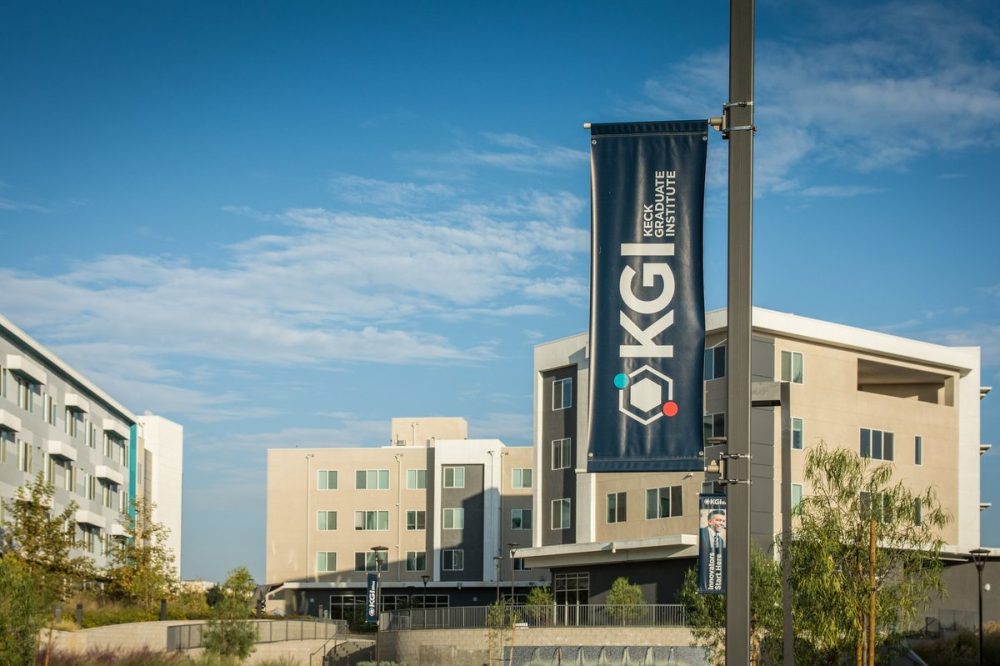
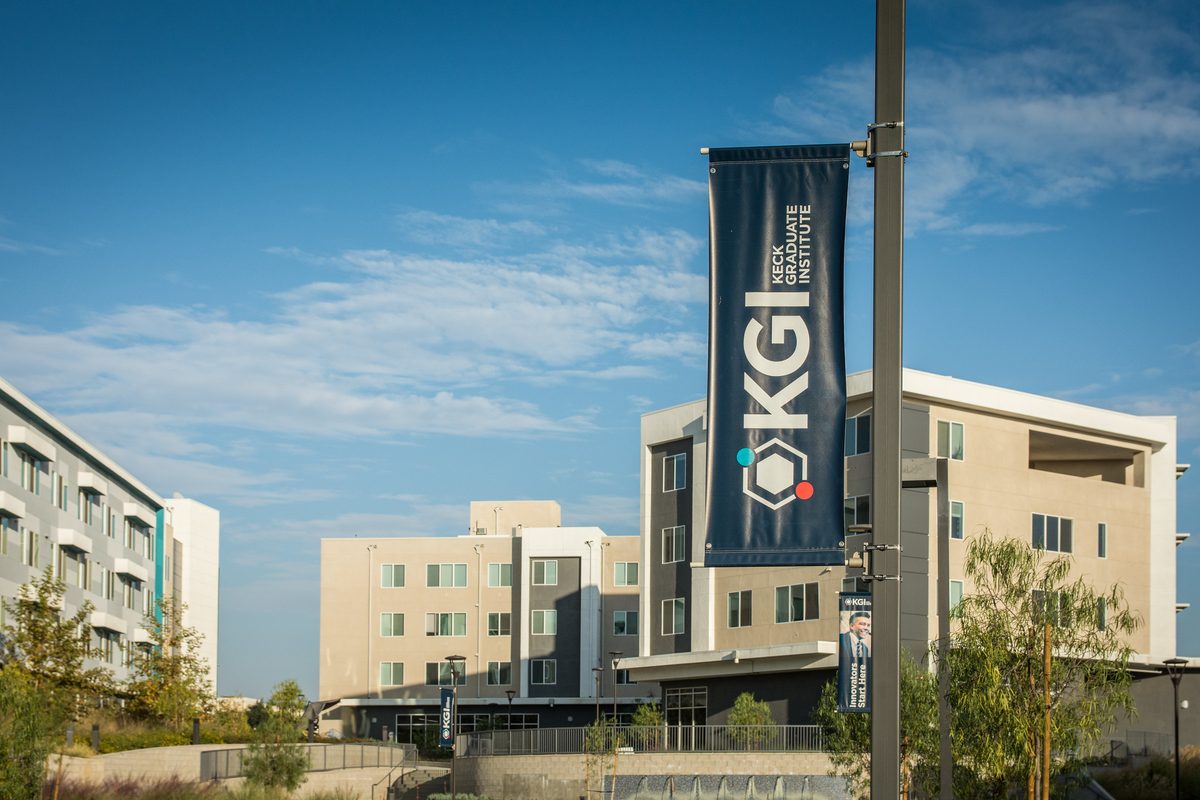
Keck Graduate Institute Building 555, home of the Physician Assistant program classrooms and clinical-skills facilities
KGI Building 555, home of the Physician Assistant program’s classroom and clinical-skills facilities.
PREMIUM · MATCH AI

Is Keck Graduate Institute a fit for you?

Unlock your personalized category, ranked school list, and reasons based on your profile. One Match AI purchase gives you the same results on PA School Finder and in your Toolkit.

SafetyTargetReachNot yet eligible
Unlock my school matches →
BEYOND THE NUMBERS

Admissions insights

What this program looks for in applicants

Holistic; capacity-to-succeed (GPA + PCE quality/hours), communication, PA commitment, KGI/Claremont alignment; preferences: first-gen, multilingual, perseverance/underserved, military, service, KGI/Claremont affiliation.

Summarized from the program’s admissions information. Confirm current selection criteria with the program.

Program admissions information

How this program interviews

Virtual

Applicants selected after holistic review of the CASPA application must complete a virtual interview over Zoom to be considered for admission. The page does not specify whether it is one-on-one or panel.

Source checked Aug 1, 2026. Interview formats and dates can change between cycles.

Program interview information
YOUR STARTING POINT

Admissions & prerequisites

Admission requirements

GRENot RequiredGRE, MCAT, and PA-CAT are not required or used. The official MSPA requirements PDF states that these tests are neither required nor considered.
Patient care1,000 direct patient-care hours within 5 years, completed by application, in the U.S., a U.S. territory, or a U.S. organization.The PDF publishes the 1,000-hour, recency, timing, and location conditions.
Overall GPA3.0 cumulative GPA.The minimum cumulative GPA is 3.0.
Science GPA3.0 science GPA.The minimum science GPA is 3.0.
Recommendations3 references: one PA/MD/DO/NP; one clinician, academic, or research evaluator; and one applicant-selected evaluator; no friends or family.The PDF specifies three references, required evaluator categories, and personal-reference exclusions.
International applicantsAccepted with conditionsInternational applicants may apply; foreign credentials require evaluation and all prerequisite credits must be completed at an accredited U.S. institution.
English proficiencyConditionalRequired for international applicants only; demonstrate through interview-based assessment or TOEFL iBT 85, IELTS 7.0, or Duolingo 120.

Prerequisite coursework

Semester hours (quarter-hour minimums also published)

Review each course, its lab, and the program’s policies. Your links are planning records; the program decides equivalency.

Choose one complete option in each group

Courses shown as alternatives in the table are not all required. Confirm the accepted route with the program.

  • Human Anatomy and Physiology route: Human Anatomy with lab + Human Physiology with lab OR Full Anatomy & Physiology sequence with lab
  • Organic Chemistry or Biochemistry: Organic Chemistry OR Biochemistry
CourseCreditsLabMin gradeYour coursework
Human Anatomy with lab

Standalone option: human anatomy covering all organ systems; course credit is counted within the required 8-credit A&P total.

Not publishedSemester hours (quarter-hour minimums also published)RequiredCSign in to plan
Human Physiology with lab

Standalone option: human physiology covering all organ systems; course credit is counted within the required 8-credit A&P total.

Not publishedSemester hours (quarter-hour minimums also published)RequiredCSign in to plan
Full Anatomy & Physiology sequence with lab2 course(s)

Two courses total; minimum 8 semester credits (10 quarter hours). Human anatomy/physiology must be the primary syllabus focus.

8Semester hours (quarter-hour minimums also published)RequiredCSign in to plan
Microbiology
Course notes & alternatives

Minimum 3 semester or 4 quarter hours. Must cover bacteria, viruses, and fungi; general or medical microbiology preferred. Lab not required.

3Semester hours (quarter-hour minimums also published)Not requiredCSign in to plan
Medical Terminology
Course notes & alternatives

Minimum 1 semester or 1.5 quarter hours; must be a comprehensive course covering word elements and terminology for the body as a whole.

1Semester hours (quarter-hour minimums also published)Not specifiedCSign in to plan
General or Inorganic Chemistry with lab
Course notes & alternatives

One semester; minimum 4 semester or 5 quarter hours. An overview course combining inorganic/organic/biochemistry is not accepted.

4Semester hours (quarter-hour minimums also published)RequiredCSign in to plan
Organic Chemistry

One semester; minimum 3 semester or 4 quarter hours; no lab required. A combined Organic Chemistry/Biochemistry course may satisfy this row, but an inorganic/organic/biochemistry overview does not.

3Semester hours (quarter-hour minimums also published)Not requiredCSign in to plan
Biochemistry

Alternative to Organic Chemistry; minimum 3 semester or 4 quarter hours; no lab required. Combined Organic Chemistry/Biochemistry course accepted; general chemistry does not satisfy this row.

3Semester hours (quarter-hour minimums also published)Not requiredCSign in to plan
Statistics or Biostatistics
Course notes & alternatives

Minimum 3 semester or 4 quarter hours. Math or psychology department accepted; other departments case by case.

3Semester hours (quarter-hour minimums also published)Not specifiedCSign in to plan

Policies that can change your plan

AP credit
AP credit is not accepted for these prerequisites.
Coursework confirmation
Some course details or accepted substitutions need program review. Check the course notes, credits, labs, grades and current completion deadline before enrolling.

KGI's 2026–2027 official guide is dated May 1, 2026. Foundational A&P courses/labs are strongly recommended in person and within three years, but this is preparation guidance rather than the stated 10-year eligibility limit. AP/CLEP/IB not accepted for prerequisites.

When courses must be complete: C or better, within 10 years of application deadline; up to two outstanding totaling ≤8 semester hours / 12 quarter hours at application, all completed by June 15 of enrollment year.

2026–2027 MSPA Admissions Requirements and Procedures, May 1, 2026 2026–2027 application cycle · Checked 2026-09-24
BUILD YOUR TIMELINE

Dates & application steps

Application deadlineNov 1, 2026

Received by deadline (app + transcripts + 2 references)

2026–2027
Ready to start an application plan?

Keep your essays, checklist, and personal targets together.

Plan application →
THE FINANCIAL PICTURE

Know what the total includes

Published cost estimate

2026–2027 MSPA tuition and institutional fees; PDF April 27, 2026
Resident tuition$131,831 published full-program tuition
Nonresident tuition$131,831 published full-program tuition

Confirm current entering cohort

Required program fees$1,500
Tuition + required feesExcludes living and other expenses
$133,331

Confirm current costs with the program.

Plan for the application, too.

Keep application fees separate from the cost of attending.

KGI official 2026–2027 MSPA tuition and fees 2026–2027; PDF dated 2026-04-27 · Checked 2026-09-26
HOW YOU’LL LEARN

Curriculum & clinical training

0116 months

Didactic education

Eighty-four credits use active and interprofessional learning, with early clinical exposure before rotations.

0212 months

Clinical education

Forty credits include eight six-week rotations: seven core experiences and one elective. Campus callbacks include examinations and case presentations.

The current KGI program is 28 months, seven semesters and 124 credits. Clinical facilities are described in Southern California.

Keck Graduate Institute official curriculum and clinical training Current published curriculum; entering-cohort schedule should be confirmed · Checked 2026-09-26
WHO STUDIES HERE

The admitted class

Recorded average GPANot recorded
Recorded science GPANot recorded

Cohort year and experience averages need verification.

Published class statistics describe the named cohort or population. They are not admission minimums or acceptance probabilities.

OUTCOMES & OVERSIGHT

The program’s track record

Graduate outcomes

PANCE pass rates

See first-time program performance with clearly dated national context.

  • First-time PANCE pass rate: 98%

No 5-year average yet - only TWO graduating cohorts (2024-2025); 96% first-time across all two (75/78)

Program reporting year not recorded; direct comparison unavailable.

  • Five-year first-time PANCE pass rate: Not available yet

Five-year first-time results are not yet available.

Accreditation history

Accredited-Provisional
First accreditedMarch 5, 2022
Next reviewApril 2027

A complete dated action history has not been added to this record.

ARC-PA currently accredited programs — sponsoring-institution directory Directory as retrieved 2026-09-26; scheduled review dates are provisional timing and may change · Checked 2026-09-26
CHECK THE EVIDENCE

Sources you can open

Follow the source for the policy or cohort you are reviewing. A check date is separate from the year a figure describes.

Rankings & information still to verify

The U.S. News PA rank uses the 2025 PA edition, matched to the listed program and campus. It reflects peer-assessed reputation, not admissions odds or a personal fit score. Programs without a separate entry are labeled “Unranked.”

Unpublished policies and unverified cohort statistics are left open for confirmation.

PA School Finder × PA Life Applicant ToolkitOne program record. One application plan.